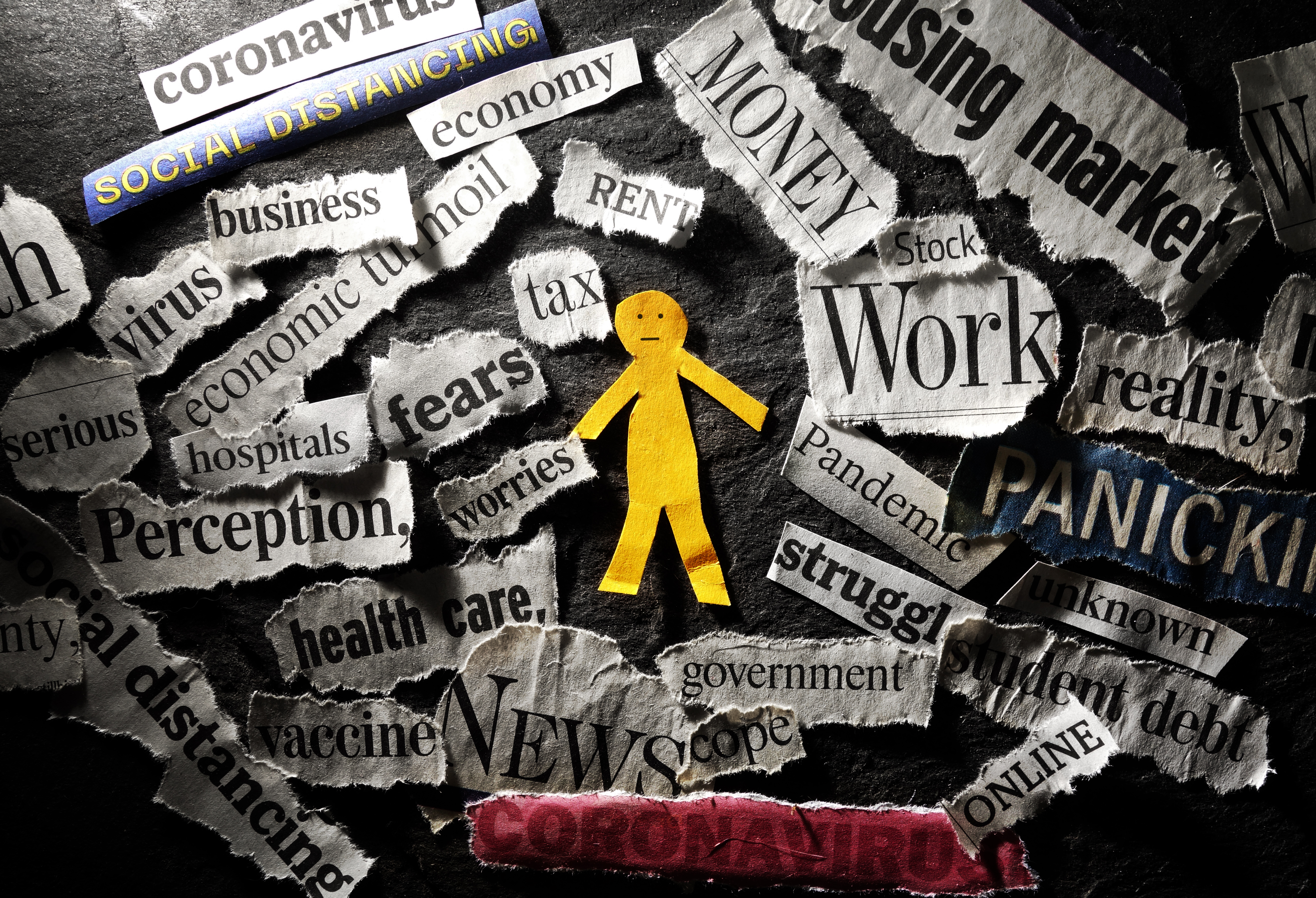
As employers face a growing mental health crisis, human resources departments are using a variety of ways to provide cost-effective help.
One common effort comes in the form of Employee Assistance Programs, or EAPs.
Kathleen Crowley, EAP Clinical Manager at Adventist HealthCare LifeWork Strategies, told NPF’s Covering Workplace Mental Health fellows that journalists can request data, utilization rates and even stories (without identifiers) from EAP managers to improve their reporting.
Crowley’s benchmark for utilization is 4%. “Our current utilization is at 11.86. In the last five quarters, it hasn’t gone below 8.77, and during the pandemic, it was 18.75,” she said.
Some employees don’t utilize EAPs due to privacy concerns, fearing that their employer will know if they’re accessing mental health services. Crowley said this was not true.
“We abide by HIPAA, and there are laws and there are ethics saying that I cannot share your stuff,” she said.
Can mental health apps build resilience?
While EAPs grow in the United States, not every country’s employees have that kind of access. Dimagi, a technology company that builds wellness apps for workers around the world, works directly with lower and middle-income countries’ workforces.
Its app WellMe will ideally reduce the impact of burnout for frontline workers in lower and middle-income countries, said Lauren Magoun, Dimagi’s senior health strategy specialist. Frontline workers, in this context, mean community health workers, who are mostly women and often lack the job protections that other positions have, she said.
“According to the International Labor Organization, 60% of people who work in the world work in the informal sector. So if every private sector or public sector job had the best everything, it would still only be reaching 40% of the world’s workforce,” Magoun said. “So there’s all those people out there that don’t have HR, social, any sort of protections.”
“This app is not going to cure your severe mental illness by any means,” Magoun said. “So we’re actually testing our hypothesis that getting people to actually use the app through creative engagement techniques will build resilience. We have a number of research studies actually out there now that are in progress or towards the end.”
HR’s wellness message: Communicate early, communicate often
At MIL Corporation, a Washington, D.C.-based organization that has been named a “top place to work” multiple years in a row, director of human resources Danielle Hayes said listening to employees’ feedback is crucial.
“People are talking to you in a number of ways, even if it’s not verbal. So we do six-month check-ins with all of our new hires. We also have focus groups. We have what we call state interviews because we’re trying to identify what is the cause of any sort of discord,” Hayes said, emphasizing that the stressors often come from beyond the workplace.
These efforts are extended to new hires as well as leaders.
“Everyone is not going to necessarily fall in line in terms of what we expect as far as their communication style and their approach. You find a lot of professionals in executive leadership roles that have had zero experience or training in leading others. So we want to work with them in those areas, but when the teams and the employees sees that the organization is taking it very seriously, then they in turn take it seriously too,” she said.
Access the full transcript here.
This program is sponsored by the Luv U Project, with associate sponsors the Johns Hopkins Bloomberg School of Public Health’s Department of Mental Health and the American Psychological Association. The National Press Foundation is solely responsible for its content.