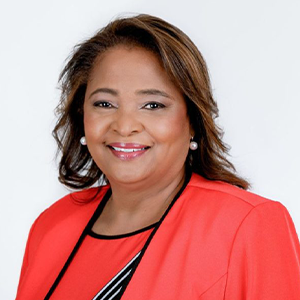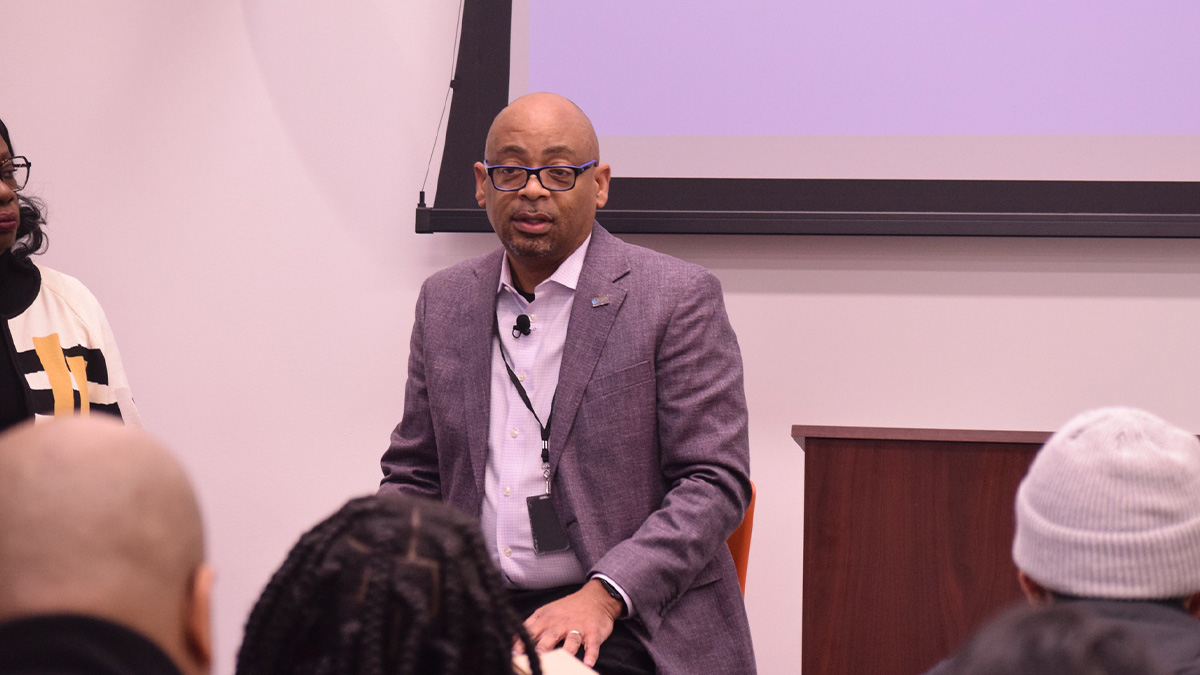
If there’s one thing Lori Montenegro knows for sure, it’s that for many journalists of color, professional distance is often a luxury. As Washington bureau chief for Telemundo, she oversees coverage of Trump administration immigration policies sweeping through American communities and witnesses the mounting mental health toll on her journalist colleagues.
“When you have to interview them, you have to look them in the eye,” Montenegro says, describing reporters covering immigration enforcement. “You see the pain and the terror in their eyes. Because our communities are in that struggle.”
As one of the most senior Afro-Latina leaders in Spanish-language news, Montenegro’s journey from a childhood in Cuba, to her father’s plant nursery in Miami to Capitol Hill yielded crucial insights, which she shared with 2025 NPF Widening the Pipeline fellows. Over decades in radio and television, Montenegro has earned accolades for her editorial leadership and mentoring efforts. But she has also witnessed – and absorbed – the emotional toll news takes on journalists, particularly reporters of color and particularly those covering immigration, race, and policies that directly impact their own communities.
Montenegro recalled one recent encounter with a traumatized young reporter who’d witnessed ICE agents detain a man who begged not to be taken from his children. Another assignment involved a father who handed his nine-year-old daughter to a U.S. citizen each morning to escort her to school — too afraid to risk exposure himself.
“She was holding on for dear life not to break down,” Montenegro says. “Everybody could see the stress on her face.”
These are not isolated moments. For journalists of color, particularly Latino and immigrant reporters, trauma is cumulative. The stories may echo family histories. The policies feel personal. And the expectation to remain composed — professional — often means suppressing grief, anger and fear.
“You studied history, you know what it took to get those rights,” Montenegro says. “And now you’re living history again, watching things you learned about being dismantled.”
The result, she says, is a workforce quietly burning out.
Losing Journalists, Losing Democracy
“We’re losing a lot of talent,” Montenegro said bluntly. “I know people who have left the business because they just can’t cope anymore.”
The consequences go beyond individual careers. Montenegro views journalism as inseparable from democracy itself.
“When there’s no communication, when there’s nobody investigating, democracies just cannot work,” she says. “I’ve seen it firsthand. It becomes one-sided information.”
Yet the industry has been slow to address mental health — especially for journalists whose identities are inseparable from the beats they cover. Newsrooms often celebrate resilience without acknowledging its cost. Strength becomes an expectation, not a choice.
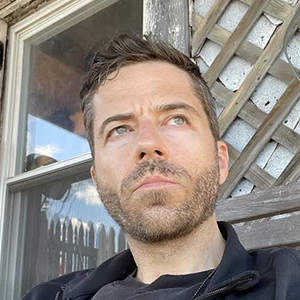
Journalist Henrick Karoliszyn also shared insights about journalism and mental health with the 2025 Widening fellows. Growing up in an immigrant family in a tough neighborhood, Karoliszyn said earning a college degree and landing a newsroom job put him on a “do or die” autopilot career track.
“The problem was it’s such a competitive field that I didn’t want to put my foot on the brake,” he said. “I couldn’t stop, because if I stopped someone else would take my job.”
The threat of stress overload never occurred to Karoliszyn.
“I never thought about the mental health aspect of reporting, and everyone around me and my community became the same reporters who were going through the same thing. We’re not talking about it. Some were numbing themselves … some people are drinking too much, they’re doing drugs, they’re getting into risky behavior. And then if you do that long enough, your norm shifts. And if you’re only hanging around people in the same field not acknowledging these things, it only gets worse.”
The breaking point for Karoliszyn came as he was covering the mass murder at Sandy Hook Elementary School in 2012. As his own tears blurred the words on his notebook, he knew he’d have to jump off the newsroom treadmill before it destroyed him. Karoliszyn went on to earn a Doctorate in Social Work from USC after focusing on secondary trauma for freelance journalists. He is currently building an online toolkit, the Freelance Frontier, to help fill mental health care gaps in journalism.
A Leadership Responsibility
As a manager, Montenegro believes the responsibility to acknowledge the mental health crisis for journalists. must start at the top.
“We have to be more sensitive to their needs and learn to identify when somebody is struggling,” she says. “You almost have to be a psychologist.”
That awareness, she argues, should be institutional — not optional. Trauma-informed leadership, access to mental health resources, and permission to step away are not perks. They are necessities if journalism hopes to retain diverse voices.
At Telemundo, Montenegro says, the editorial approach prioritizes humanity — allowing advocates, community members, and human rights organizations to contextualize injustice so reporters do not carry the burden alone.
“We lead with the human aspect,” she says. “That’s why we include those voices.”
Staying Hopeful, Staying Whole
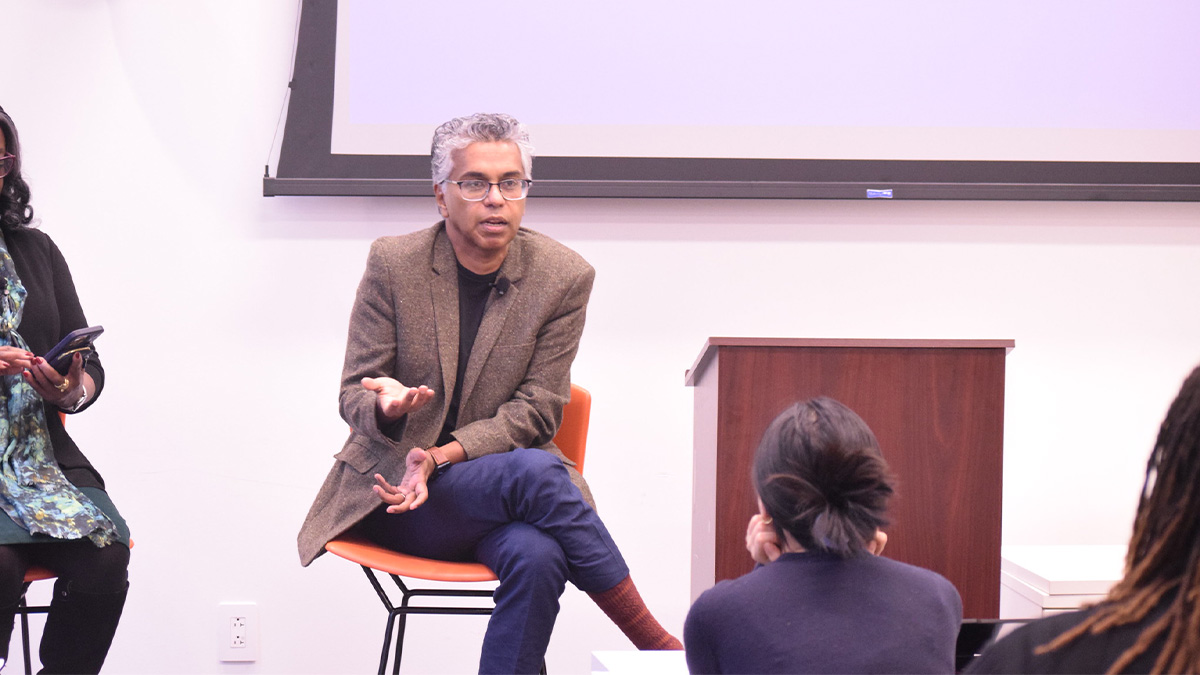
Journalist Danielle Belton said the bottom line should be self-care. The author and former HuffPost editor-in-chief has been transparent about her career as a journalist living with bipolar disorder, and said a combination of a solid support network and consistent mental health counseling have helped her succeed in a business where deadlines and competition could have derailed her goals.
Belton shared a powerful example from 2009, when she was earning accolades for her blog entitled “The Black Snob.” But when Harvard University invited her to speak about it at their Black policy conference, she was terrified.
“I went and saw my psychiatrist and he basically said to me, ‘I think you should go, and I’ll tell you why. I know you thought that your job was causing your illness to be worse, but I don’t think you can do nothing. I think doing nothing is just as detrimental to you as overworking yourself.’”
It was the ‘aha moment’ Belton said she would have never achieved by herself.
“He basically told me I needed to create a work-life balance for myself so that I could pursue my dreams but not become so sick that my health was in peril, and that had a profound impact on me.”
For journalists of color, self-care is not indulgence. It is survival. And for an industry built on truth-telling, acknowledging the mental health toll of bearing witness may be one of the most urgent stories left to tell.
This fellowship is funded by the Evelyn Y. Davis Foundation and the John C. and Ethel C. Eklund Scholarship Fund. NPF is solely responsible for the content.