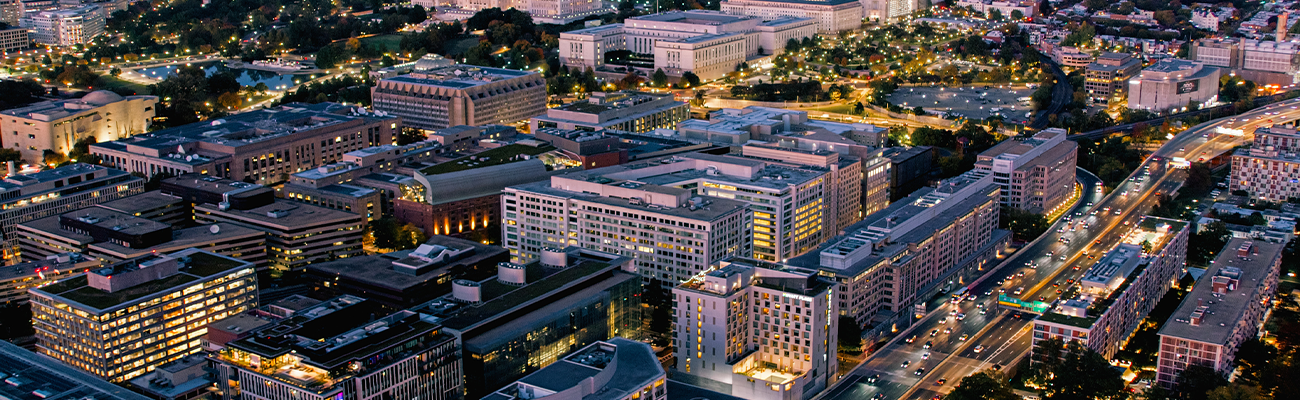
Across America, businesses large and small, urban or rural, hope to attract the broadest range of customers and tourists for their products and services. But in a post-pandemic world, cities like Washington, D.C., are scrambling to craft strategies for attracting visitors and supporting economic development.
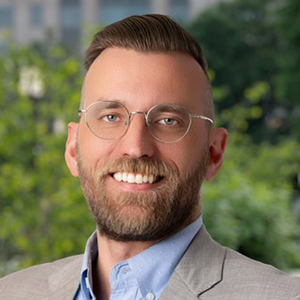
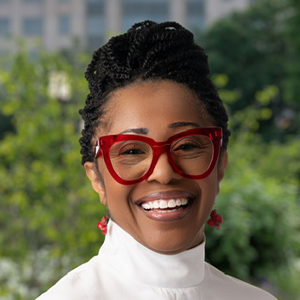
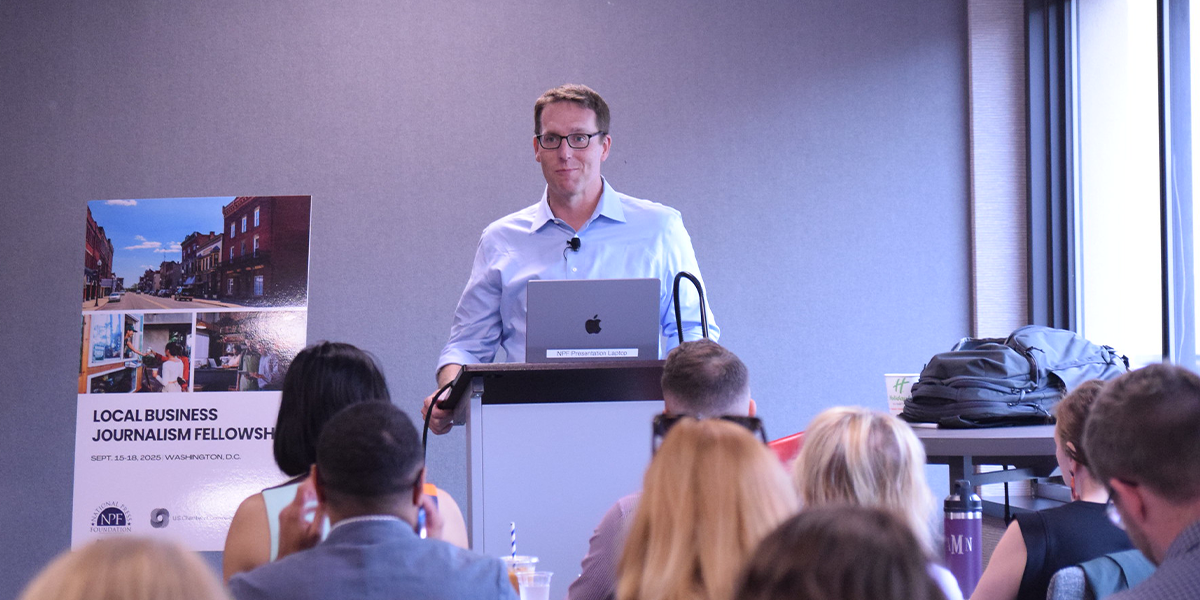
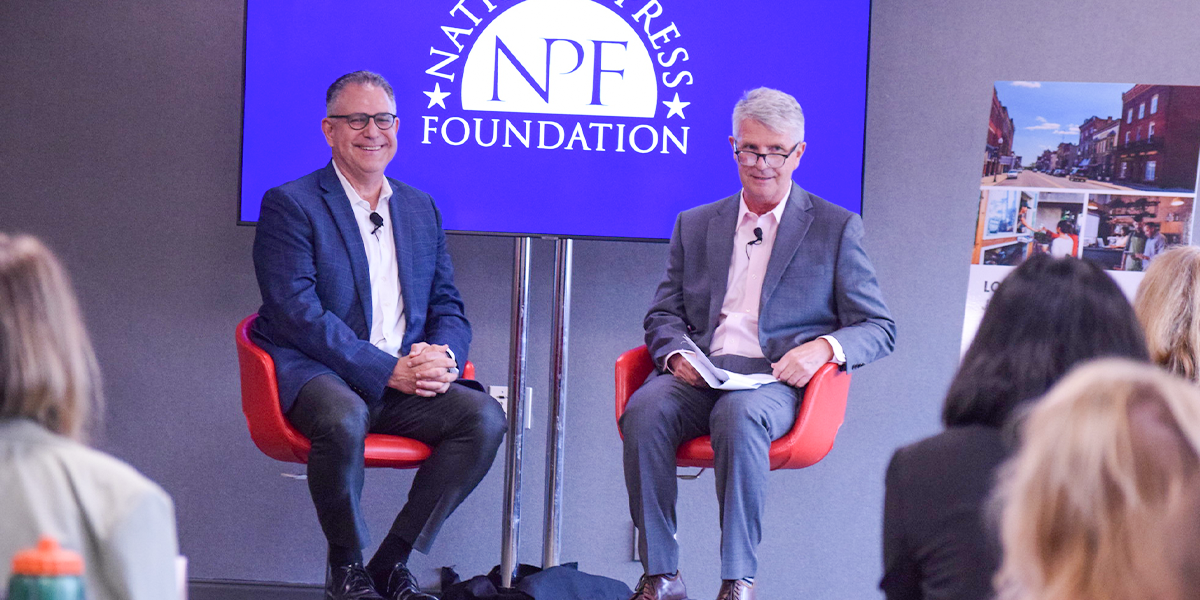
On Sept. 17, NPF Local Business Journalism Fellowship reporters got an exclusive briefing about those challenges from two representatives of the Downtown DC Business Improvement District, aka DC BID–Ebony Walton, director of marketing and communication, and Mark Simpson, director of planning and economic development. They unpacked the elements of a successful marketing strategy for elevating downtown business districts. These strategies are playing out against a backdrop in which President Trump has sent the message that Washington has a high crime rate and deployed the National Guard. According to Destination DC, a separate organization, this has resulted in fewer international tourists.
“In the urban planning field, there’s sort of a joke that downtown is in crisis about every 20 years or so. So this is my generation’s time,” Simpson said, referencing the heavy toll COVID-19 took on a downtown Washington’s business sector. Both he and Walton offered key insights for journalists covering their own local and regional business sectors.
Tourists rule
Walton said that pre-pandemic, tourism was by far the largest driver of traffic to the city’s downtown area, and a major source of pedestrian traffic. In 2019, an estimated 25 million people visited D.C. That number dropped to 13 million in 2020. Visits rebounded in 2024 at just over 27 million, and the goal for DC BID is to lure people away from the National Mall into the downtown retail and dining scene.
But the city’s lingering reputation as being unsafe make that strategy more difficult. Many major cities reported rising crime rates in recent years, and D.C. saw a peak in 2023, Simpson said. That yielded a lot of bad buzz.
“A lot of that press, even if it doesn’t happen downtown, it could be in a neighborhood that’s a mile or two away from us, but the perception for somebody driving in from the suburbs is like, oh, it’s like this happened in downtown even if it was far away.” But the city’s crime rate actually declined in 2024, and DC BID touted that fact in their 2024 State of Downtown report. Said Simpson, “It was just very good news because it’s important to make people want to come here and feel safe. It can be really hard to counter that the narrative sometimes because the charts and the graphs, they don’t get people as excited as they get me excited.”
The Pandemic Sucker-Punched Downtown
There are 12 Business Improvement Districts in the nation’s capital, each geographically defined areas where property owners and/or businesses pay an additional compulsory fee to fund services that attract loyal customers and a steady stream of tourists.
“Our goal is to make the area clean, safe and friendly. That’s the baseline” for getting people to visit and spend money, she said.
But COVID flat-lined years of marketing strategies about Downtown DC. Seventy percent of the area is commercial office space, which left it barren once quarantines and working from home began. Even when the pandemic was declared over and hybrid work was introduced, office worker foot traffic was just 50% of pre-pandemic levels, causing many restaurant and retail businesses to shutter.
Adjustments = Resilience
Walton said businesses have had to make a hard pivot.
“I think the challenge is when you talk about diversifying a mix of uses as a BID we have to understand every audience. So not just the property owner, the worker, the property manager, the retailer.
“So if I own a building and my building is retrofitted to be a commercial building, now what does that mean if I really want to convert to residential? And then how do city policies help that? Am I going to make less money? …There’s no magic bullet at least that we have found. But in terms of going forward, talking about what can we do to continue the pedestrian activity.”
Seeing is Believing
Walton said you just have to convince people to see things for themselves.
“Our goal is we don’t want to make people be downtown, we want you to want to come downtown. So it’s about what other reasons can we give people to come downtown? Events are a great way that we help to spur that economic activity and that pedestrian activity. So this summer we came off a whirlwind of doing, I don’t know, 10 events, trying to figure out how there are still a lot of assets downtown.”
Access the full transcript here.
This fellowship is sponsored by the U.S. Chamber of Commerce as part of a journalism training and award program. NPF is solely responsible for its content.