Rivers of money run through the nation’s nonprofit organizations. Yet these operations, which often benefit the rich and powerful, from Elon Musk and Donald Trump to universities, hospitals, and professional sports leagues, lack basic regulatory oversight.
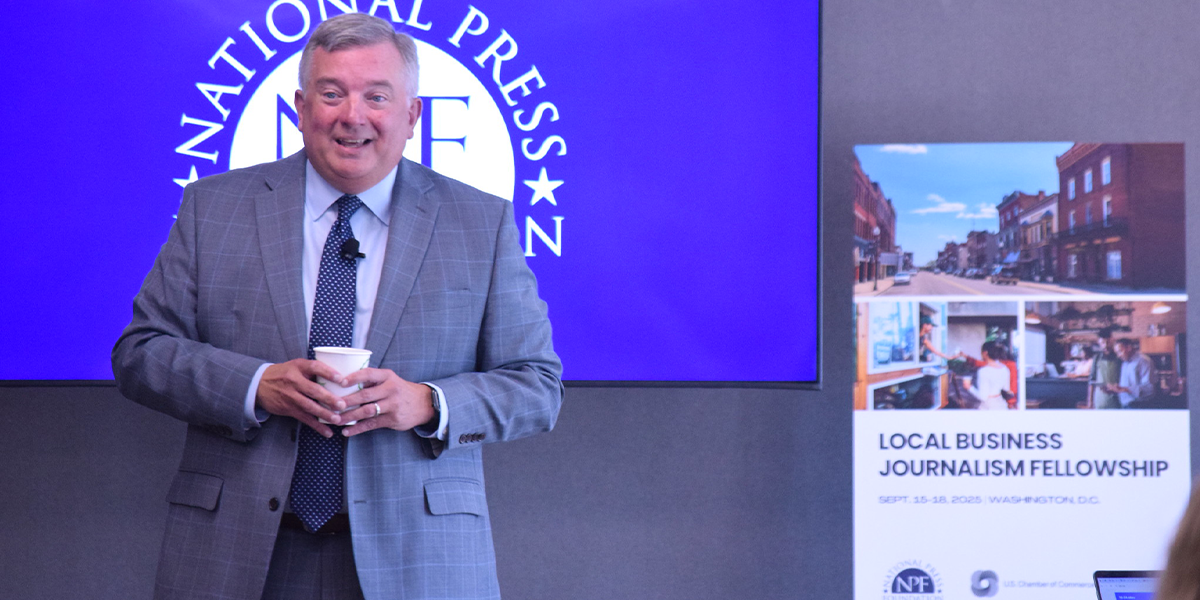
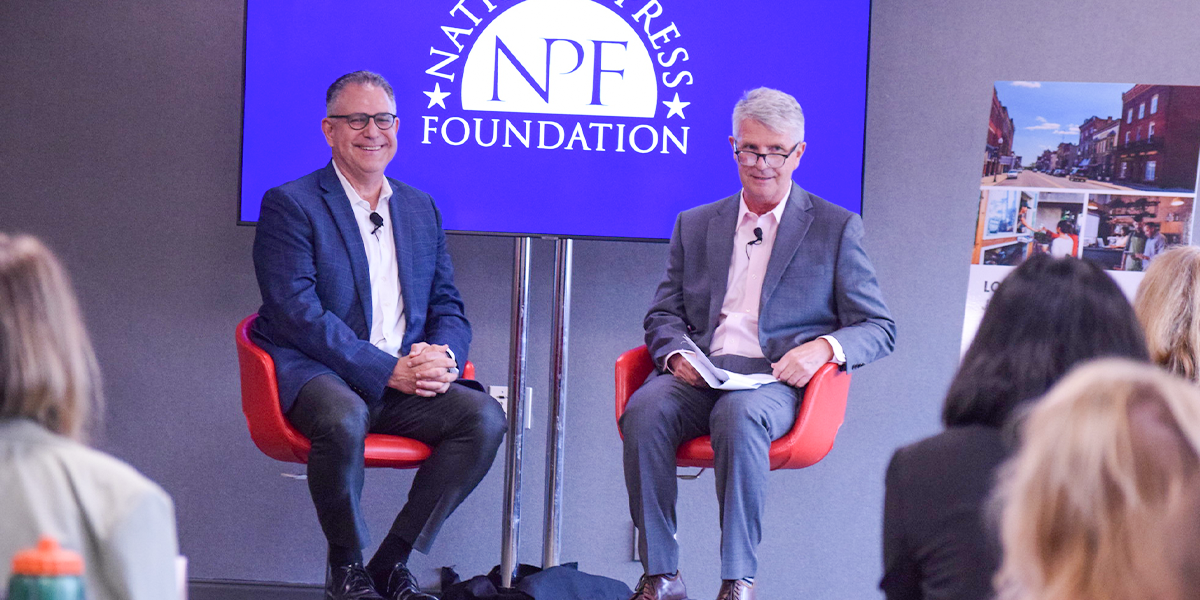
David Fahrenthold, a Pulitzer Prize-winning reporter at The New York Times, has built a career examining the workings of this overlooked network and shared a primer with the National Press Foundation’s Local Business Journalism Fellowship.
Why a nonprofit focus is important:
“Because there’s lots and lots of money,” Fahrenthold said. “In many cases, some of the largest and most powerful institutions in your town, whatever your town is (there) will be nonprofits, hospitals, universities, large charities.”
Those institutions have a huge amount of power in local, state, and national affairs, and because of that high profile, there’s lots of transparency, Fahrenthold said. “I’ve covered businesses for a while and I can tell you for sure that there is a lot more out there about nonprofits than there is about the average business, especially the average private business in some cases. If you’re writing about a powerful person or a powerful institution, Elon Musk, Donald Trump, their nonprofit will be the most transparent part of their entire life, especially people who’ve tried to sort of keep their life private or to curate what the public knows about them.”
Little oversight means ‘a lot of room for journalists’:
Take nothing for granted about the nonprofit in your community, he cautioned.
“So, the things that you might presume about a nonprofit–that it must be doing things right because it has nonprofit status, because the IRS (Internal Revenue Service) granted its status, because your state gave it nonprofit status–that there must be some sort of presumption that they’re doing something right because they’re allowed to operate as a nonprofit.”
Fahrenthold urged a more pragmatic approach, because that perspective is:
“Totally wrong. Nobody regulates these things really at all, and to the degree they are regulated, they’re often regulated through a partisan lens, regulated by state attorneys general who want to hurt nonprofits associated with the other side and not really look at the ones associated with their side. All that to say is there’s a lot of room for us. There’s a lot of room for journalists because there’s a lot of wrongdoing that’s out there that you can find in documents that nobody else has found, especially regulators.
Before you make a phone call…
There’s a logical first step, Fahrenthold said.
“You start here: the IRS Form 990. As I say, like the deep sea, you can study it for years and not fully contemplate its depth and beauty. It is a form that every nonprofit has to file every year with the IRS.”
That journey will yield a wealth of foundational information for journalists.
“Every nonprofit that gets more than $50,000 a year in revenue, they have to file it with the IRS. They have to make it public…There’s a ProPublica site that I would recommend to all of you called Nonprofit Explorer. That’s the best free site to find these, but it is basically an x-ray of the nonprofit’s finances or at least what it wants to declare about its finances. So, if you’re going to write about any nonprofit, you start by pulling these up, reading them closely, and then trying to take down and understand the information that’s in them from year to year.”
Fahrenthold said AI can help with the sorting process, but he likes to review the records by hand.
“I do it because I want it to go through my own head and I want to see the trends that are there. And you ask yourself questions like: Is this organization growing or shrinking? What’s changing with its expenses? Is it doing what it says it does? Does it say it’s helping the poor but really spends all its money buying baseball tickets for its owners or things like that? You can just get a real sense of an organization’s activities and you want to go through this to sort of understand how does this organization see the world. Are they desperate for money? Are they riding high?”
Access the full transcript here.
This fellowship is sponsored by the U.S. Chamber of Commerce as part of a journalism training and award program. NPF is solely responsible for its content.