It is also important to keep diverse housing types in mind when covering stories.
“Let’s get away from this idea that a single-family home is homeownership and a multi-family property is rental. There’s all different kinds of living situations, and ownership, and housing types that are part of our community fabric and community need,” Peterson said.
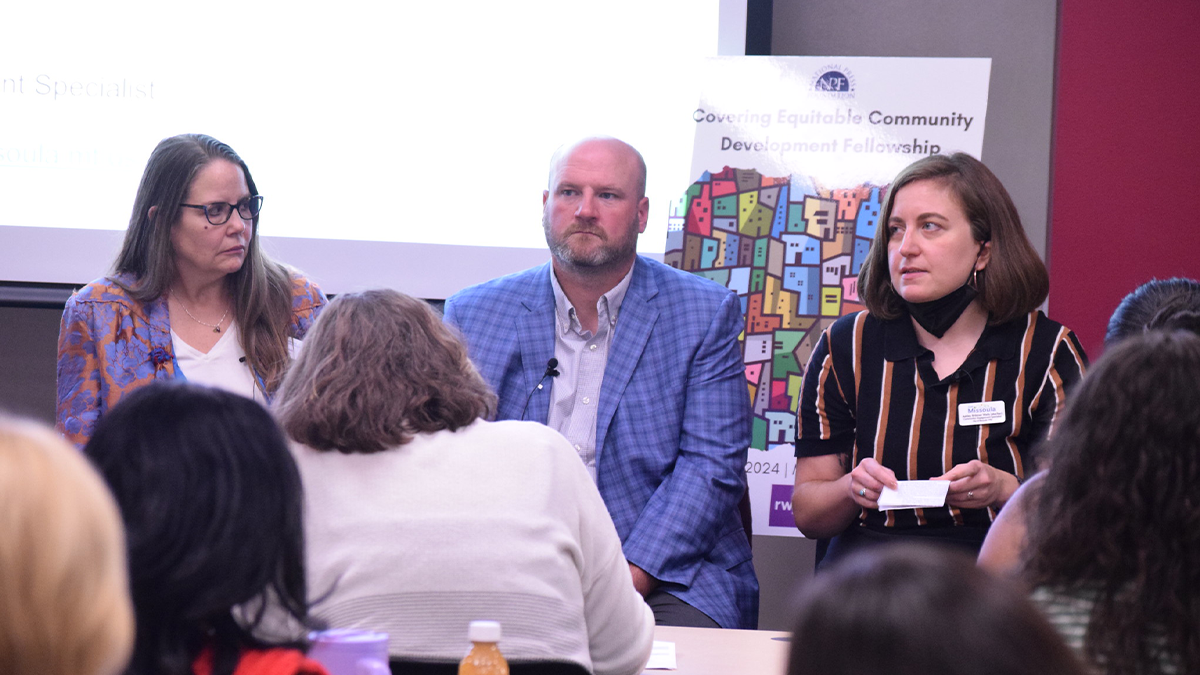
Jim Hicks, executive director of Hope Rescue Mission in Missoula, which he joined after 40 years of pastoral ministry, also spoke to reporters.
Hicks discussed the project Temporary Safe Outdoor Space, which provides 30 hard-sided, 100-square-foot shelters. The need for these shelters goes beyond mortgage rates and new construction.
“It’s older people, it’s disabled people, it’s people that are chronically homeless,” he said.
TSOS also provides:
- Daily peer support from staff with lived experience
- Private shelter
- Access to showers
- Hygiene items
- Care coordination with community resources
- Access to various outreach organizations for health needs
- Personal storage space for belongings
It’s necessary to be exposed to the problems in a community to truly understand what’s going on, Hicks said.
“If you don’t see a problem, you can’t name the problem. And if you can’t name the problem, you can’t begin to serve and help,” Hicks said.
It’s also important for journalists to shift the language around housing, according to Julie Pavlish, the operations and program director of Homeword, an organization that provides homebuyer education in Montana.
One example of such a language shift is saying “homes” instead of “units.”
“It seems like such a simple change, right? But who wants to live in a unit?” Pavlish asked. “We want to be in homes with our neighbors and that’s where we envision ourselves.”
Access the full transcript here.
The Covering Equitable Community Development journalism fellowship was sponsored by the Robert Wood Johnson Foundation. The National Press Foundation is solely responsible for its content.