Shortly after two of the most dramatic climate-related events in recent history occurred, journalist Rob Chaney had an important message for NPF Community Development fellows on October 10.
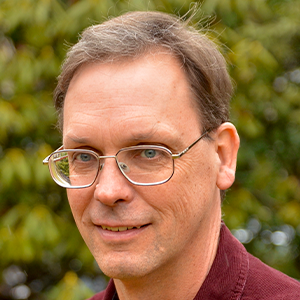
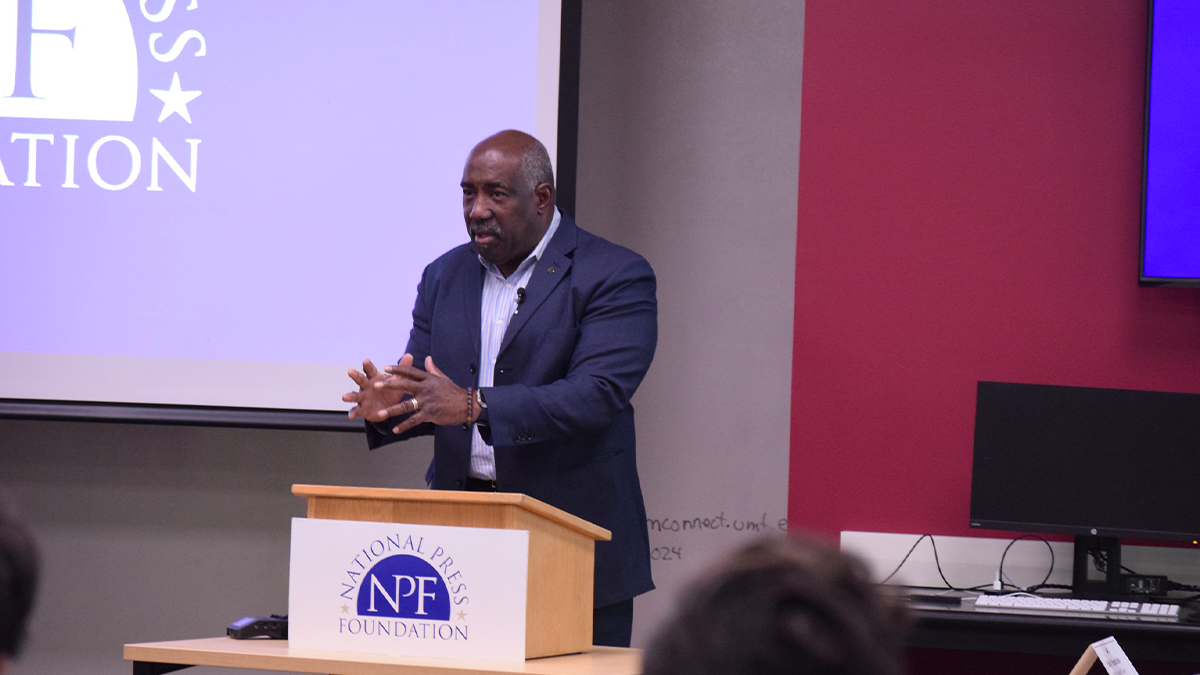
“We are all climate reporters. We are all science reporters,” said Chaney, a long-time Montana journalist, author and recipient of a 2024 NPF-NPCJI Kozik Environmental Justice Reporting grant. His session about covering climate change, the environment and renewable energy occurred one day after Hurricane Milton made landfall in a struggling region that was still crippled by the impact of Hurricane Helene two weeks earlier. Some communities that had long considered themselves safe from the disastrous impact of hurricanes were literally washed away, leaving policymakers, scientists and residents shocked and scrambling.
“One of the biggest things about climate change, about global warming is that it moves people. It literally, physically moves. You got to get up and get out of the way of the flood. You got to go find your house after the tornado came through,” Chaney said. So journalists reporting on the impact of natural disasters must also follow the long-range implications for communities.
“Hurricanes aren’t over the day after. Anybody in New Orleans knows how long Katrina is still a thing. As a health reporter, as a city government reporter, as a growth reporter, as a business reporter, the amount of just churn that you put through a community when you put a natural disaster like this on top of them is a years-long thing and it’s not something that’s all going to be settled in a city council meeting. It’s going to be settled in people’s sidewalks and their water systems and their health department clinics. It’s going to be all over the place.”
Chaney advised that topics like climate change and renewable energy are vulnerable to misinformation, and journalists need to know where to find accurate information. The following are key takeaways from his presentation:
4 Takeaways:
1. Look at the big picture, and find the root of the issues in communities
“Our ability, our superpower is to go and hear these people and then bring the bigger picture to them and see what they think about it,” Chaney said.
He explains that with climate change, it is imperative to actually find the root cause of these issues.
“You need to break these agencies and these institutions out of their silos and say it’s not all about what you see through the windshield,” he said.
2. The renewable energy story is a lot more complex than you might think
Chaney described the paradox faced by members of the Indigenous Crow tribe, who’ve been mining coal in Montana for the last 50 years. After many productive yields, tribal leaders are now reckoning with national and international economic forces that are moving away from fossil fuel. “So that translates to the loss or imperilment of nearly a 1,000 jobs on a reservation with only 8,000 people that were all tied to coal royalties all underwritten by having that coal mine functioning,” Chaney said.
Though options like wind and solar farms bolstered by federal infrastructure and economic stimulus plans seem to be the ultimate solution, Chaney cautioned that covering a community’s response to them requires a thoughtful approach.
“There’s a gigantic amount of inertia in old fossil fuel-related industries that even though they know it’s killing you, they know it’s poisoning the water, they know it is losing all of its clients, they know the whole world is trying to go green, they may have been affected by Milton and God knows what all else in the climate department – they’re still not really thrilled about switching over to this.”
It is also important to stay on top of climate change misinformation.
“The other thing you’ve really got to watch out with, especially in coal but in fossil fuels in general, is some massively expensive misinformation,” Chaney said.
3. Depend on reliable sources of information
Resources such as the Society of Environmental Journalists and attribution science can be extremely useful for journalists, according to Chaney.
Attribution science is when an extreme weather event occurs, and scientists research how climate change played a role in that event.
“It’s a really handy way when you have a localized disaster, a localized health issue that has a climate angle to just bring in the reinforcements to make your case,” Chaney said.
There’s also been a significant amount of research on the impact of catastrophic natural disasters and displacement of communities, he said.
“The impacts of Katrina were widely measured – where people went to, how long they stayed there, did they go back? Did they become permanent little New Orleans islands in Texas or Florida or somewhere else? So yeah, you can find that. You can also find that internationally, you look at various diasporas of Rohingya refugees, Kashmiri refugees, Palestinian refugees, Sudanese refugees.”
4. Stay informed about the way climate science is changing
Climate researchers have long relied on a term called stationarity to analyze climate activity, Chaney explained. In other words, armed with more than hundred years worth of climate data, researchers have been able to use that information about rain and snowfall to try and predict how much water will to flow into a reservoir behind a dam, for example, in order to help prepare for flooding.
But decades of weather data are quickly losing their relevance, Chaney said.
“Climate change has happened so fast and it’s so comprehensive that pretty much anybody who is making their day-to-day operations based on long-term climate data is SOL.” Without the ability to make predictions about when crops will bloom or where flooding will hit hardest, many sectors are affected,
“All of that is rattling through industries, agriculture, communities that are depending on things happening at a predictable time. And when you frame it that way, when you frame it as your cherry festival doesn’t happen at the time that you have always had … and the cherries aren’t there because the cherry is all frozen in January. You don’t even have to say ‘climate change.'”
Access the full transcript here.
The Covering Equitable Community Development journalism fellowship was sponsored by the Robert Wood Johnson Foundation. The National Press Foundation is solely responsible for its content.