There’s a general consensus about the role of artificial intelligence in re-shaping the American workforce. AI has created a significant organizational shift, comparable to the dot-com boom or COVID, and the result is widespread change and anxiety.
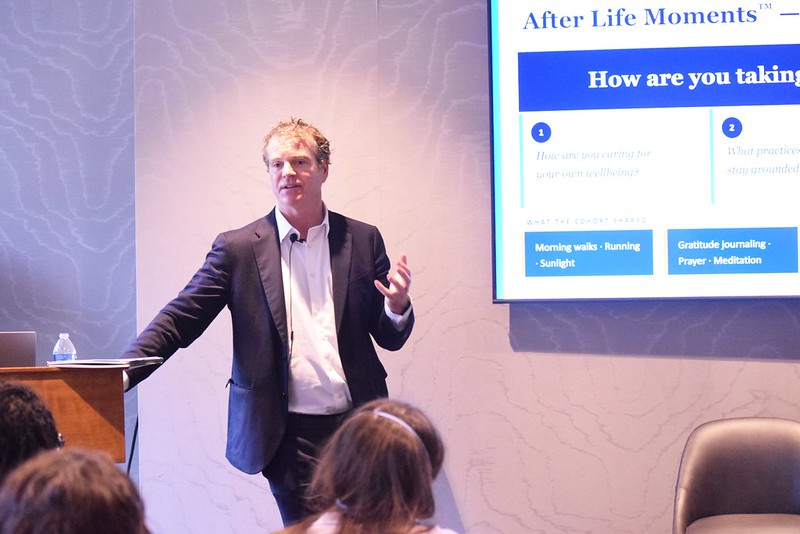
But journalists reporting on the impact must communicate the nuance and context properly. Covering Workplace Mental Health fellows received expert guidance on that topic from Doug Reynolds, executive vice president for product strategy and innovation with APTMetrics. His data-driven human resources firm helps clients connect with, assess, select, develop and retain their top talent.
Reynolds’s presentation explored how companies can move beyond AI anxiety toward positive organizational change. He believes managers play a big role.
“The rollout of AI, the transformation of organizations towards using AI is kind of a leadership crucible. It’s putting leaders to the test and it’s a situation where strong leaders are performing differently than other kinds.” Reynolds provided insights into the AI landscape in the American workforce through the following points:
- A study of senior executives and board members revealed a sense of personal insecurity and a reluctance to admit their lack of understanding about AI, leading to ambiguous guidance for their organizations.
- Organizations that focused on implementing AI technology without simultaneously developing their leaders’ capacity for managing change were putting themselves in a “risky quadrant.”
- Research indicated that AI-enabled tasks tended to benefit higher-skilled workers more, potentially widening the performance gap. Furthermore, employees’ trust in colleagues who heavily used AI tended to decrease.
- The practice of “algorithmic management,” where AI directs and surveils workers, was linked to the worst mental health impacts with little evidence of increased productivity.
- Automating the easier parts of a job could leave the remaining human tasks significantly harder, more stressful, and more reliant on high-stakes judgment.
Managers who understand the importance of effectively educating employees about implementing AI stand to gain the most benefits, Reynolds said. Leading with themes of greater efficiency and speeding up tasks can deepen insecurity and mistrust.
“They’re pushing it through as a technology initiative when in fact it’s as much a human initiative as it is a technology initiative that exposes this leadership gap that leaves them at risk.”
Access the full transcript here.
This program is sponsored by the Luv U Project, with associate sponsor the American Psychological Association. The National Press Foundation is solely responsible for its content.



 Reload document
 Open in new tab