Journalists covering mental health know that stigma around mental health issues has significantly decreased in recent years, and business journalists know that since the pandemic, workplaces are focusing on mental health like never before.
However, only one in four organizations has a formal mental health strategy, according to the Mental Health at Work Index by One Mind, a nonprofit promoting mental health best practices.
“That means three out of four [organizations] have a default mental health strategy, and that’s the most expensive strategy, because when you don’t pay attention to mental health and wellbeing, the cost to your people and the cost to your organization are unknown risks to you and not calculated,” said Kathy Pike, citing costs such as voluntary turnover, disability and presenteeism.
Pike is the CEO of One Mind, a clinical psychologist and psychology professor at Columbia University.
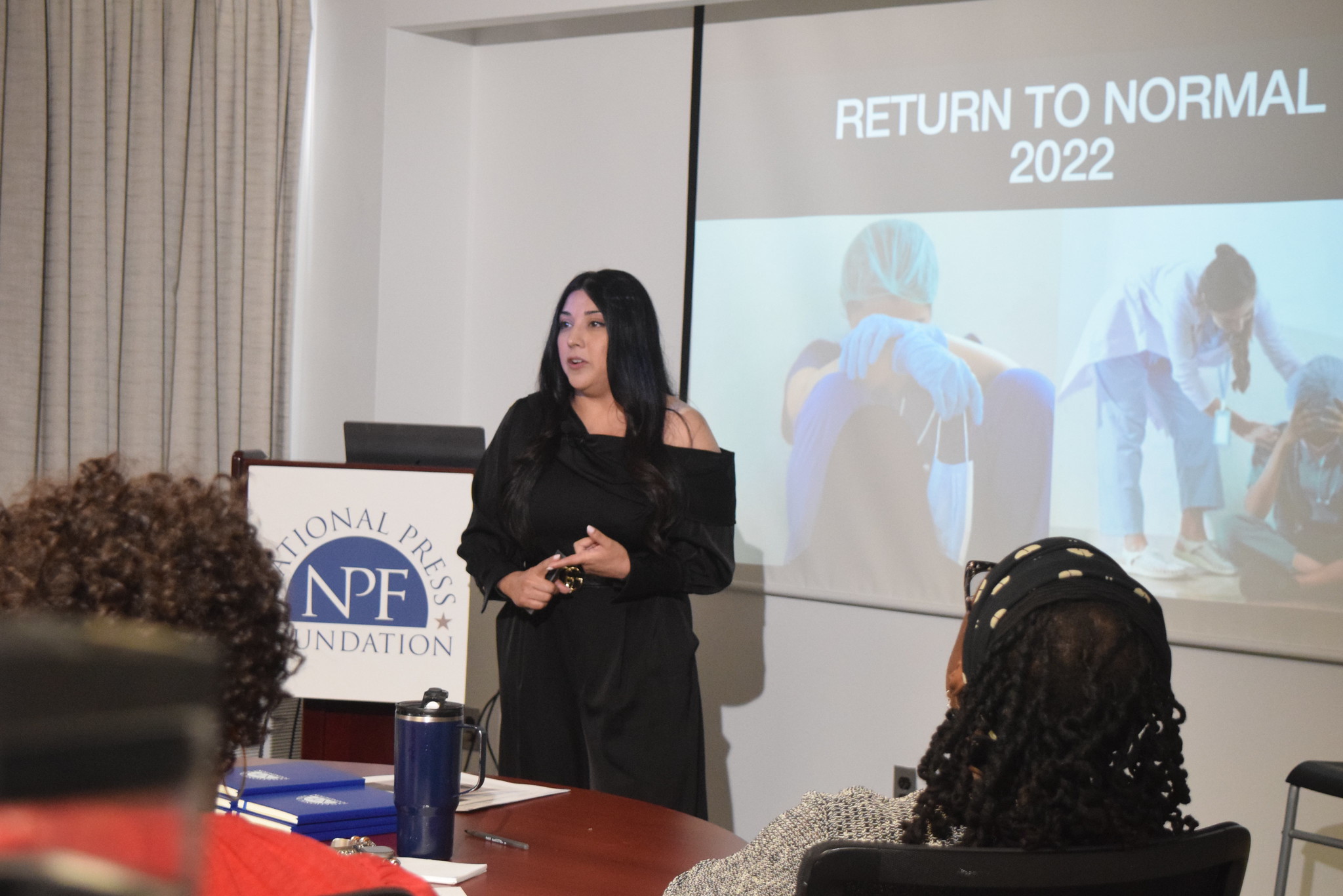
“Mental health in the workplace is no longer a perk – it’s a strategic imperative. And the data are very clear. If we want resilient organizations, we need to build environments where mental health is protected and promoted, not just treated. We need to go upstream,” Pike told National Press Foundation’s “Covering Workplace Mental Health” journalism fellows.
She framed going “upstream” as “the 3 Ps” employers should do for employees:
- Protect: “Reduce exposure to negative harms … or reduce the negative impact if you know that your workers are going to predictably be exposed to something that is emotionally very difficult.”
- Promote: Developing the positive aspects of work as well as worker strengths; “building skills and systems that enable … people to flourish.” This can include flexible schedules or resilience training.
- Provide: Providing access to information, resources and services … to address workforce mental health needs regardless of their cause.
“Provide” has been the biggest focus, with employers integrating EAPs and therapy coverage, for example. But to take a systems-focused approach, rather than individual, protecting and promoting are just as important.
“We will never, never have enough clinicians to care for the mental health needs of our workforce,” Pike said. “We absolutely need more providers. But alone, that strategy will not address the needs that we have in our society. The real opportunity for us, in terms of addressing workforce mental health, is in addressing how we do the work of work, because work is not working for too many people.”
Access the full transcript here.
The Covering Workplace Mental Health journalism fellowship was sponsored by the Luv U Project, with associate sponsor the American Psychological Association. NPF is solely responsible for its content.