In a society with so many cultures, religions and nationalities living in close proximity, Singapore’s government has long emphasized social cohesion. Those efforts have come into play in new ways over the past two decades as the city-state confronts ISIS-inspired security risks and now far-right ideologies and conspiracies.
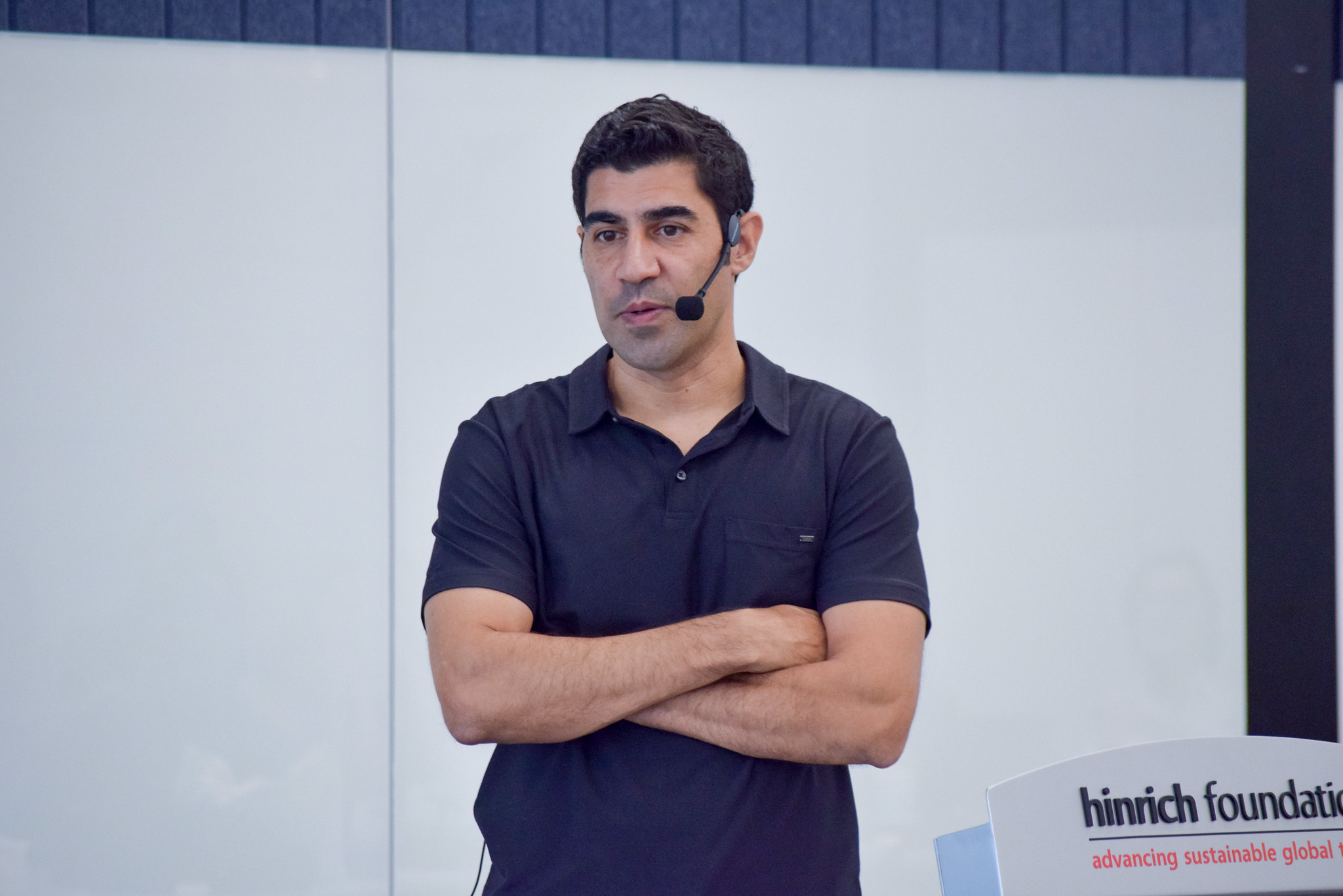
“If large numbers of one ethnic group are killed in a violent incident and the perpetrators are seen to be from the other, what do you do about it?” asked Shashi Jayakumar, founder of SJK Geostrategic Advisory and formerly of Singapore’s Ministry of Defense and Centre of Excellence for National Security. How do countries bounce back?
“Resilience is really at the heart of the terrorism response, not just arresting people,” Jayakumar told NPF International Trade Reporting fellows.
From JI to ISIS to Far Right
When a Jemaah Islamiyah terrorist plot was discovered after 9/11, dozens of men were detained and put through deradicalization, with many of them successfully re-entering society after several years. This is when Singapore’s Religious Rehabilitation Group was born, led by people from within the Malay Muslim community.
However, in pro-ISIS extremists, anti-terror efforts have become more psychological.
“For these younger chaps, religion might be the initial first few lines of code, but below that you’ve got issues with coping, the kin group, friends or indeed the normal – I wouldn’t say normal – but the processes that happen when adolescent goes through a tough period,” Jayakumar said. “For the most recent self-radicalized cases, clear emphasis on mentoring” can push them off a violent trajectory.
Jayakumar has noticed similarities between these extremists and those in the West.
“There’s a serious element not just of conspiricism but gamification as well. They draw succor and sustenance from the fact that they are in this online world. In a couple of cases, it’s been ROBLOX, and they shape their own pro-ISIS memes and imagery,” he said.
The right-wing extremists have all idolized Brenton Tarrant, the New Zealand Christchurch mass murderer.
“These are not mental cases. They’re deadly serious about what they wanted to do and in the first case, [he] was going to do an exact imitation of the Brenton Tarrant attack, which is against two mosques. The only difference is he couldn’t get the guns,” he said. “For a couple of the other more recent right-wing chaps – very, very young, willing … and keen to go and fight overseas for the white people in a race war.”
Pointing also to eco-accelerationists, antifa and incels, Juyakumar remarked, “We are all radicalizable.”
Disinformation Destabilizes World Security, Economy
Online disinformation plays a role, and Singapore has taken a stand against Facebook’s hands-off content moderation pivot with the Protection from Online Falsehoods and Manipulation Act. The Foreign Interference Countermeasures Act followed. In this way, Singapore has more teeth when economic players and businesses won’t work with counterterror organizations.
Singapore’s Cybersecurity Agency has faced numerous threats from criminal groups and even other countries. For instance, the most serious breach of personal data in Singapore’s history, the SingHealth attack of 2018, was attributed to a state-linked “advanced persistent threat” group.
“All the major hacks, it’s always a state actor,” he said, which can disrupt not only international security but international trade and the global economy.
“Disinformation and cyber threats – everyone’s doing it.”
This fellowship is part of an ongoing program of journalism training and awards for trade coverage sponsored by the Hinrich Foundation. The National Press Foundation is solely responsible for the content. All programs are on the record. Resources and transcripts are available to journalists worldwide.