When many people think about global trade, they picture cargo jets and container ships piled high with goods. But that picture misses the massive digital economy.
Data isn’t just information for a business or a journalist; it’s a commodity. While it is not rare – more data will be generated in the next three years than in all of human history, according to the Hinrich Foundation and Visual Capitalist – it is valuable.
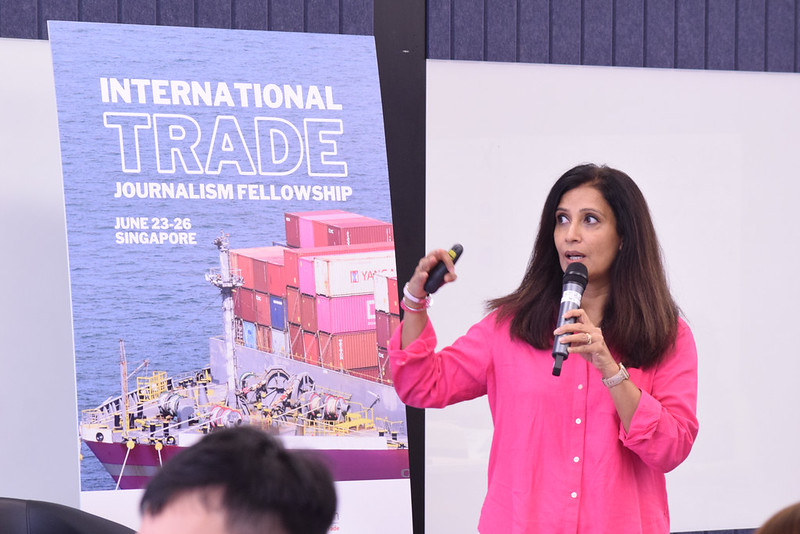
“Digital economy has grown as part of the approximate GDP of every single country,” Gareth Tan, a senior associate director at APCO’s Singapore office, told NPF International Trade journalism fellows. “Developing countries in particular have become quite territorial about data, which they view as a key strategic resource.”
This territorialism may soon lead to a major change. The World Trade Organization e-commerce moratorium, the practice of not imposing customs duties on electronic transmissions, which has been renewed every two years since 1998, may not be renewed at the ministerial meeting in Cameroon in 2026 as Indonesia, India and South Africa have voiced opposition.
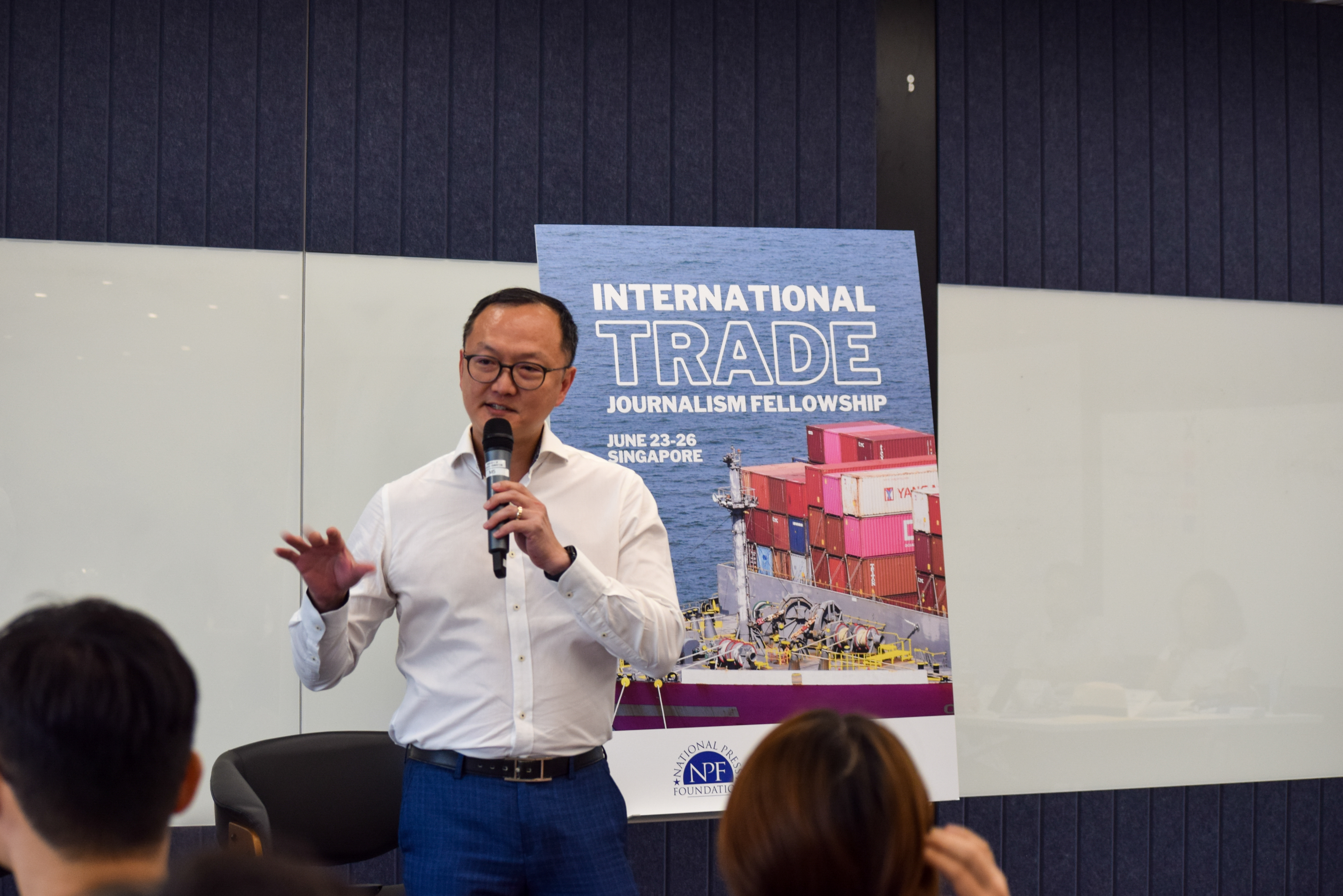
“Next year, it is almost certain that the moratorium will be ended, giving governments all over the world a free hand to – just as someone proposed a hundred percent tariff – to do exactly that or worse,” said Chuin Wei Yap, program director of international trade research at the Hinrich Foundation. “If the e-commerce moratorium goes away next year, your music is going to be tariffed; your movies, which you probably stream, are going to be tariffed; your software is going to be tariffed.”
In addition to having an impact on consumers, experts say it would be a hardship on small and medium-sized enterprises (SMEs).
“We view [the e-commerce moratorium] as something that small businesses know very little about, but which affects them very significantly,” said Tan, also a regional lead of the Digital Prosperity for Asia Coalition. “By implementing some kind of tariff on services, you’re creating enormous due diligence for small businesses in particular. Maybe large businesses will have the ability to overcome this because they have the resources, they have an army of lawyers, they have an army of due diligence people, but small businesses in particular have a real challenge with this.”
Digital goods count as services.
“The idea of that globalization is dead is a fallacy,” Yap said. “Globalization is alive and kicking – and is particularly so in the case of services. … In about five to 10 years, services as a driver of the global economy is going to be the most critical engine of global growth.”
Another potential change would be the passage of the Digital Economy Framework Agreement (DEFA), currently being negotiated among ASEAN members.
“There is a consciousness that the WTO’s moratorium may expire, in which case then there may be a need for some degree of regional safeguarding,” Tan said. “If there’s one thing that [Trump’s] ‘Liberation Day’ tariffs have demonstrated it is that small countries do need to find some recourse to being pushed around by larger countries. And in that context, DEFA potentially allows ASEAN to start functioning or operating as a more unified digital economy, allows it to have greater heft in negotiating with some of its larger trading partners.”
However, Yap says, Asia can’t decide.
“You don’t want to have a regulation of data and AI to the point where you can influence a country’s elections. Clearly, you don’t want to have that, but neither do you want to have regulations that will kill the technology companies that are driving the innovation of this one thing that is left in the global economy’s key drivers of growth,” he said.
Regardless, these agreements – or lack thereof – will have ramifications crucial for journalists to cover over the next year.
Access the full transcript here.
This fellowship is part of an ongoing program of journalism training and awards for trade coverage sponsored by the Hinrich Foundation. The National Press Foundation is solely responsible for the content. All programs are on the record. Resources and transcripts are available to journalists worldwide.




 Reload document
 Open in new tab