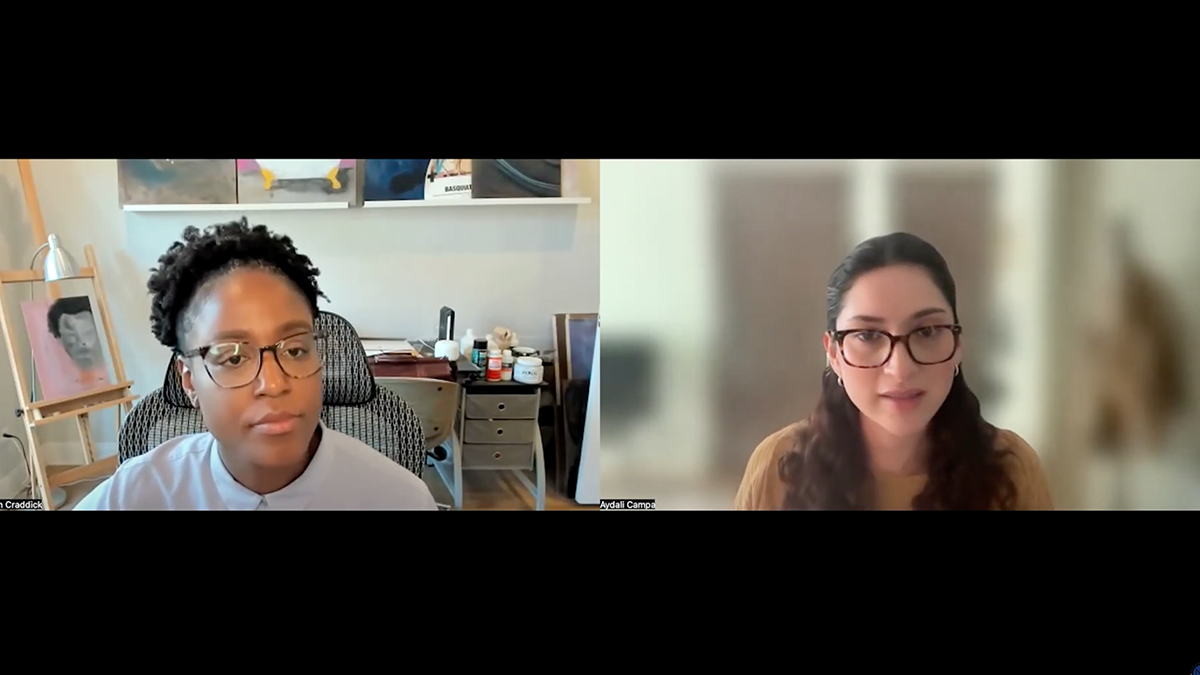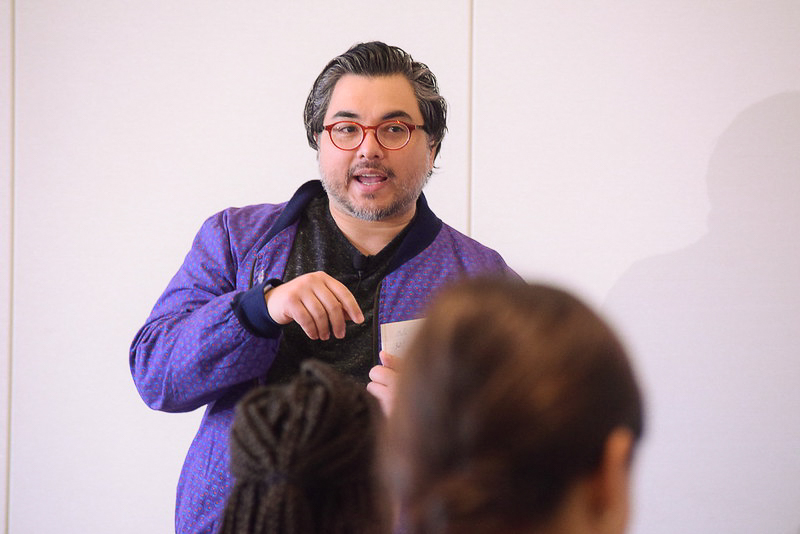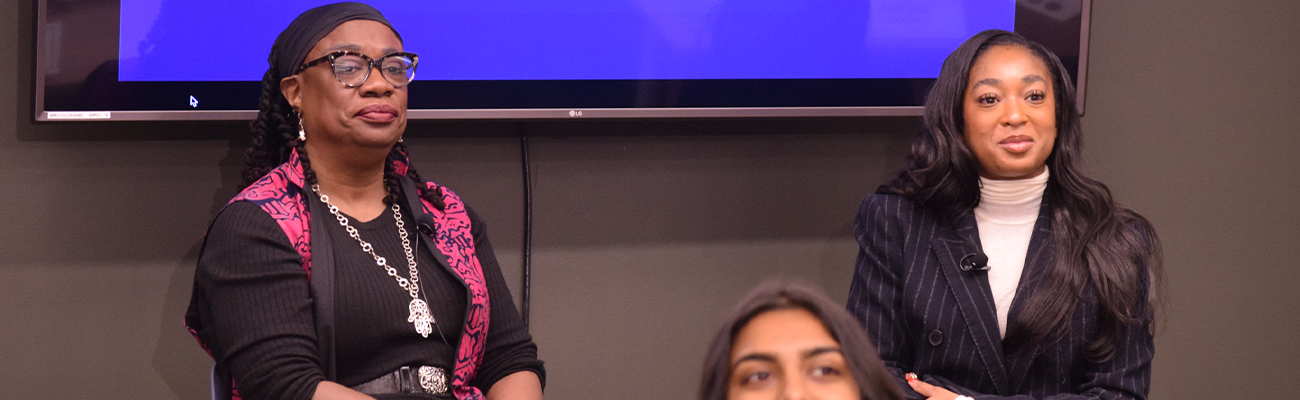
In many ways, audience engagement and innovation were coded onto news influencer Kelsey Russell’s DNA. Her mother’s side of the family were educators, her father’s side were entrepreneurs. Russell loved reading the newspaper growing up, so it’s no surprise that media would be part of her career. But her early ventures as a fashion influencer didn’t quite hit the mark.
Eventually Russell connected the dots of her social media engagement to the pursuit of media literacy, and everything clicked. She started recording TikTok videos as @kelscruss where she explained newspaper stories and talked about the importance of media literacy, and her content creator career exploded.
“When [people] go on TikTok, when they go to get their news on Instagram, it’s not always because they’re lazy. It’s not always because they want a shortened way to see something. It might be because they simply can’t read or the things that they are reading are really difficult for them to interpret. So I found that social media was this way for me to connect with people and make them more comfortable with journalism that they might not feel like they know how to interact with,” she said.
What began as an experiment has earned Russell a massive social media following. Russell has interviewed politicians, guested on high-profile venues like the Drew Barrymore Show, spoken at journalism conferences and cemented her cred as an influencer with big ideas about wooing Gen Z audiences toward credible news.
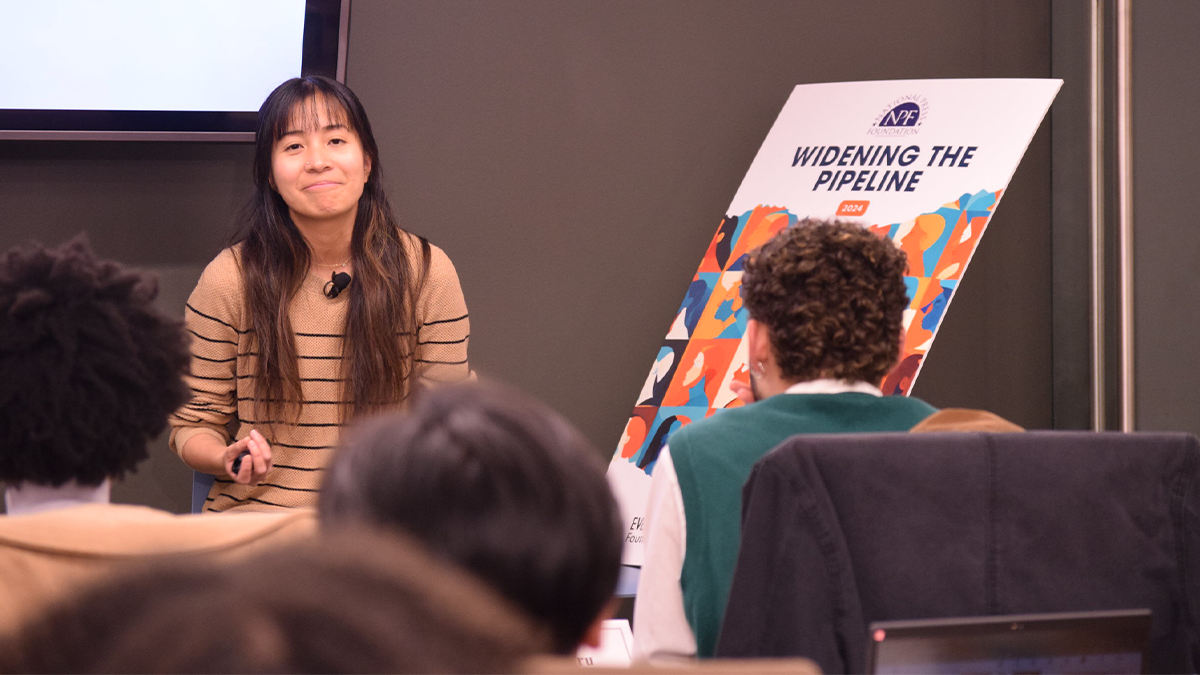
To launch the 2025 Widening the Pipeline fellowship program, Russell shared some of those ideas with journalists. Here are four key takeaways:
Content creators and journalists have to work together
While some media organizations see social media influencers as competitors, Russell says it’s time to get over it.
“In terms of branding and social media, and how to grow an audience, we all could just learn from each other,” she said. “While I think it’s important personally that people feel connected to the person that’s giving them information, I think this is kind of a scary place we’re in where people don’t know who to trust and how to trust. And I think the only way we can get over that hump is by working together.”
Think about the audience first
The first thing Russell thinks about when she’s reading is “Is this naturally interesting?” The next thing: “What does my audience want to hear?”
“What I am doing is if I see an article that is really interesting and I feel like would speak to my audience, I’m going to read it, annotate it, summarize it, and lead my audience to better sources if they want to know more,” she said.
Transparency builds trust
Russell said she frequently hears from followers questioning why a journalist did something a certain way and demonstrating severe distrust of the news media.
“The question that I often ask people when they say, ‘I don’t trust media’ is ‘Who are you talking about?’ … How do you trust somebody who you’re just seeing on your phone, but you don’t trust an institution?” she asks. “You’re not looking up the journalists, you’re not looking up their training.”
But expecting audience to do that work is a high bar. Journalists need to be better about telling their own stories.
“What if we could create a content world and an influencer world where we were able to use our platform to showcase what you all do, what would it look like if journalists in a way that has often been so shielded from the public do what they do? What if the public got to know why it’s important that you all have audience growth? What if the public got to know the training that you all go through? What if the public got to know what ethics you all are actually following? What if the public got to know if you all do have biases, I think we’re in this different lane of journalism where for so long journalism has happened behind a curtain. And that’s kind of why it’s been respected is that there is just this blind trust. And as we’ve seen, that trust has been broken.”
Russell said she’d like to see more newsrooms hire content creators and more content creators interested in what journalists do.
“How do we make journalism sexy? And I know it sounds silly, but if you scroll on TikTok or Instagram, you will see people doing ‘day in the lives’ of so many different jobs. And I want to see personally more journalists.”
Access the full transcript here.
This fellowship is funded by the Evelyn Y. Davis Foundation and the John C. and Ethel C. Eklund Scholarship Fund.



 Reload document
 Open in new tab