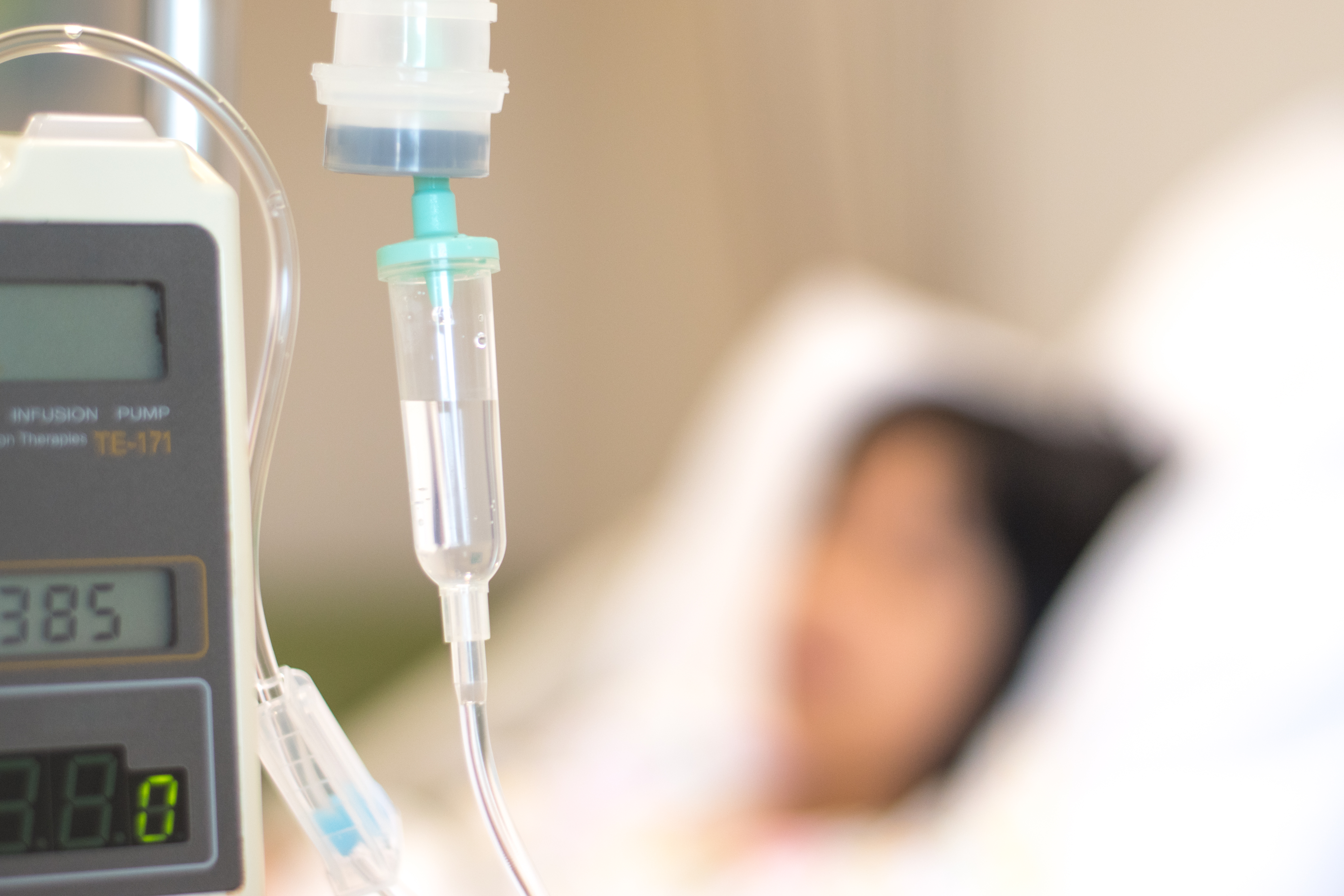
Between the first 24 and 48 hours of a baby’s birth in the U.S. healthcare system, they’re given a prick in the heel to draw blood that can be used to screen for rare diseases.
“Newborn screening saves lives,” Dr. Joni Rutter, the acting director of the National Center for Advancing Translational Sciences at the National Institutes of Health, told Covering Rare Diseases fellows. EveryLife Foundation’s chief policy and advocacy officer Annie Kennedy and Rady Children’s Institute for Genomic Medicine’s vice president Charlotte Hobbs agree but cautioned fellows that access is not equal for all babies. [Transcript 1 | Transcript 2 | Video 1 | Video 2]
5 takeaways:
➀ Newborn screening can prevent deaths and save lives. Rady Children’s Institute for Genomic Medicine and the University of San Diego received a grant from the National Institute of Health to study how much infant mortality was caused by genetic disease from 2015 to 2020, according to Hobbs. To do this, they performed whole genome screenings on 45 patients who died as infants. They found that 31% had a genetic disease that was not diagnosed prior to death – and that 57% of those genetic diseases have an effective treatment.
➁ There’s a state-by-state disparity in newborn screening. Although all newborns born in the U.S. healthcare system are screened for rare diseases, not all states screen the same. There are about 36 conditions on the federal panel, Annie Kennedy said, but some states screen for fewer than 31 diseases whereas others screen for more than 60 diseases. “This is a circumstance in the patient community that we often refer to as ‘death by Zip code,’ because for a condition to be added to the newborn screening panel, it has to have an intervention that is considered life-altering or lifesaving,” Kennedy said. Kennedy told a story of a pregnant woman who was living in Florida during the zika outbreak, but she moved to Illinois before her delivery. Her child was screened for and diagnosed with Pompe disease – a disease Florida didn’t screen for at the time. Within a week, her baby got treatment for Pompe and is now healthy. “That would not have happened in Florida because at the time Florida had not yet added Pompe to the screening panel,” she said. Check out what diseases each state screens for from the Health Resources & Services Administration.
➂ Rare disease patients experience a lengthy diagnostic odyssey. Despite the fact that rare diseases affect 10% of the U.S. population, and 350 to 400 million people worldwide, the ability to detect them remains stubbornly challenging, said Rutter. This process of obtaining a clinical diagnosis is called the diagnostic odyssey, and it can take years. But Rutter says the increased use of electronic health records may shorten the journey. The use of algorithms within databases may help streamline the process for patients who often see multiple clinicians in varying settings.
➃ Rare diseases are expensive. Genomic screening can help. A study conducted by the EveryLife Foundation led found that in 2019, the economic impact of living with a rare disease in the U.S. was a trillion dollars – and that was one year of cost, Kennedy said; 60% of those costs were incurred directly by families and society, she said. And many families face the agonizing reality of being denied coverage for rare disease treatments by their insurance companies. “One of the things we work on as a community is providing data and evidence to ensure that there is access to approved therapies,” she said. Newborn screenings can help prevent the financial burden of discovering illnesses early.
➄ The next horizon? Detecting rare disease when there are no symptoms. Hobbs said genomic screening should occur before babies reach the neonatal intensive care unit or the pediatric/cardiovascular ICUs, to identify molecular monogenic disorders among asymptomatic babies. Researchers at Rady have been exploring this realm over the past two years and have yielded a prototype that’s been published in three studies. “We also really want to think about how we can be part of a global initiative that is talking about using newborn genomic sequencing,” Hobbs said.
This program was sponsored by Fondation Ipsen. NPF is solely responsible for the content.




 Reload document
 Open in new tab