Incisive journalism has never been more necessary than in the run-up to the 2024 presidential election. To help prepare reporters for the challenge, the National Press Foundation invited public officials, civil rights advocates, election law experts and top journalists to multiple events in Washington, D.C., and Detroit this year to provide crucial guidance for covering an election of a lifetime.
Included here (jump to):
- The next Jan. 6
- Election cybersecurity
- New voting laws in your state
- How elections actually work
- Know your election officials
- Where community activists come in
- Michigan’s Secretary of State and Attorney General speak out
- Politicians of color face disproportionate threats
- Why you’ll want to talk to the women behind the scenes
- Where to go for state-specific information
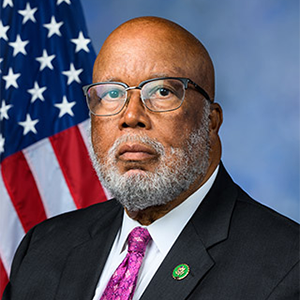
The legacy of the Jan. 6 Committee: Chair Bennie Thompson says panel’s work offers warning for 2024
No one event since the Civil War has underscored the fragility of American democracy than the January 6th attack on the U.S. Capitol. That the assault was launched by domestic insurgents remains an open wound for much of the country. As chairman of the House Select Committee, which investigated the origins of the assault, Congressman Bennie Thompson said “the one thing that became quite clear is it was all about former President Trump’s refusing to acknowledge that he lost the election.”
- Thompson does not believe there will be any incidents in D.C. this year but thinks there could be sporadic uprisings across the country.
Read the article | Watch the session | Quote from the transcript
Elections have never been more secure: Senior DHS official Cait Conley talks election security and finding truth in the chaos
The work to secure this election is deadly serious, and fewer are more familiar with the task than Cait Conley, senior advisor to the director of the Cybersecurity and Infrastructure Security Agency within the Department of Homeland Security. She leads CISA’s efforts to secure the nation’s far-reaching election system, in partnership with state and local authorities. It’s a huge task that includes fighting misinformation that threatens to undermine public confidence in the system while countering efforts by hostile nations to interfere in the process fundamental to our democracy.
- Conley encourages people to find the signal through the noise. People can trust state and local election officials, and this is the best way to find accurate information.
- CISA offers many nonpartisan resources, such as guidance about how to prepare for the election and a Rumor vs. Reality page.
- Former Homeland Security Secretary Jeh Johnson also told fellows that the 2020 election was “the most transparent and secure in the nation’s history,” but the fact that so many Americans doubt this indicates a serious threat to democracy.
Read the Conley article | Watch the session | Quote from the transcript
Read the Johnson article | Watch the session | Quote from the transcript
Know the rules of the road: A constellation of new election laws and the impact on 2024 vote
NPF gathered top voting law experts in an in-depth elections training in July – Sean Morales-Doyle, director of the Voting Rights Program at the Brennan Center Democracy Program; Michigan state Senator Stephanie Chang, a member of the State Elections and Ethics Committee; Ian McDougall, president of the LexisNexis Rule of Law Foundation in the U.S. Voting Laws & Legislation Center; and Michigan state Sen. Jeremy Moss, chairman of the Election and Ethics Committee – weighed the impact of new rules, from early voting provisions to dropbox requirements.
- At least 28 states have introduced new voting restrictions for this year’s presidential election, according to a Brennan Center review.
- LexisNexis also designed a tool to track the status of election laws.
- The Voting Rights Lab also provides a separate tracking tool. Liz Avore provided a walk-through on how to get the most out of the tool.
Read the article | Watch the session | Quote from the transcript
All elections are local: Understanding the mechanics of election operations
Our country’s far-flung network of local clerks and administrators make up the backbone of America’s election system. And with so much hanging in the balance, it is more important than ever that the public and the press understand how this crucial work gets done. For the past decade, Justin Roebuck has served as Ottawa County’s clerk and Register of Deeds, responsible for administering all elections in the county. Matthew Weil is executive director of the Bipartisan Policy Center’s Democracy program.
- Distrust in the voting system has been evident since 2020, Roebuck said.
- Public officials must push back against misinformation.
- “We have to understand how to communicate a message and how to get a message out to people in a way that they understand it,” Roebuck said.
Read the article | Watch the session | Quote from the transcript
Election coverage shouldn’t be a one-day assignment: Making elections a full-time beat pays dividends
For news organizations, presidential elections represent all-hands operations. This election, however, promises to test staffing limits and journalists’ preparation.
Pam Fessler, editor and correspondent at NPR who covered voting issues for three decades; Tina Barton, the former city clerk of Rochester Hills, Michigan, and a member of the State’s Election Security Commission; David Becker, executive director and founder of the nonpartisan non-profit Center for Election Innovation and Research, highlighted the increasing threats facing election administrators and urged journalists to build trusting relationships with election officials before the day of the vote.
- Election officials are under pressure and may be fearful of speaking to the press because of threats from members of the public.
- Fessler encouraged journalists to tour polling places and attend poll worker training classes in order to understand the election process
- Don’t just focus on the problems
- “There really are some heroic stories of people who not only run our elections, but who volunteer,” Fessler said. “There’s stuff going on all the time related to elections, and every single one of those offers an opportunity for stories.”
Read the article | Watch the session | Quote from the transcript
Civil rights advocates talk turnout
Without the support of civil rights groups, social and criminal justice organizations, communities and faith-based consortiums, political campaigns would be dead in the water. One of the strongest and most influential voices in Detroit, and the country, is Rev. Wendell Anthony. For the past three decades, the creator of Souls/Soles to the Polls, Rev. Anthony has served as president of the NAACP’s Detroit branch, the largest branch in the country.
- “Black men are not going to vote for Trump in numbers,” Anthony predicts.
- Project 2025 is a threat to a free press.
Read the article | Watch the session | Quote from the transcript
On the front lines: Michigan Secretary of State Jocelyn Benson and Attorney General Dana Nessel confront efforts to upend democracy
Election schemes and the inherent risks they posed were never more apparent than in Michigan in the aftermath of the 2020 election. Jocelyn Benson and Dana Nessel have been in the middle of it all. Michigan is one of four states to have pursued criminal charges against fake electors following the 2020 election, while also prosecuting the case related to the stunning attempted kidnapping of Gov. Gretchen Whitmer. Benson, meanwhile was a target of armed protesters who descended on her home following the 2020 election, calling on the secretary of state to launch audits and halt the certification of Biden’s statewide victory.
- Benson is implementing a “panic button type of communication” that allows election workers to immediately notify law enforcement and state officials of a threat.
- In Michigan, it is now considered a crime to threaten an election official in the line of work. Is that true in your state?
Read article on Benson | Watch the session | Quote from the transcript
Read article on Nessel | Watch the session | Quote from the transcript
Lawmakers, candidates of color facing mounting security threats
In a hostile, polarized political environment, security has increasingly become a major concern for incumbent lawmakers, prospective candidates and government workers, especially women and people of color.
Sadaf Jaffer, a former member of the New Jersey Assembly who left office amid a campaign of harassment and intimidation, joined Gowri Ramachandran, deputy director of the Brennan Center for Justice’s Elections & Government Program; and David Millard, chief of Threat Assessment and Criminal Investigations Sections for the U.S. Capitol Police to discuss virtual and physical threats. They outlined a growing and troubling threat – not just political threats to individual lawmakers – but to the process of governing.
Read the article | Watch the session | Quote from the transcript
The backbone of democracy: Women taking leading roles in election administration
Long a traditional gateway for women in government, elections administration is requiring more of its leaders – and women are increasingly taking top roles in state and local jurisdictions.
“For a long time, elections were perceived as very, very administrative, very paper-based … and so it was seen as an easier way for women to get into particularly local government,” said Amy Cohen, executive director of the National Association of State Election Directors.
Cohen joined Linda Lamone, a former longtime elections director in Maryland, who said she was most concerned about misinformation in 2024.
Read the article | Watch the session | Quote the transcript.
Thousands of statehouse races and dozens of ballot measures are up for grabs: The NCSL tracks it all
Martha Saenz, the Associate Director of the Quad Caucus and Women’s Legislative Network, an affiliate of the National Conference of State Legislatures, shared resources with NPF’s Covering Women in Politics fellows earlier this year. The non-partisan NCSL has long been a go-to source for comprehensive analyses of state elections – before and after the vote.
- Explore more NCSL election resources, including 50-state surveys on state laws, legislation databases, enactment summaries and more.
- Watch NCSL’s Elections Defined video series for a quick look at key steps of election administration you may not have heard of, from “ballot curing,” to voter list maintenance, to what it means to be a poll worker and everything in between.