While unsubstantiated claims of voter fraud remain the enemy of public trust in the 2024 election, local election officials have been combatting waves of misinformation for decades.
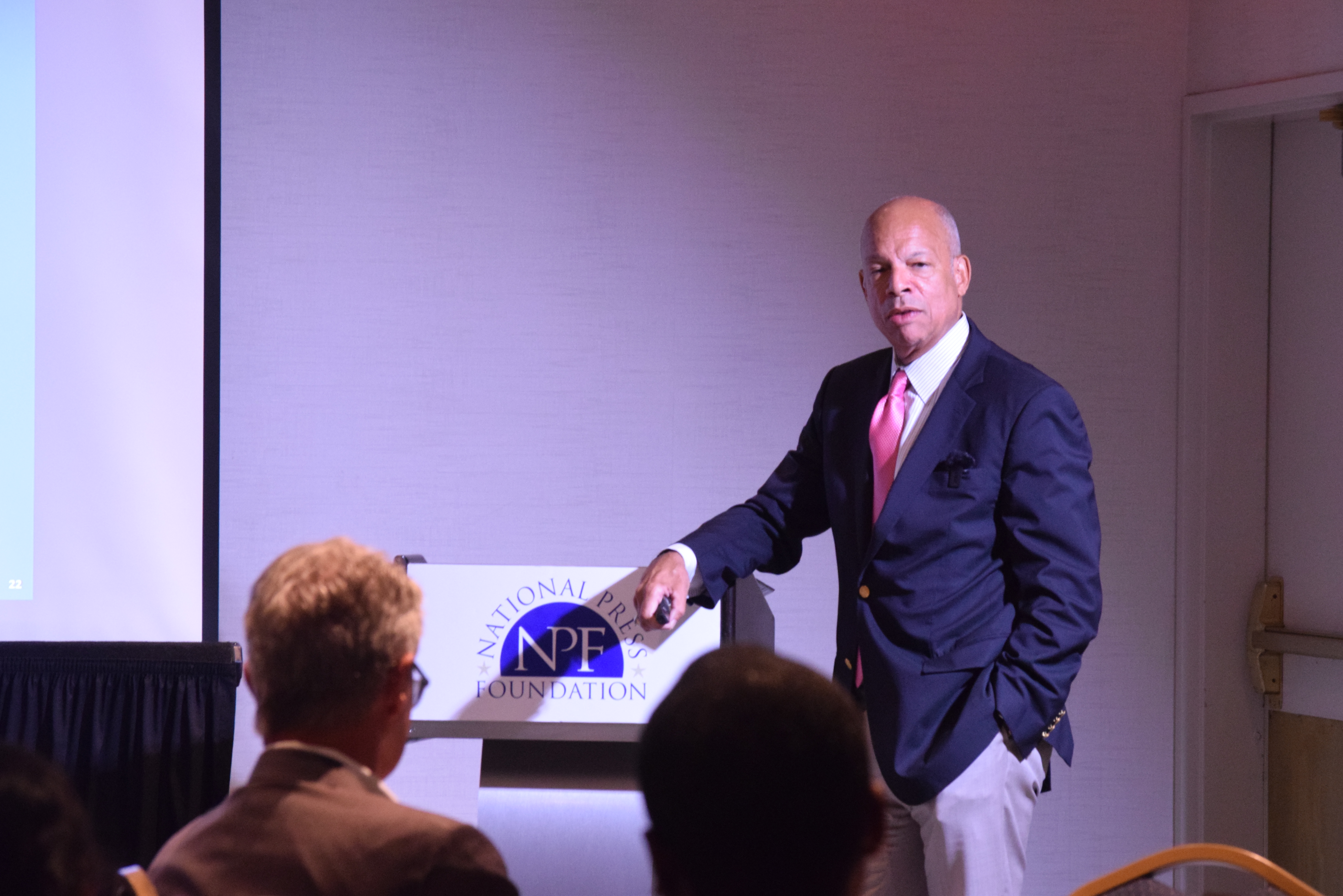
Justin Roebuck, the chief election administrator in Ottawa County, Mich., and Matt Weil, executive director of Bipartisan Policy Center’s Democracy Program, acknowledged that misinformation and recent reports of local election staffing shortages have stirred some uneasiness, but they told NPF Election fellows that administrators have long experience confronting those challenges.
What people get wrong about the state of election offices
The 2016 and 2020 elections were infamous for the number of voter fraud allegations even though they were declared some of the most secure elections in U.S. history. Still, Weil reminds journalists that people have worried over election security for decades. When voting systems made the switch from punch cards to electronic systems in 2004, there were similar concerns about inaccurate counts.
Weil also said that reports of turnover in the ranks of election workers have been somewhat exaggerated nowadays.
“Election official turnover has become a topic du jour for the press and for policymakers, a lot of it stems from 2020 and the threats against election officials – that’s a very real problem for sure,” Weil said. “It wasn’t just four years ago that this became a problem.”
Weil pushed back against the narrative that new election officials will be ill-prepared for this upcoming presidential election.
“Yes, we are seeing in some states a significant percentage of the election officials might be running their first presidential election this year for the first time on average across the country,” Weil said. “Sixty-five percent have experience during the presidential election and 35% don’t. That’s true. … But it’s a little misleading.”
Weil said that “new” in this context doesn’t necessarily mean “new to the job,” but rather “new to their jurisdiction.” He cautioned against painting a picture of an ill-equipped election workforce.
Misinformation affecting the job
Roebuck said that he can remember the shift that occurred in 2020 and seeing public distrust in the voting system grow.
“My community is a 67% Republican community, by the way. So we voted for President Donald Trump, 67% in 2020, and yet I was run out of town on the rails in my local Republican Party meetings for saying that I believe that Joe Biden won the state of Michigan, won the election,” Roebuck said.
Roebuck has encountered some of that distrust again when training new election workers, with people asking questions about whether absentee ballots really count or how to keep “illegals” out of the voting process. (It is against the law everywhere in the U.S. for non-citizens to vote.) These questions initially surprised him, but he now understands that people have been inundated with misinformation, and it is his job to answer those questions.
“We have to understand how to communicate a message and how to get a message out to people in a way that they understand it. We should not assume that the average person who’s paying my paycheck has the time to really understand the ABC verbiage of my field and dig into the realities of how elections work,” Roebuck said.
Journalists have an important task in this regard.
Access the full transcript here.
This program is funded by Arnold Ventures. NPF is solely responsible for the content.




 Reload document
 Open in new tab