On October 10, President Donald Trump threatened China with enacting a massive tariff hike over a dispute about rare earths exports to the U.S. It’s just the latest in a series of trade strategies from the current administration, and analysts are scrambling to convey the potential impact.
As these policies unfold, a central question is emerging for the 99 percent of American companies categorized as small businesses: What’s the endgame, and can business owners survive the twists and turns of geo-political trade strategy?
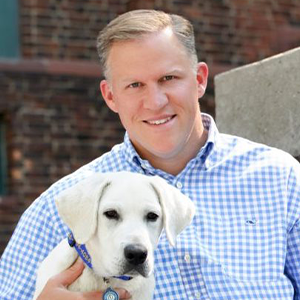
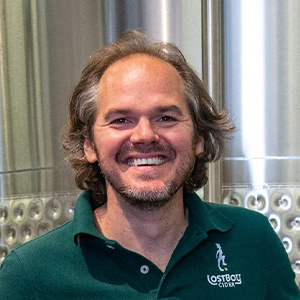
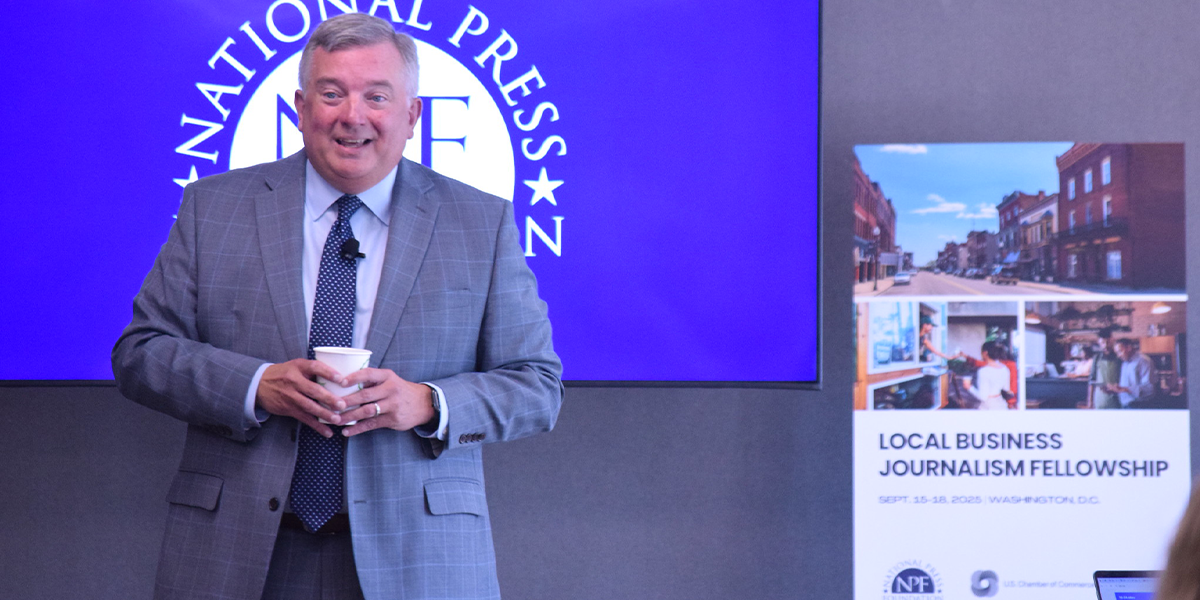
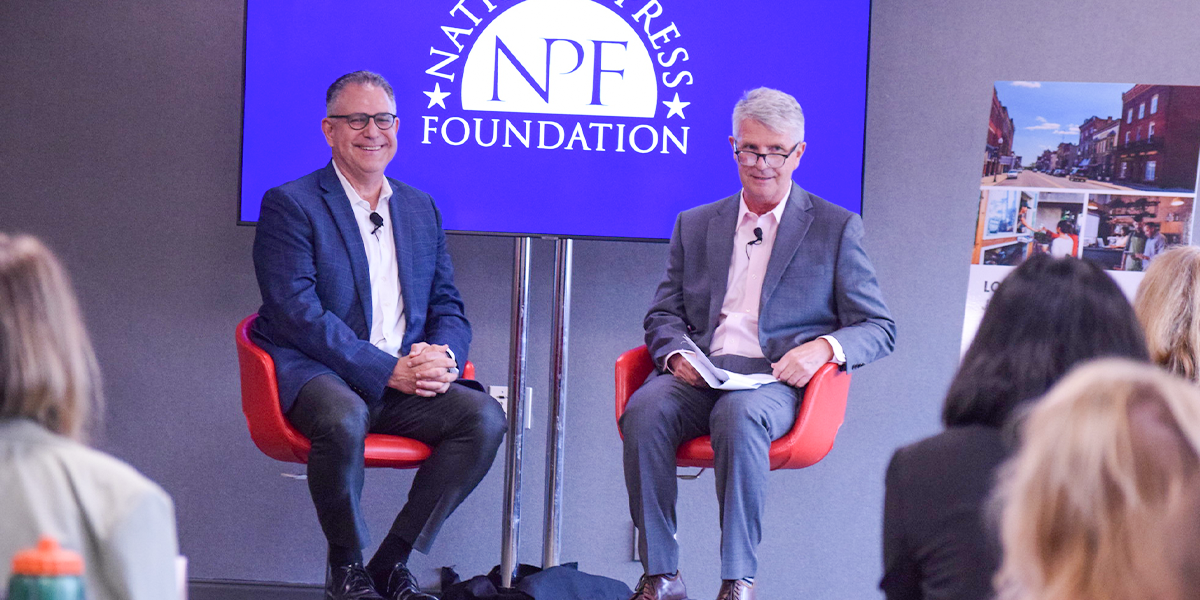
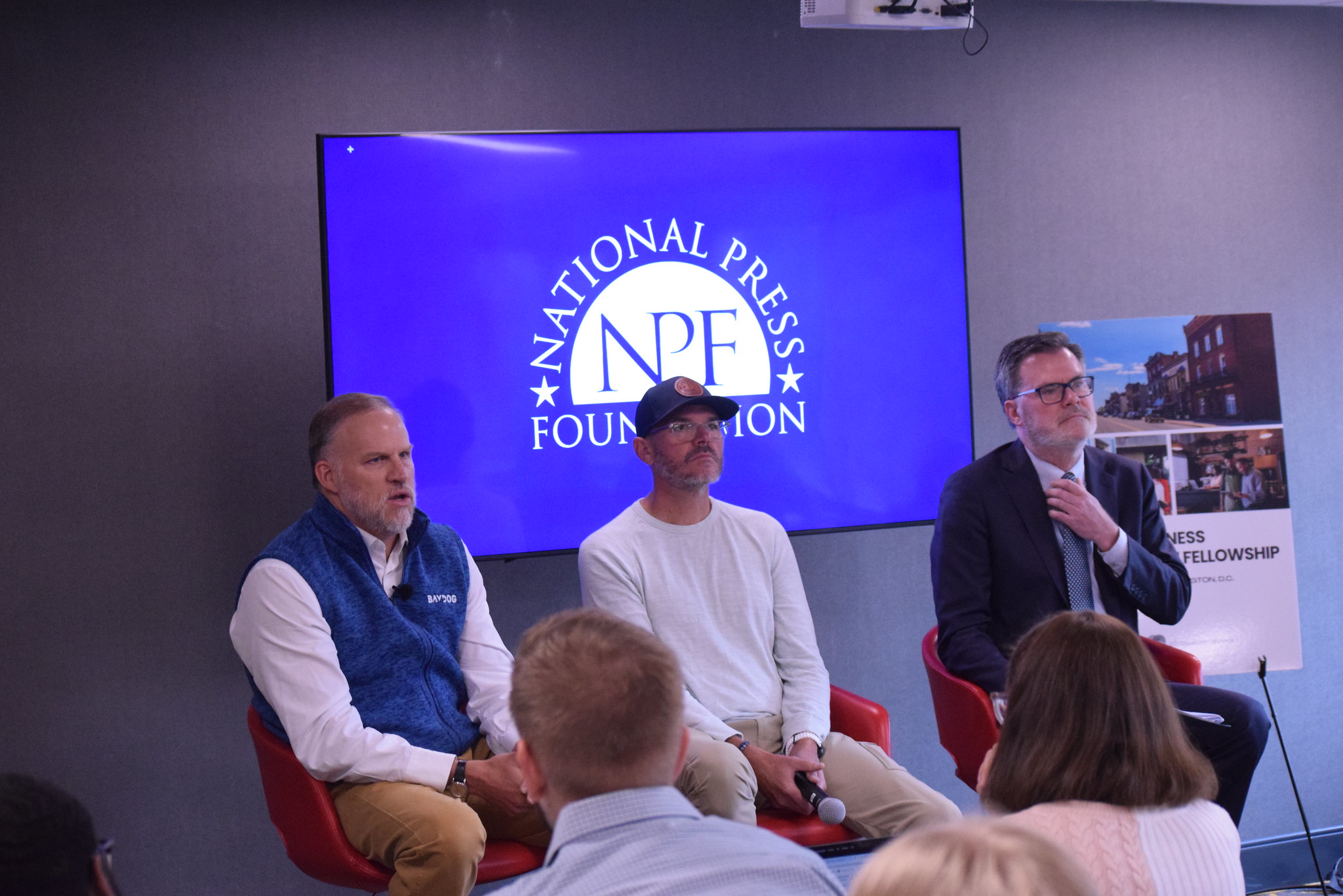
That was the focus of a session during the National Press Foundation Local Business Journalism Fellowship featuring Dennis Shea, former deputy U.S. trade representative and U.S. ambassador to the World Trade Organization (WTO), Tristan Wright, founder of Lost Boy Cider and Barton O’Brien, founder and CEO of the BayDog canine adventure gear company.
The following are highlights from their session:
Tariffs are a legitimate and necessary tool …
But Shea explained that decades of flawed trade policy led to massive deficits and the erosion American manufacturing capacity.
“We had a $1.2 trillion trade deficit in goods in 2024. We’ve had nearly a $20 trillion cumulative trade deficit in goods since the World Trade Organization was founded. And the view is that we are basically, as a country, financing current consumption by selling off our assets in the future, income from those assets. And that’s not sustainable, and it’s not in the interest of the national security of the United States. So that’s the key objective.”
Donald Trump made his intention to rewrite the rules of the economic order loud and clear in his bid to reenter the White House.
“I see the implementation of the Trump trade strategy is basically the fulfillment of a campaign promise. I mean, this was not something that he hid, this was sort of central to the campaign. During the campaign, he promised 10 to 20% baseline tariffs. He promised up to 60% tariffs on China, and he promised reciprocity in bilateral trade relations.”
Shea believes that while the tariff drama unfolds, there is somewhat of a bipartisan consensus.
“I think there’s a really a broad-based view within the United States among both Democrats and Republicans that the previous system, it was just not working as well as it should for the United States. And I think we’re not going to go back to a system, a multilateral trading system with the World Trade Organization, which I used to represent the United States at as the core of the international trading system.”
Tariff policies are creating crippling uncertainty for small business owners
Wright said his boutique cider company lives and dies by profit margins.
“I manage down to the penny what our margins look like and what our costs look like,” he said. “And then you look at aluminum costs, where I could get a phone call from our aluminum supplier and say, ‘your costs have just gone up 27%,’ which we received a year ago before the current presidency took office.”
Foreign-made aluminum and steel faced tariffs in the first Trump administration, under Biden, and saw increases from Trump again in March and June of this year.
Another uncertainty: migrant labor.
“Guess who picks all our apples? … They come up here on a visa and guess who doesn’t want to be in America right now,” said Wright. “In many businesses, they do all the labor and the work that I literally can’t afford to pay anybody to do. My priorities the last 16 months have been really two-fold: manage my expenses and increase my cash position and sit on the sidelines anxiously and await the next bad thing to occur.”
Supply chain changes take time
The business owners said it’s impossible to reshore quickly enough given the lack of U.S. manufacturing infrastructure, the time it would take to build it and the volatility with which policies are changing.
As Trump’s tariff intentions unfurled ahead of the 2024 presidential election, O’Brien researched possible outcomes.
“I borrowed as much money as I could. I advanced all of my factory runs by several months … so we actually filled our warehouse with well over a year’s worth of inventory. I actually had to rent a container and put it out back, and we filled that full of dog life jackets. I had dog life jackets in our bathrooms. We have a ton of inventory, and so I have yet to pay a tariff,” he said. “But me borrowing money and advancing is different than rerouting a supply chain.”
While he was able to prepare for a short time, he believes businesses and consumers will start showing more pain over the next months and beyond.
“Fifty percent – that’s not a tax. That’s more of an embargo, right? Very few people can pay a 50% tax and stay in business viably. What can you do in that environment if you’re dependent on a global supply chain, which almost all big businesses are,” he said. “I haven’t raised my prices. Ford Motor Company said they haven’t raised their prices yet, but they’ve paid hundreds of millions of dollars in tariffs, and they’ve gone into the red. … Everybody’s raising prices. I talk to pet store owners all across America, every day they’re seeing toys and treats and food, and everything across the board is going up and it’s really hurting them, and they’re seeing a change in consumer behavior. So I think the longer this persists, the worse it’s going to get. And once we get into the holiday season, you’re really going to start to see it.”
Access the full transcript here.
This fellowship is sponsored by the U.S. Chamber of Commerce as part of a journalism training and award program. NPF is solely responsible for its content.