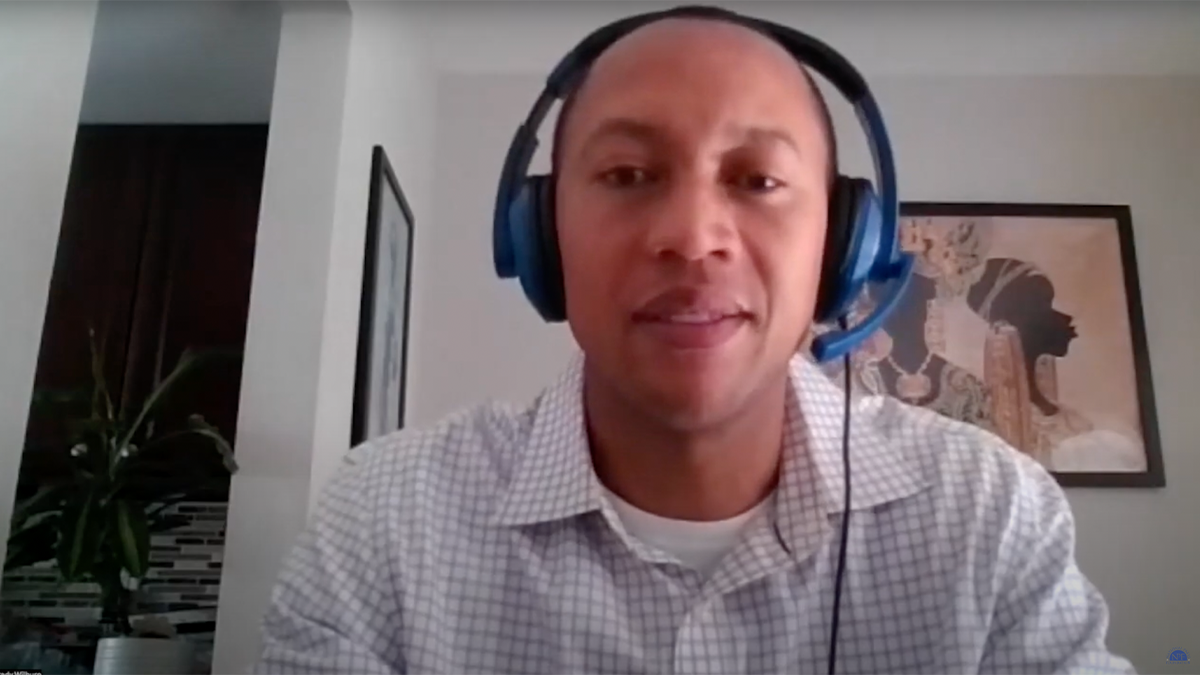
In January 2023, the American Academy of Pediatrics announced new, comprehensive guidelines about the treatment of childhood obesity, urging an earlier focus and more aggressive treatment that includes drugs and even surgery in some cases. But as some American parents may worry about too much-processed food or too little movement beyond the PlayStation screen, other families struggle with lack of access to quality food and or safe places for children to exercise or play. Dr. Roy Kim, the head of pediatric endocrinology at the Cleveland Clinic, outlined some of the social factors that can increase children’s likelihood of obesity, for Future of the American Child fellows and explored tackling the issue from an equity and public health perspective. [Transcript | Video]
5 takeaways:
➀ Obesity goes beyond lifestyle choices.
“If we think about the problem of obesity, you can study its biology and how brain signaling works and the impact of having a lot of adipose or fat tissue in the body,” Kim said. “But to really address it at a large scale and at the level of public health, you have to think about factors such as economics, access to grocery stores, safe places to play, even things like food policy and having PE class in school and education about a healthy diet.”
Diets only work if they are sustainable in the long term. “There’s not a single diet that is more effective than others,” Kim said. “And if the diet is too structured, they’re hard to sustain. We do know that adding exercise to a healthy diet is more effective than a diet alone or exercise alone. We do know that things like reducing sugary drinks and lowering screen time are worthy objectives and effective.”
➁ Obesity disproportionately affects lower-income households.
Highly processed foods are a good option for families without time to prepare meals with fresh ingredients, which can often be expensive. Some families live in food deserts, where it is difficult to access grocery stories with fresh foods. “Food swamps” include places to purchase food, but those places are fast food restaurants and convenience stores instead of grocery stores.
“The fundamentals” of making lifestyle changes rest on “having a stable social environment,” Kim said. Clinicians sometimes connect food-insecure families with social workers before proposing any treatments related to obesity.
➂ Obesity has wide-ranging effects.
Health-wise, obesity can lead to high blood pressure, high cholesterol, heart disease, diabetes and many other problems. Financially, for a child aged 10, obesity adds $19,500 over their lifetime. Obesity adds between $116 and $310 per year per child in medical expenses. However, these are only “direct costs” and do “not capture the full implications of things like missed school or missed work for a parent,” Kim said.
➃ Stigma hinders progress.
“There is the…school of thought that blaming an individual or … holding a child accountable for their obesity will motivate them to change,” Kim said. “In fact, it can have the opposite effect. It may cause a person to withdraw and actually not seek out treatment or be afraid of trying to make change.” Clinicians avoid using the term obesity with clients, even though it is the medical diagnosis because the term can make patients feel judged. Other terms like “high BMI” or “high body weight” can be less triggering.
Stigma can perpetuate a cycle of negative behaviors. Some children want to be homeschooled because they are bullied at school for their weight, but by doing so, they miss out on structured mealtimes, gym classes, and simple activities like walking around school. “Some of our kids have requested things like a note excusing them from gym class because it’s hard for them, and that will just make things worse,” Kim said. “So we try to meet them where they are. Start with very basic and seemingly simple requests for physical activity. In some cases, things like checking the mail or walking up and down the stairs or helping with household chores.”
➄ Prevention is the best treatment.
When children do develop obesity, the next strategy clinicians take is to “prevent future complications” and slow the worsening of obesity, if they are unable to totally reverse it, Kim said.
But the best strategy begins before birth. Encouraging expecting mothers to manage healthy weight gain and breastfeed, setting diet goals for children, limiting screen time and promoting active play are all strategies to set children on a healthy path and reduce the risk of obesity. “A lot of things that just occur naturally in children who aren’t in online school and who have a safe environment, we’re trying to make more concrete and deliver that message to everybody,” Kim said.
This fellowship is funded by the David and Lucile Packard Foundation, the W.K. Kellogg Foundation and the Heising-Simons Foundation. NPF is solely responsible for programming and content.