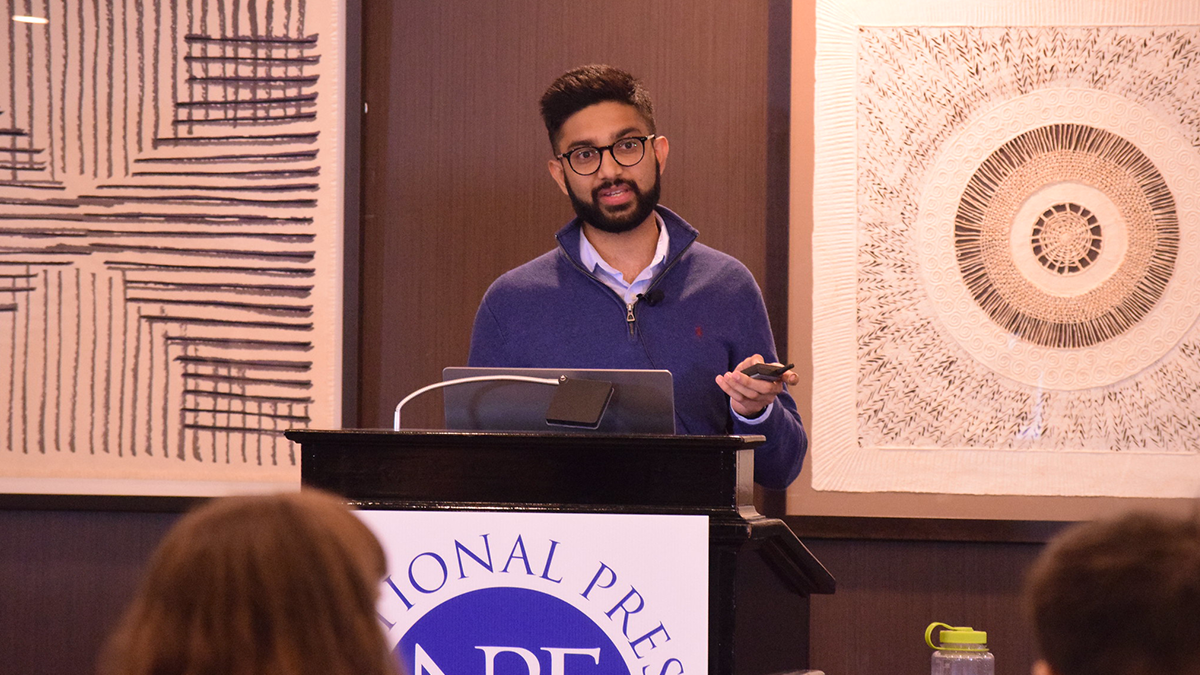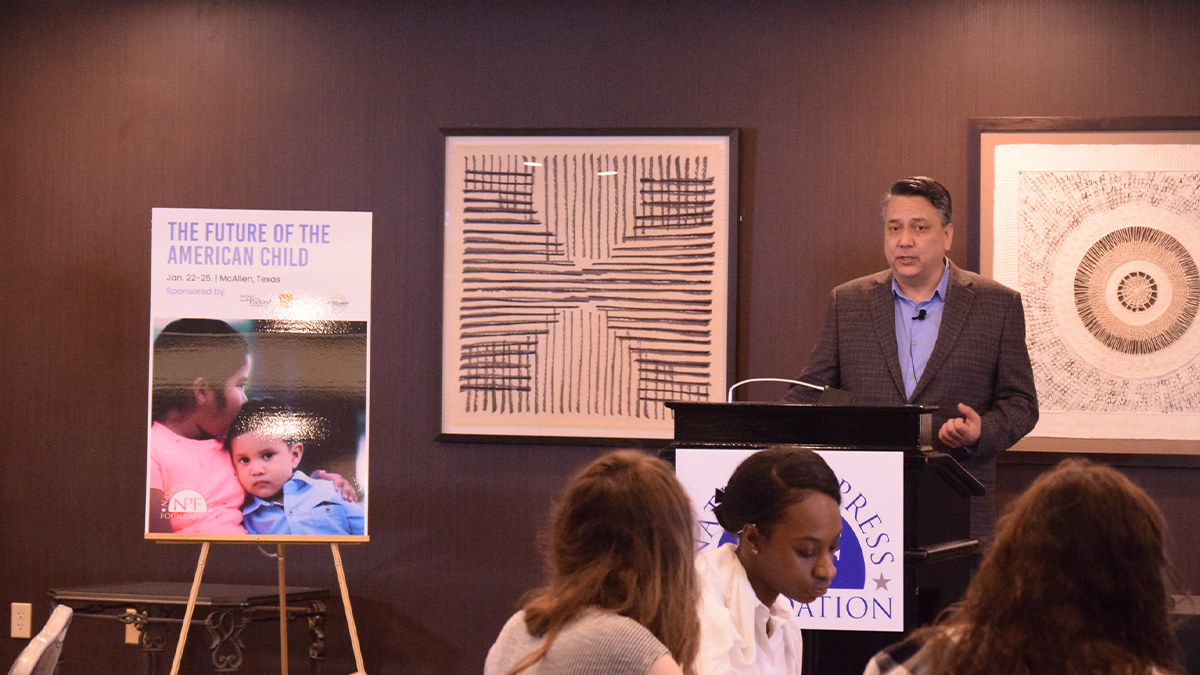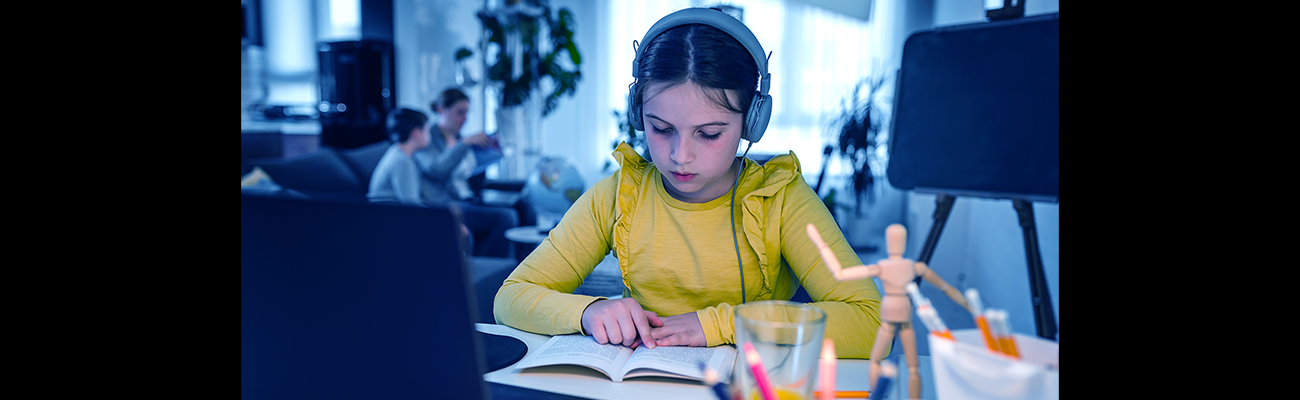
When historians analyze the impact of the COVID-19 pandemic, one primary focus may well be on education. Pivoting to remote learning created unforeseeable challenges that were exacerbated by issues of poverty and lack of access to the Internet for many students. That reality was captured in the National Assessment of Educational Progress (NAEP), which contains data collected by the National Center for Education Statistics (NCES). Grady Wilburn, a research statistician with NCES, broke down the data from the Nation’s Report Card with a group of NPF fellows in McAllen, Texas. [Transcript | Video]
5 takeaways:
➀ Math scores were most affected. Fourth grade students dropped five points from 2019 to 2022 and eighth grade students dropped eight points from 2019 to 2022. “[Those are] the largest drops we’ve ever seen,” Wilburn said. But because the upper score could hiccup up or down, Wilburn said it’s important to carefully examine another measure, too. “When you pull the data apart and look at percentiles, you can get a different story,” he said. Within this dataset, there are declines across percentiles, but they found larger declines for lower performers at grade four. “School closure between 2019 and 2022 seems to have maybe impacted those lower performers more than the higher performers in grade four math,” he said.
➁ Reading scores declined too, especially in females. The overall reading score declined by three points in both grade four and grade eight students in 2022. But an achievement gap was created because the drop by males wasn’t as fast as the drop by females – a four-point drop in females in both Fourth and Eighth grade compared to a two-point drop in fourth grade males and a one-point drop in eighth grade males. “And so that’s the story that hasn’t gotten the attention,” he said.
➂ English learners in eighth grade improved compared to 2019. While other groups declined in their reading score, the 2022 score went up four points for Eighth grade English learners. “This is a bright spot, if you will,” Wilburn said. There’s only a hypothesis for why this happened, but some believe it’s because English learners were less likely to be pulled out for special one-on-one focused interventions due to school shortages. Advocates who have always pushed to keep English learners in regular classes were somewhat vindicated. However, Wilburn said it’s never just one thing that causes something like this to happen and encouraged journalists to dig into this data.
➃ Available resources made a difference. “We asked ‘when you were learning at home, did you have access to a desktop computer, a laptop or a tablet all the time?’ ” Wilburn said 91% of higher-performing students said yes, while only 70 percent of the lower-performing students said yes. Other data showed that the higher-performing students were more likely to have a quiet place to work, have a teacher available to help at least once or twice a week and to have participated in real-time video lessons with their teacher almost every day. Wilburn also noted that the survey section asked about parental education. As compared to students whose parents had advanced education, students with parents who had some college, high school or less struggled, he said. Researchers think it’s because those students were more likely to have parents who had to leave the house to go to work leaving them without additional learning support, he said.
➄ Lower scores don’t have to mean educational doom. “The way the scores went down over three years, I’m optimistic that the scores can go up in three years to the same extent,” Wilburn said. That potential rebound could be fueled with things like summer school, extending the school year or high-dosage tutoring, he said. Also, Wilburn said that increased mental health problems and bullying during COVID have not gone unnoticed by policymakers. He believes there will be increased efforts to identify the students who need interventions, and that money and resources will be channeled to where they could have the biggest impact.
This program was sponsored by the David and Lucile Packard Foundation, the W.K. Kellogg Foundation and the Heising-Simons Foundation. NPF is solely responsible for the content.