Access to quality health care is a major concern for communities across the nation. Throughout the decades, policymakers, business leaders, philanthropies and community advocates have all proposed potential solutions, with varying degrees of success. Where do the residents come in?
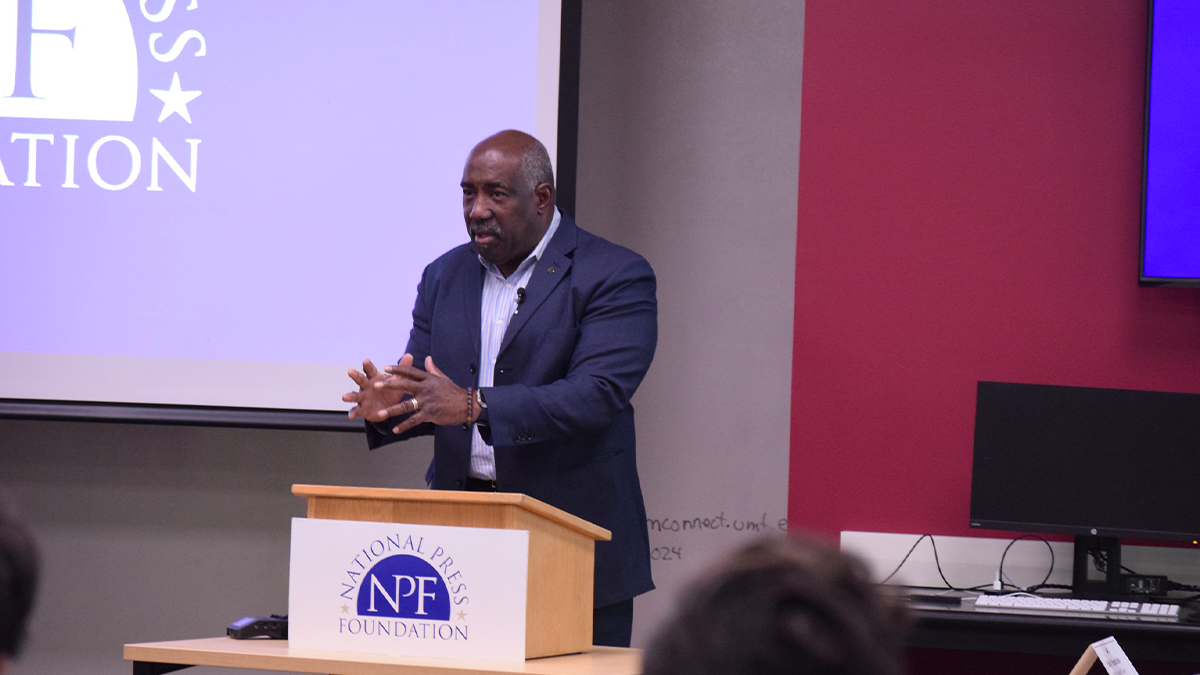
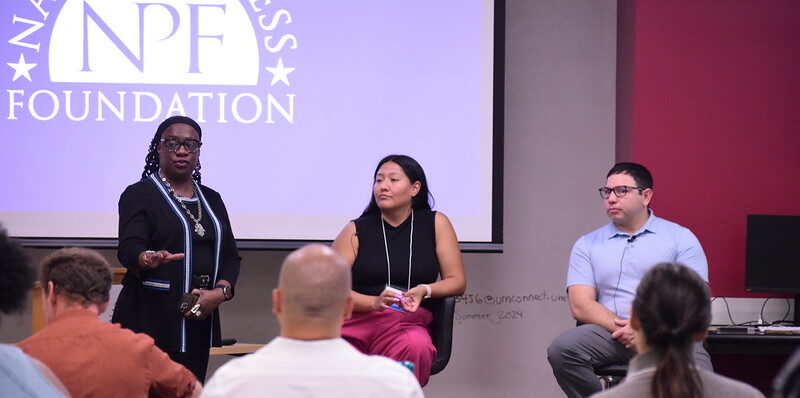
The Missoula Health Initiative is resident-driven in its focus on equity and leverages partnerships within the community, Lisa Beczkiewicz, a health promotion manager and Missoula Invest Health team leader at the Missoula Public Health Department told journalists in NPF’s Covering Equitable Community Development fellowship.
(Invest Health is a collaboration between the Robert Wood Johnson Foundation – which sponsored the fellowship but did not make decisions about speakers, content or curriculum – and the Reinvestment Fund focused on mid-sized American cities.)
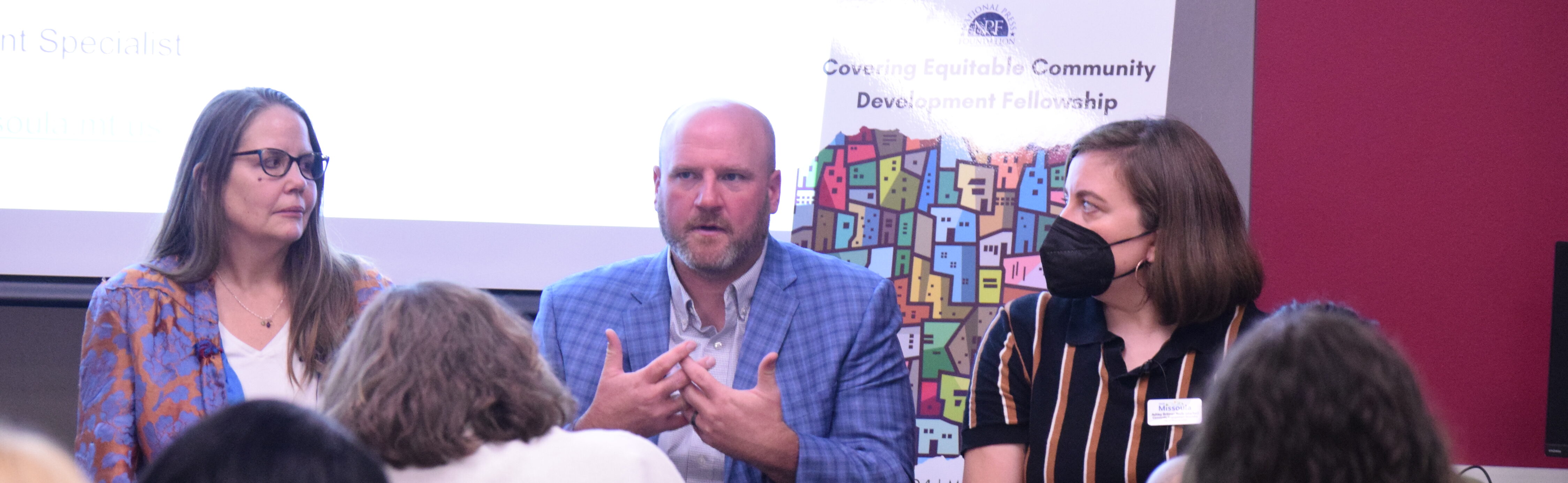
Missoula City Council member and former Missoula Housing Authority board member Mike Nugent and City of Missoula community engagement specialist Ashley Brittner Wells also spoke to reporters. Here are key takeaways from the session:
5 Takeaways:
1. Have the tough conversations with residents
Beczkiewicz encouraged journalists and officials to prioritize being fully transparent about the goals of initiatives with residents.
“[Take] the I out of the conversation and [bring] in the we,” she said.
Beczkiewicz referenced the Invest Health initiative’s actions to create more sidewalks and how not everyone initially embraced the project.
“I’ll never forget, one lady came up to me … and said, ‘I really didn’t like you when you came in and told me you were putting a sidewalk right in front of my house, but now I get it. And I really do want to help the kids and the people that are in wheelchairs and it’ll be good for everybody,'” Beczkiewicz said.
Residents also know what their communities need much more than analysts or policymakers.
“[Work] with the residents as leaders in their neighborhoods, because they’re really the experts of what works for health within their neighborhood settings,” Beczkiewicz said.
2. Tell the story of the community
“Tell the story … from the perspective of folks that are actually living it,” Wells said.
It takes a long time to do this, Wells explained, but it’s a necessary strategy to understanding a community’s needs.
“It’s not journalist’s job to help me get my message out, but I think that it’s to help tell the story of the community,” Nugent said.
3. Use visuals
One strategy that Beczkiewicz praised as an effective way of sharing data and assessing needs was through mapping neighborhood assets and outcomes.

Beczkiewicz worked with Missoula County GIS manager, Mike Snook, to create this map, which helped those working on the Invest Health initiative to relay information from residents about where they thought improved sidewalks would help them access care.
This allowed the initiative to take steps to apply for grants and figure out how to implement these sidewalks.
Visualizations are effective, and journalists can use them when telling the story of their communities.
4. Avoid extractive journalism
“Part of my job is to help build relationships and trust with folks that we haven’t necessarily had that within the past,” Wells said.
Wells discussed the importance of building trust with those whose story you are telling. Rather than just trying to extract information from them, she suggests building an ongoing relationship.
5. Everything is interrelated when it comes to community development
Often when discussing issues such as equitable housing, the focus gets too specific rather than reflecting the whole picture, Nugent said. He helped the journalists grasp the intersection of a community needs and its larger economic imperatives. “This all interacts together and how an investment in affordable housing helps the non-subsidized market just as much as it does the people needing housing,” Nugent said about the Our Missoula Project.
The initiative aims to reform the code in the city of Missoula to create more affordable housing, according to Nugent.
“So that’s everything from subsidized housing all the way through market-rate housing because in a lot of ways they relate together,” he said.
Access the full transcript here.
The Covering Equitable Community Development journalism fellowship was sponsored by the Robert Wood Johnson Foundation. The National Press Foundation is solely responsible for its content.



 Reload document
 Open in new tab