While antidepressants revolutionized the treatment of depression over 50 years ago, there’s been more recent developments for treatment-resistant depression (TRD)– depression that persists even after trying two or more antidepressants.
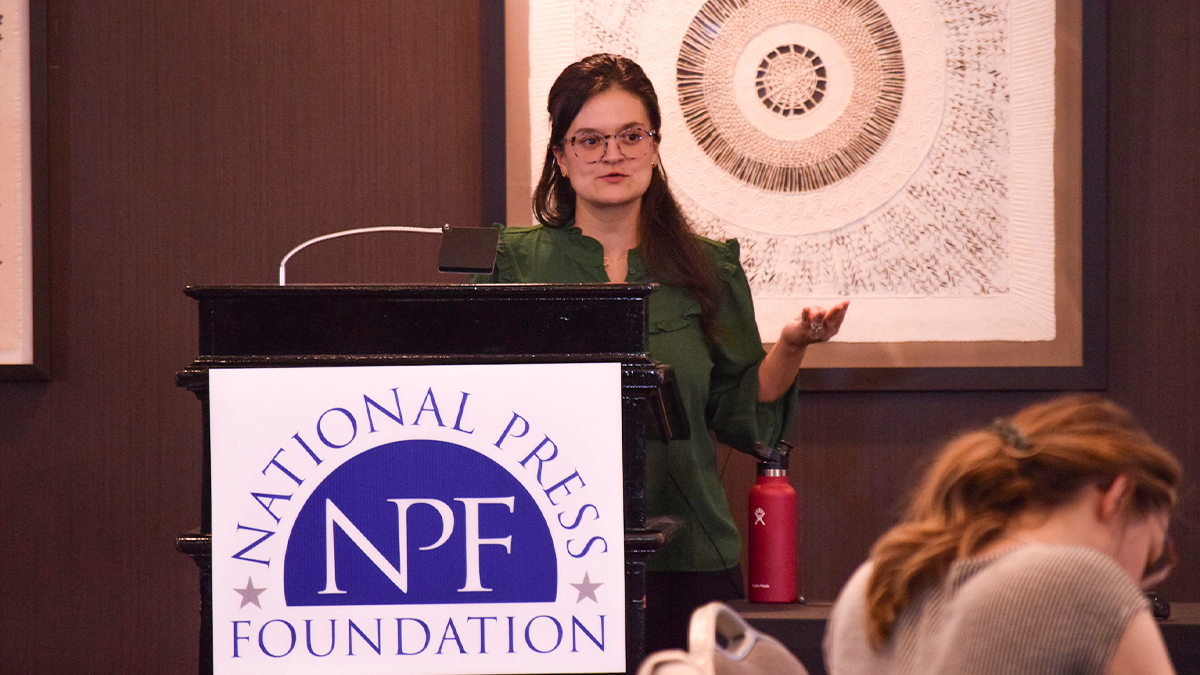
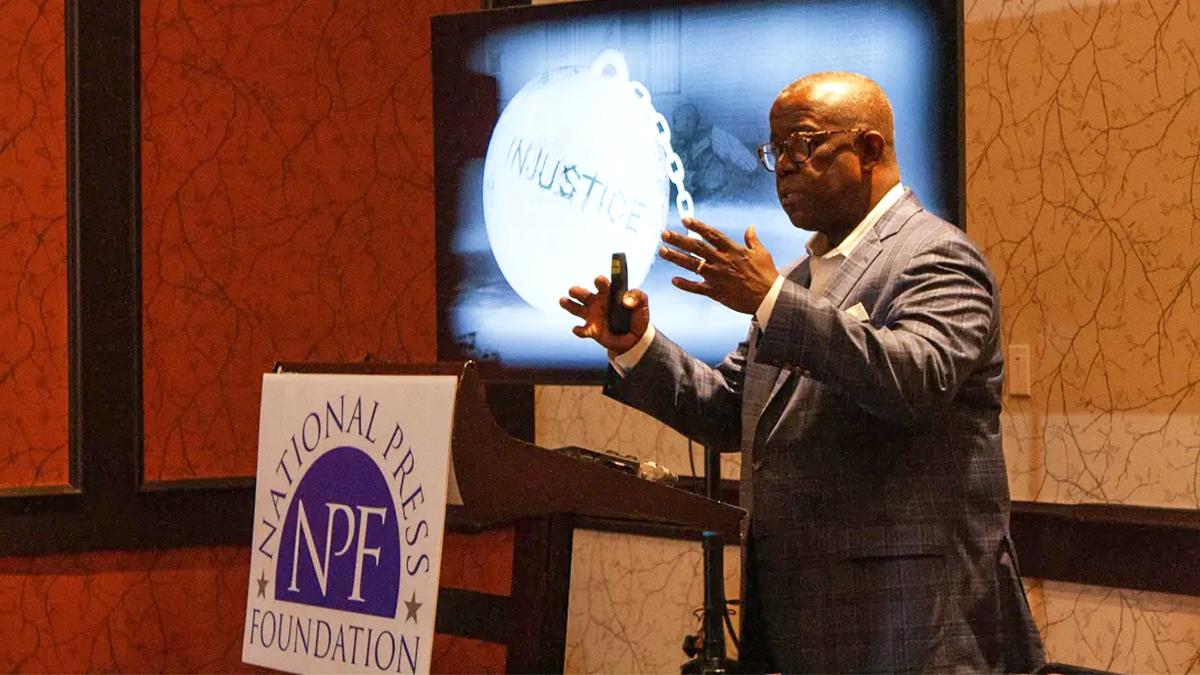
Four experts joined a National Press Foundation online briefing on April 30 to discuss treatment, awareness and access – and how journalists can better report on treatment-resistant depression.
Key quotes from each panelist:
Dr. Maurizio Fava, chair of the Department of Psychiatry/Psychiatrist-in-Chief, Massachusetts General Hospital
“As a field, we’ve seen tremendous advances in the treatment of resistant depression with IV ketamine, esketamine, TMS [transcranial magnetic stimulation], rapid TMS, and now psychedelics …This is an exciting time to be in this field, but the important thing is to have the opportunities to lobby for the removal of those obstacles … Depression is a lethal condition, and yet we don’t necessarily treat it like we’re treating other medical conditions in terms of coverage by insurance.”
“… We have tremendous problems of access in general. In the United States alone, the government has predicted by 2025, we would have a shortage of over 50,000 (5-0, 50,000) psychologists and 14,000 psychiatrists.”
Dr. Lisa Harding, an assistant clinical professor in the Department of Psychiatry, Yale School of Medicine; medical director, Mood Institute
“We can have all of these wonderful treatments, [but] if people don’t access it, this is the exact reason why we see that depression is the leading cause of disability worldwide, not only in the United States.
And they have socioeconomic implications … when we talk about access to minorities, we have to have a comprehensive conversation about what the minority is. We’re talking about financial classes, we’re talking about even where you live. That one of the treatments, esketamine, that is actually FDA-approved and covered by most insurances, but you can’t drive yourself to and from treatments, on the days of treatments. Think about what it is to arrange a ride, to come to a doctor’s office to get this treatment.”
“It’s really hard to talk to minorities getting over things like Tuskegee and all of the things that have been done to minoritized populations by science … you have to get out there to the minority populations and explain to them the utility of these treatments and why it is that engaging with us can really help them get back to living their fullest lives.”
Dr. John Tumeh, Chief of Psychiatry, Foundation Psychiatry
“When we’re referring to ketamine, we’re referring to the IV form that this was used as an anesthetic agent. And eventually in psychiatry, we realized that significant lower dosage we could use it in the outpatient setting. … Esketamine, that’s just the form of it that is done by nasal spray. So, it’s easier to do for someone like me in the clinical outpatient setting, we switched almost completely from IV administration to the nasal spray because it’s easier.”
“We do have to be careful of drugs of abuse. There is a form you can actually prescribe now that someone can self-administer at home. I personally don’t like that, because I want to be able to monitor the patient … And so I only do in-office, but we’re giving lower dosages and we’re telling them upfront that there’s a specific protocol.”
Courtenay Harris Bond, Staff writer, Philly Voice
“I think with treatment-resistant depression, people can get their hopes up that they’ll find a cure. That, ‘Oh, ketamine is going to be the magic bullet.’ I would just say that as journalists, it’s good to present these things as modalities, and that often in combination with other things can really help get patients into remission. I’ve rarely talked to a patient who said, ‘Oh, doing ketamine just put me into remission.’ It’s like a combination of ketamine and therapy or maybe ketamine on top of an antidepressant.”
Access the full transcript here.
This webinar was sponsored by Johnson & Johnson. NPF is solely responsible for its content.