When America’s opioid epidemic reached Ohio, a separate challenge worsened—increasing cases of abuse and neglect for children. Gov. Mike DeWine had prioritized child protection since his tenure as an assistant state attorney general, and by the time he claimed Ohio’s top job in 2019 he was determined to make a significant effort to improve the system.
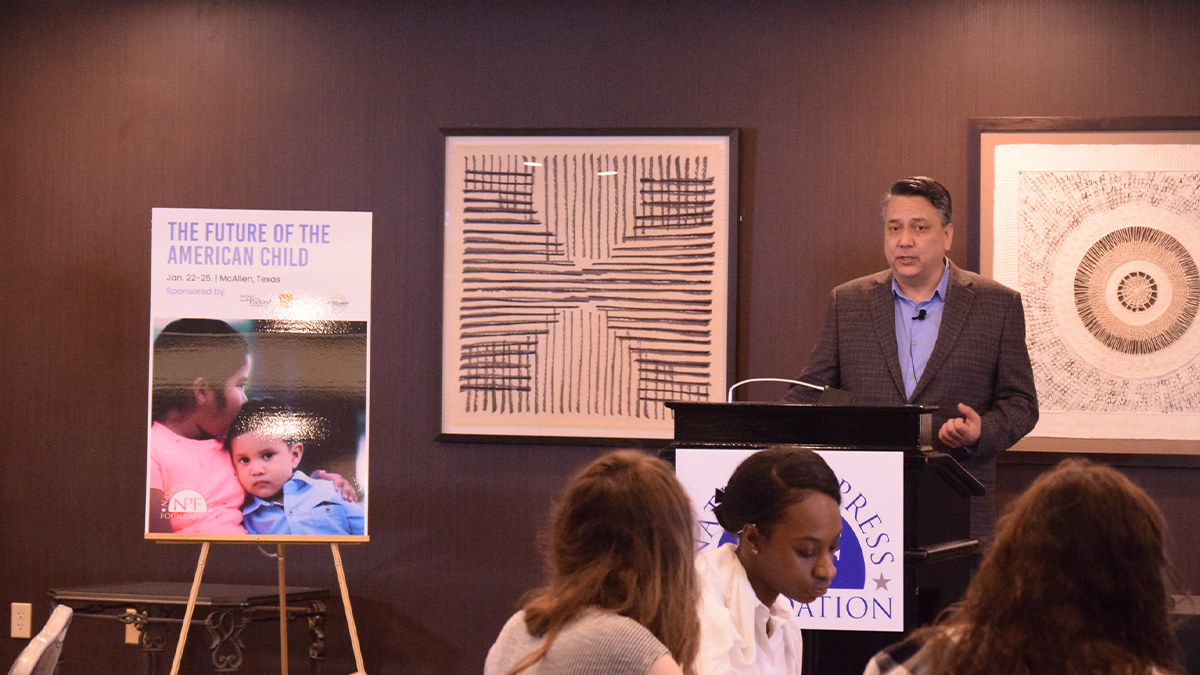
DeWine’s chief of staff LeeAnne Cornyn explained Ohio’s child welfare reform strategy to Future of the American Child fellows in Cleveland on May 8. She was joined by child welfare expert Fred Wulcyzn, the Senior Research Fellow at the University of Chicago’s Center for State Child Welfare Reform. Wulczyn helped journalist understand the need to grasp the conflux of data and lived experience that fuel child welfare policy and practice. [Transcript | Video]
6 takeaways:
➀ Children in Ohio were dramatically impacted by the opioid epidemic. By the time Mike DeWine became governor, he had seen thousands of Ohio families struggling with the devastation of opioid abuse, Cornyn said. And while the overwhelming majority of cases were in white families, Cornyn said Ohio also noted a rise in unintentional opioid overdose deaths for African American males.
➁ The state child welfare system simply wasn’t equipped to handle the repercussions. “You can see from 2014 to 2018 just dramatic increases, nearly 3000 additional children in custody in Ohio over a relatively short period of time, and dramatically increasing removals due to substance use, nearly doubling in that same time period,” Cornyn said. “In 2019, about one in four of children in custody were there due to parental substance use of some kind.” During his tenure in the Attorney General’s office, DeWine believed he could use his legal platform to support an overwhelmed system struggling to sort out cases complicated by medical and psychosocial challenges.
➂ State child welfare departments don’t operate from the same playbooks. Cornyn said Ohio is one of only nine U.S. states that supervise child welfare but whose individual counties administer services as they see fit. Not only does that make service provision complicated, it can cause serious hurdles for reform. But in 2017, then Attorney General DeWine helped create a program called Ohio START, which stands for Sobriety, Treatment and Reducing Trauma. “We stood this up in 17 counties in southern Ohio where we knew resources were the lowest of the local level and our overdoses were the highest.”
As of 2023, Ohio START operates in 54 counties, Cornyn said. When drug or alcohol abuse is involved in a child’s separation from family, officials try to expedite treatment for parents, and immediate identify trauma support for the child. Since 2017, 4,000 Ohioans have entered the program, half of whom were children.
➃ Statistics can yield positive news, too. Wulczyn asked journalists if they could identify the source of the following data set: “50,000 to under 7,000 from 1996 to 2023.” That’s the change in the number of children in foster care in New York City during that period of time, Wulczyn said. He urged journalists to consider that this statistic could not have happened without several decades of deliberate, focused attention to the public child welfare system, and that more stories should acknowledge progress where it has occurred.
“Somehow we have to be able to talk in positive terms about these kinds of changes while also acknowledging at the same time, there are challenges that remain,” Wulczyn said. “There is no finish line to this story, but at the same time, we have to acknowledge dramatic changes such as this and the fact that there is no quick, easy fix.”
➄ People who’ve lived the data are the best sources of advice. The Multistate Foster Care Data Archive, housed in Wulczyn’s department, holds the records of more than 4.5 million foster children and more than three decades of history. “When we started, there was no one in a registry where we could talk about what was happening to kids in out-of-home care,” Wulczyn said. “In fact, that’s what spurred the collection of data about kids in out-of-home care because in 1980, they went to ask states, ‘Do you know the whereabouts, the children for whom you’ve taken legal custody?’ And the answer was too frequently, ‘No, actually, we’re going to have to get back to you on that. We don’t exactly know where they are right now.’ ”
Archive researchers trace a child’s journey from the moment they enter out of home care. “Do they change placement? Do they leave? Do they come back? How long do they spend there? And it’s an important record of what this nation has done with regard to foster care and its use and how it’s changed over time,” Wulczyn said. “Pretty much every day I talk to these kids one way or another, not literally, but figuratively I try to understand their narratives.”
➅ While focusing on persistent problems, recognize new patterns. Wulczyn said there’s been a 200% increase in the number of white newborns coming into out-of-home care in rural America. “Much of this has gone unnoticed because of the large changes in urban areas we’re fascinated by, but the reduction overall has been in urban areas. Whereas in non-urban areas, particularly rural America, there’s been an increase in the number of kids coming into out-of-home care.” The dramatic differences in the changing mix of kids coming into out-of-home care by both race and age are important trends to note, Wulczyn said.
This fellowship is funded by the David and Lucile Packard Foundation, the W.K. Kellogg Foundation and the Heising-Simons Foundation. NPF is solely responsible for programming and content.