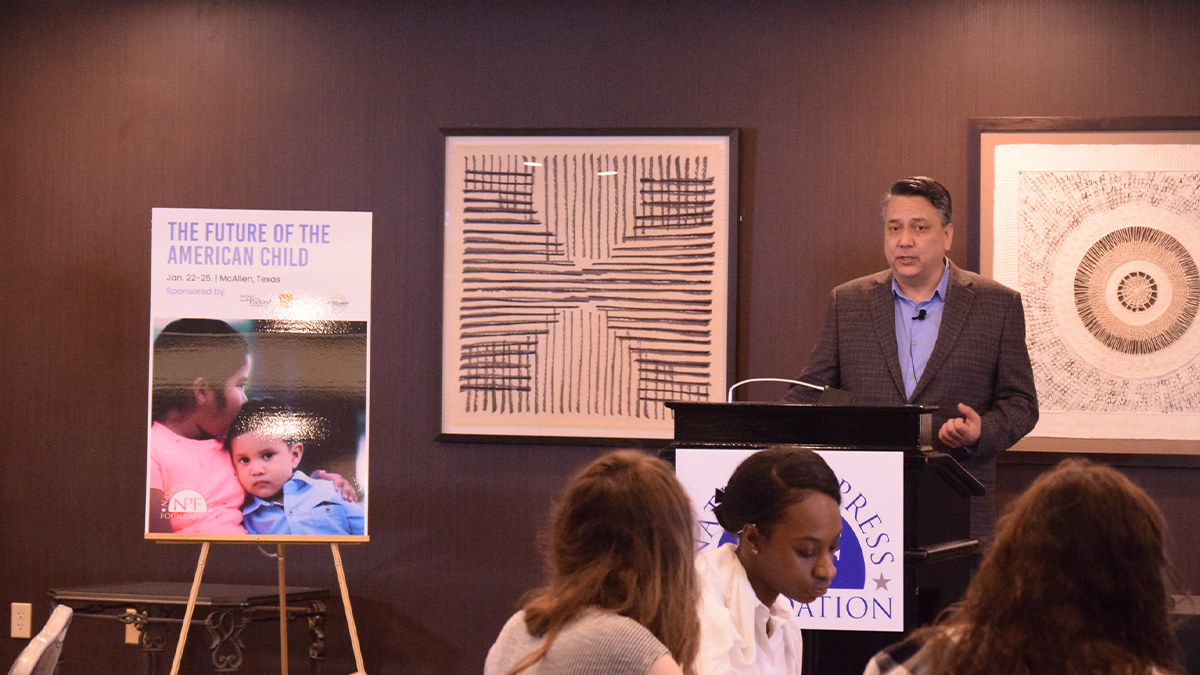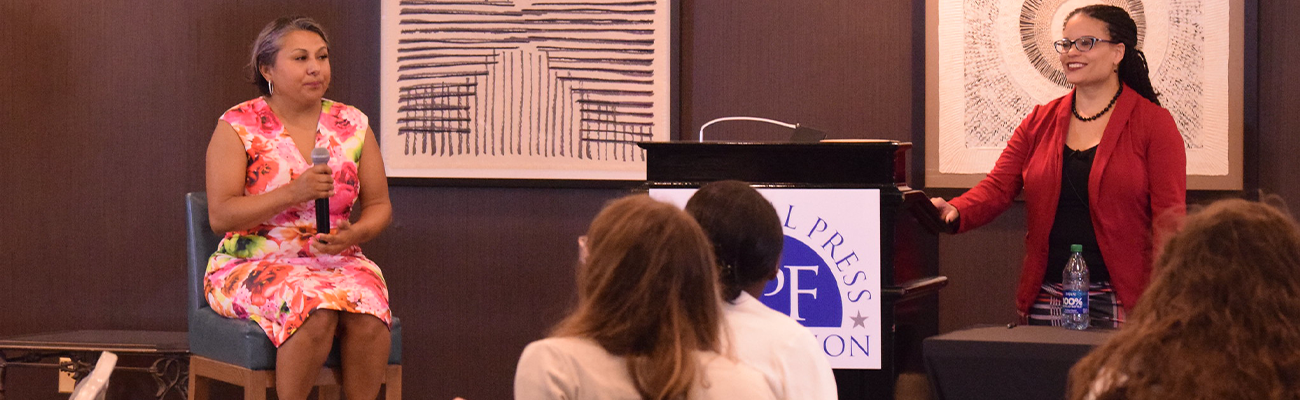
Valerie Jackson began her career as a clinical psychologist in Houston, working in residential treatment facilities for children in foster care. She describes those settings as “the worst of the worst” when it comes to out-of-home placements for at-risk children. The experience informed her opinion of the child welfare system and led to the founding of Monarch Family Services, an agency that pushes for children to be placed with extended family rather than foster homes. Jackson believes the child welfare system’s inability to address the urgent social needs of troubled families creates more trauma and harm for children, and that resources should be redirected from training foster families to supporting birth families. [Transcript | Video]
5 takeaways:
➀ The family should remain at the center of all child welfare cases. Jackson said Monarch Family Services operates on a mental health and case management framework. “We have a family-centered approach and also we believe that the overriding goals of all of our services and programming is to heal from past traumas and also stabilize the home environment.”
Only 5% of the Monarch families are not related to the at-risk child—and that group is actively seeking to adopt the children in their care. “Permanency is the answer for any of these children that have been through the system and that have been traumatized by the system most.” Another program Jackson founded, Initiatives for Healthy Communities, provides mental health education, treatment and referrals. “Because we believe that you can address one issue, but if you’re not providing that wraparound support, then healing, getting to a point of stabilization is not possible.”
➁ America has a tortured history of separating children from families. In recent years, the high-profile focus on children at the U.S.-Mexico border being separated from their parents—and of course those shocking images of children placed in cages—have fueled the uproar about the government’s child welfare policies. Throughout the nation’s history, other examples have included the way children were sold away from their parents during slavery, and how Native American children were removed from their homes and placed in so-called “boarding schools” in order to become more Westernized. “And if parents would refuse to turn over their children for these programs to these residential schools, then they’ll use coercion. They would use manipulation as well as threatening them.” It’s no wonder, then, that BIPOC families harbor deep mistrust of agencies that are seemingly designed to help them, Jackson said.
➂ It’s impossible to overstate the trauma children can experience in foster care. Jackson has adopted three of the children she’s encountered during her work with families. “The last child who I adopted in 2021, he’s only nine years old, he’s already been through 17 placements. He doesn’t even remember removal at age four. He doesn’t remember that life, but he remembers all 17 of the placements, the five hospitalizations, the residential treatment for a year, and then finally in my home.” Jackson said that even children who’ve suffered extreme abuse retain deep emotions about their families—especially those Black and brown youth who often spend a decade or more in the system. “As soon as they age out, what is the first thing you think they do? They go look for those families. They go look for those relatives. They want that connection.”
➃ The kinship care movement is gaining some high-profile momentum. In March of 2022, President Joe Biden released a budget proposal that included funds to prioritize kinship caregivers and prevent removals from foster care. The proposal included more money for initiatives such as the Kinship Navigator Program. It assists not only kinship families that are in the child welfare system, but also families that are not but who could potentially support their relatives in crisis.
“There’s no preparation for kinship families,” Jackson said. “They haven’t been thinking or are considering taking in more children. They get a call of one day out of the blue saying, “You need to take these kids. You have two hours to say yes or no. Otherwise, we’re going to put them in foster care. That’s it.”
➄ Kinship care can strengthen cultural connections in communities. Besides reducing trauma, Jackson said kinship care often yields improved mental health outcomes, also fewer behavior problems and social outcomes, better educational outcomes and educational stability. Children don’t have the anxiety of navigating multiple new homes with different family structures and rules. “One thing about unrelated adoption and foster care, there are very sparse findings that the biological parent is still involved, and they still have connections,” Jackson said. “With kinship care, in most cases, the biological parents are still involved in some type of way. The child is still able to have that connection, and it makes their life satisfaction much higher.
This program was sponsored by the David and Lucile Packard Foundation, the W.K. Kellogg Foundation and the Heising-Simons Foundation. NPF is solely responsible for the content.



 Reload document
 Open in new tab