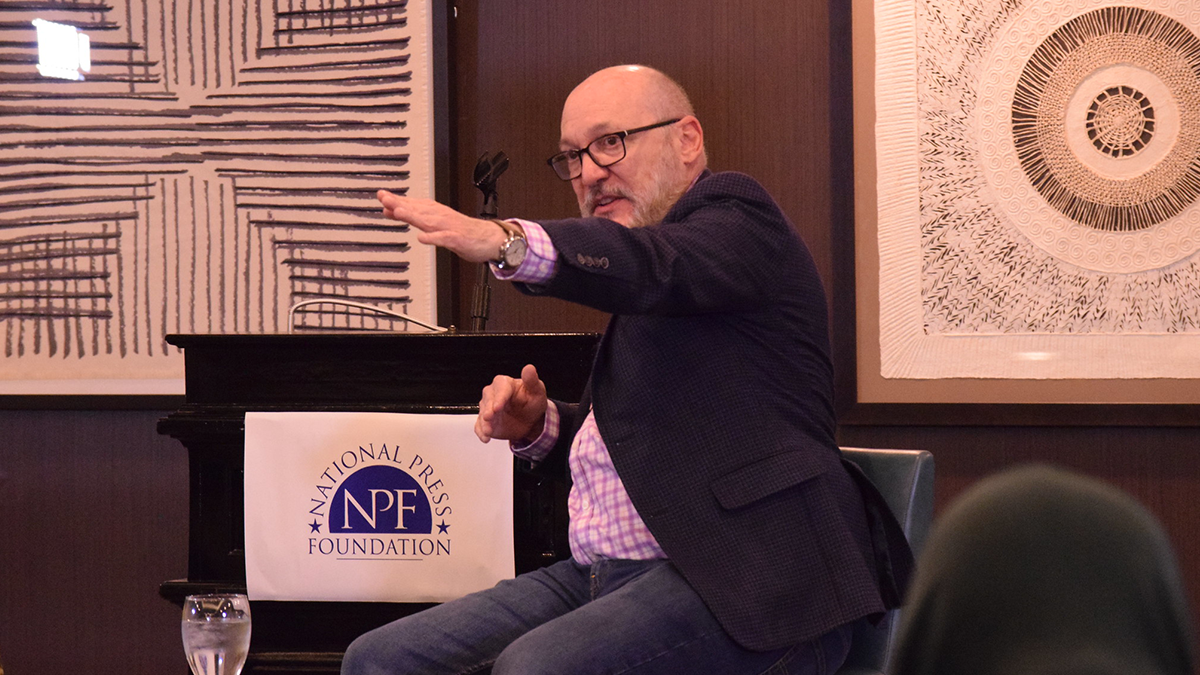
Children who arrive in the U.S. with their families can experience multiple layers of challenges, including mental and emotional trauma, poverty, etc. Monica Romo, a senior program coordinator with the University of Texas at Austin’s Girasol program, trains the staffers of organizations that support immigrant families’ mental health. She explained what constitutes trauma, where it comes from, and how navigate it to The Future of the American Child fellows in McAllen, Texas. [Transcript | Video]
4 takeaways:
➀ Trauma is the response to the event, not the event itself. “It’s all about how we internalize that event, how it affects us, and how it changes the way that we view when we function in the world,” Romo said. She said acute trauma occurs after one intense event, like a car accident, but chronic trauma occurs repeatedly over a long period of time, in situations such as abusive households. Complex trauma involves a combination of types of traumas. “The majority of the immigrants that I have worked with in my career have complex trauma,” Romo said.
Trauma responses are necessary to survive stressful events, but they become disruptive after the fact. Panic attacks and self-destructive behaviors are some common symptoms of trauma. For children, trauma often manifests in interpersonal relationships and learning environments. Children may have emotional outbursts, hyperactivity or a lack of impulse control in response to trauma. Children may also experience depression, changes in sleep or separation anxiety after a traumatic event. Romo said during the Trump administration’s zero-tolerance policy, the immigrant children she worked with became very attached to their caretakers. “Two days after meeting this person, they could not be separated from them,” she said. “But they were coping with having been separated from their parent.”
➁ Immigrant children experience trauma throughout their journeys. Before migrating, children often face poverty and multiple types of violence. They may feel abandoned by their caretakers who had to leave to provide financial support, or they may have lived through natural disasters. Along the journey to the U.S., children from Latin America often face discrimination, and holding camps on the border creates traumatic situations. At detention centers, children are separated from their loved ones and caretakers. The courtroom can also be traumatizing. “Most judges are not child-friendly,” Romo said.
➂ Create safety for traumatized people. For journalists, even asking someone for their input on where to hold an interview can show care. Fidget toys and coloring pages can also be helpful when working with traumatized children. Journalists should be prepared to be confused by the retellings of their journeys. “When talking to immigrant children, it can be very convoluted,” Romo said. “And it can take more than one time speaking to them in order to understand.”
Romo said trauma and culture can interact to make the chronology of storytelling confusing. “Giving the opportunity to tell their story as they want…I think sometimes can be helpful,” she said. Asking open-ended questions instead of confirming each element of a timeline can help reduce harm while still getting the pertinent details of a story.
For immigrant teenagers, providing a sense of choice can help them regain a sense of control. “Sometimes they’re forced to tell their stories in order for them to be able to get out of detention,” Romo said. Giving teenagers the choice of where to go and allowing them to refuse to answer questions can help build trust.
➃ Take care of yourself, too. Taking time to re-center before talking with someone who has been traumatized can yield success. Designating a colleague, friend or family member to debrief with after interviewing a trauma survivor can be therapeutic. Romo said experiencing vicarious trauma in her work resulted in daily tear-filled commutes for her.“I was so traumatized by what I was facing every day that it literally got to the point where I just couldn’t function anymore,” she said. “That’s not healthy, don’t get to that point.”
This program was sponsored by the David and Lucile Packard Foundation, the W.K. Kellogg Foundation and the Heising-Simons Foundation. NPF is solely responsible for the content.



 Reload document
 Open in new tab