4 takeaways:
➀ Words matter. UNHCR estimates that more than 2.3 million refugees have fled Ukraine, and the words U.S. journalists use to describe them matter greatly, two experts told NPF’s Paul Miller fellows on March 7. In Europe, the reaction to Ukrainian refugees is different from how Syrian refugees were treated just several years ago – and the treatment of Black and Asian refugees fleeing Ukraine is also cause for concern. Tazreena Sajjad, a senior lecturer at American University and adviser to the Refugee Solidarity Network, noted that some news outlets have called refugees from Afghanistan, Iraq and Syria “migrants” while referring to Ukrainians as “refugees.”
This “signals who has legitimacy and who does not … whose lives are worth saving, whose lives are disposable,” she said. She also noted the negative connotations of many words associated with displacement. “’Swarms,’” she said, “is used for insects and should not be used for human beings.” “Flooding” is a natural disaster. “Invasion” or “storming” are militarized terms. They suggest that “there is aggression associated with those who are obviously trying to cross a border,” Sajjad said. She also said journalists should think carefully about using terms like “unprecedented” and “crisis.” “Crisis of what and for whom?” she asked. “I know journalists are trained extensively in terms of biases and prejudices and assumptions. But it’s work that is never completely done. So being much more conscious of it would be a great start.”
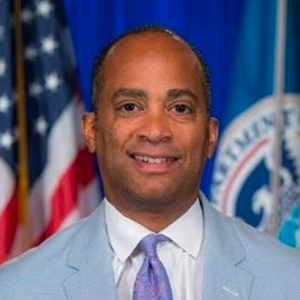
➁ Mind the legalities. The terms ‘refugee’ and “asylum seeker” have specific meanings under U.S. law, LeRoy Potts, a Council on Foreign Relations fellow who has worked for the U.S. Department of Homeland Security for 14 years. The Immigration and Nationality Act defines a refugee as “a person who is unable or unwilling to return to his or her country of nationality because of persecution or a well-founded fear of persecution on account of race, religion, nationality, membership in a particular social group, or political opinion. Applicants for refugee status are outside the United States, whereas applicants seeking asylum are either within the United States or arriving at a U.S. port of entry.” He also noted concern about the treatment of Black and Asian refugees fleeing Ukraine. The reaction to Ukrainian refugees has diverged from how Syrian refugees were treated just several years ago.
➂ Photo choice both influences and reflects assumptions. Sajjad asked journalists to consider:
What role do visual images have in the construction of our concept of the refugee?
What do the photos of refugees tell us about their subject and their audience?
Why are some instances of forced migration covered extensively by the media while others are ignored?
What is assumed in terms of the audience reception to the news and audience need for information? What moves people to respond to visual images as well as narratives of forced migration?
Photos of refugees show “people captured at very agonizing moments of their lives, without the full agency of who’s taking the picture, how their pictures and how their stories are going to be narrated and how these pictures are going to be part of framing the political discourse in terms of the audiences around the world,” Sajjad said. While photos of individuals may portray “victimhood, hopelessness and helplessness,” photos of masses suggest the “receiving state is losing control,” Sajjad said.
➃ Provide context by reporting on the diversity and complexity of each refugee crisis. When a large population is at the U.S.-Mexico border – for instance, Haitian asylum seekers — Potts often sees “very alarmist kind of terms,” which, he said, “shouldn’t happen.” “This is a situation which has taken probably months, if not years, in the making. … [but] somehow their story was lost between Brazil and the southern U.S. border,” he said. “The complexity is often missing.” Sajjad voiced similar frustrations about the coverage of Syrians arriving in Europe. From “2015 onwards, it was the fundamental assumption that they just came out of nowhere. They just popped up suddenly on the shores of Greece, and that’s where the story began. Whereas the reality is some of these individuals, many of these individuals had crossed 10, 15, 17 countries.” Potts noted that while the perception is that the U.S. and European countries are the receiving countries, “85% of the world’s refugees are hosted in low- and middle-income countries, so there’s an incredible burden that is shouldered by the poor nations around the world, in the southern hemisphere.” Ukrainian refugees are diverse just as asylum seekers at the U.S. southern border are, “but we only see one kind of story,” she said.
“When news reporting is highly investigative and in-depth in terms of being able to cover contexts, the political context, multiple stories of movement of an individual from Point A to Point B, really highlight the stories of their struggles in terms of the social, political, economic, cultural obstacles they face, together with how they navigate that, then print media has been absolutely phenomenal.”
However, she warned that when it comes to biased coverage, lives are on the line. “We need to be aware of where our assumptions lie about being forcibly displaced. It is not just obviously people from the so-called developing countries. It is not just people who look a certain way or come from a certain class or a certain background, or a certain faith. This can happen to any of us under any sort of set of circumstances,” Sajjad said. “Being able to capture that complexity, even if you have a very short timeframe, attention span, and word limit, I think that’s where the challenge lies.”
You may also like: Russia-Ukraine Conflict: A Diplomat’s Take
Speakers:
NPF is solely responsible for the content.


 Reload document
 Open in new tab