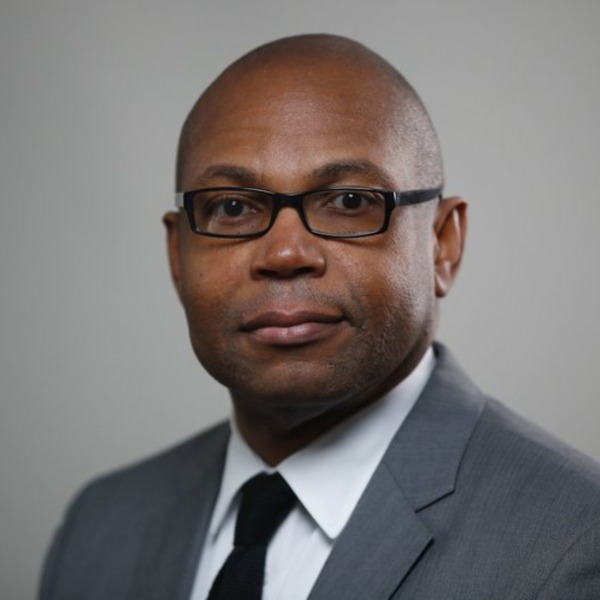
Just days after announcing his departure from the Associated Press Local Investigative Journalism Project, veteran journalist Ron Nixon told Widening the Pipeline fellows that he’s optimistic about the future of journalism, even during this volatile era of media reinvention and disruption.
“If you think about a lot of the stuff that we know, it’s because a journalist dug it up. Journalism has gotten defective products off the market, gotten people out of prison, gotten people put in prison. So journalism serves a vital role. But again, I just think we have to be realistic about the fact that it has traditionally not served everybody, and the journalism that we want to create should serve everybody.”
Nixon’s distinguished career has included stints leading global investigations for AP, as a Washington correspondent for The New York Times, as a database editor at Minneapolis Star Tribune and as a member of the national training staff of IRE. He also authored the 2015 book “Selling Apartheid: Apartheid South Africa’s Global Propaganda War.’
Nixon didn’t share with Widening fellows what his next career chapter will be. But the good news is that he’ll remain in the fight to preserve local journalism and strengthen investigative reporting—especially by ensuring that more people of color are involved.
“A lot of the leadership there is still not very diverse. And that’s one of the reasons that we founded the Ida B. Wells Society for Investigative Reporting. It was not just to get people into the field, but to work with those who are already in the field, who aspire to lead those things. I think there’s a huge, huge gap there for the people who are leading what I would argue is the most impactful form of journalism, which is investigative reporting.”
Watch Nixon’s session below, and access the full transcript here.