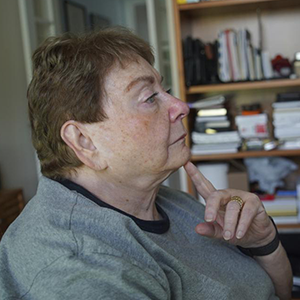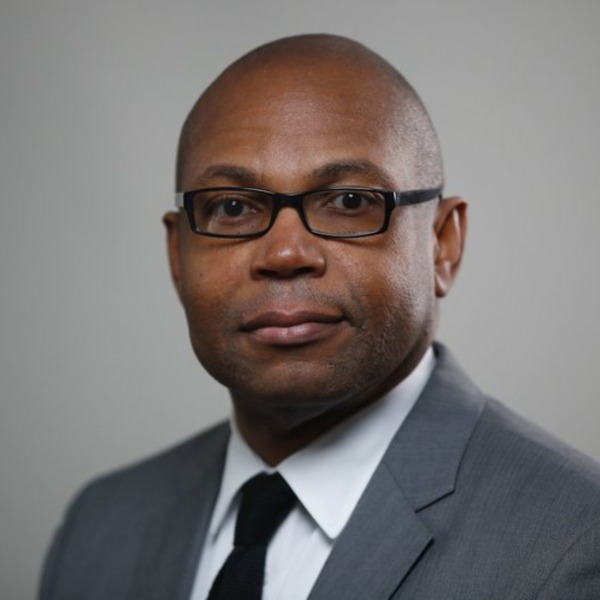
Jean Heller broke the story about the infamous Tuskegee Syphilis Study as an Associated Press investigative reporter in 1972. Fifty years later, she agrees with the AP’s Vice President for News and Investigations Ron Nixon that the goal of investigative reporting remains the same: to root out inequality and injustice. [Transcript | Video]
5 takeaways:
➀ Most investigative projects start with a single question. Heller told Widening the Pipeline fellows that her reporting on the Tuskeegee Syphilis Study began after a colleague handed her papers containing letters from a U.S. Public Health Service (now the CDC) staffer whose job was counting STD cases in San Francisco. That staffer reported hearing about a study in Alabama where they were using Black men as guinea pigs. “He wrote this letter to his supervisor in Atlanta and said, ‘Is this true?’ The supervisor wrote back and said, ‘Don’t worry about it, you’ve got a job to do, just do your job.’ I thought, ‘Why didn’t he just say no?’”
➁ Times change, but the reasons for investigative projects don’t. Nixon says that journalists today have better tools to tell stories with, but they’re still working with the same raw materials—inequity and injustice. One of the best projects he’s seen in recent years was produced by journalist Corey Johnson and colleagues at the Tampa Bay Times, about residents being poisoned by Florida’s lone lead smelter. He also highlighted New York Times visual investigations, like this one about the mistaken US drone strike in Afghanistan. Better tools help journalists go deeper and tell more complete stories, Nixon said.
➂ The “aha” moment can be devastating for reporters, too. Heller says that once she had uncovered enough information about the Tuskegee Study, she offered government officials the chance to confirm or deny. They kept putting her off until Heller finally said she’d have to publish with or without their comment. When they finally confirmed that her reporting was accurate, Heller says she went home and cried with her husband. “We both just sat there looking at each other. To me, it was impossible that this had remained secret, basically for 40 years.”
➃ Slowly but surely, investigative reporting teams are changing. Nixon says there’s still a long way to go to achieve the kind of diversity that accurately reflects American society, but one reason things are changing, he says, is because people like him are at the table leading coverage. “If you’re always drawing from the same little pool, you’re going to get the same type of people all the time,” Nixon said. “I broaden the pool of people that I’m looking at, and I’ve hired whites, I’ve hired people of color, I’ve hired everybody because I want the very best journalists and I don’t want to miss anybody because I’m only pulling from the same little pool.”
➄ The path to investigative reporting isn’t always the same. At first, Heller thought she might want to be a teacher, a safe and stable job her parents approved of. But she told Widening the Pipeline fellows that by the time she was covering her first big story for the Ohio State University school paper in 1963 – the assassination of President John F. Kennedy – her passion for journalism was sealed. Nixon said he chose journalism because he wanted to write music reviews for a Black-owned newspaper in Columbia, S.C. When he received a videotape of a Black man being beaten by police, his journalism trajectory shifted for good.
The Widening the Pipeline Fellowship is sponsored by the Evelyn Y. Davis Foundation, Bayer, J&J and Twitter. NPF is solely responsible for the content.