From taxes to social security, labor, health care, education and the environment — Washington is awash in government policy.
But what is good policy? And how should we be evaluating these plans as they impact local communities?
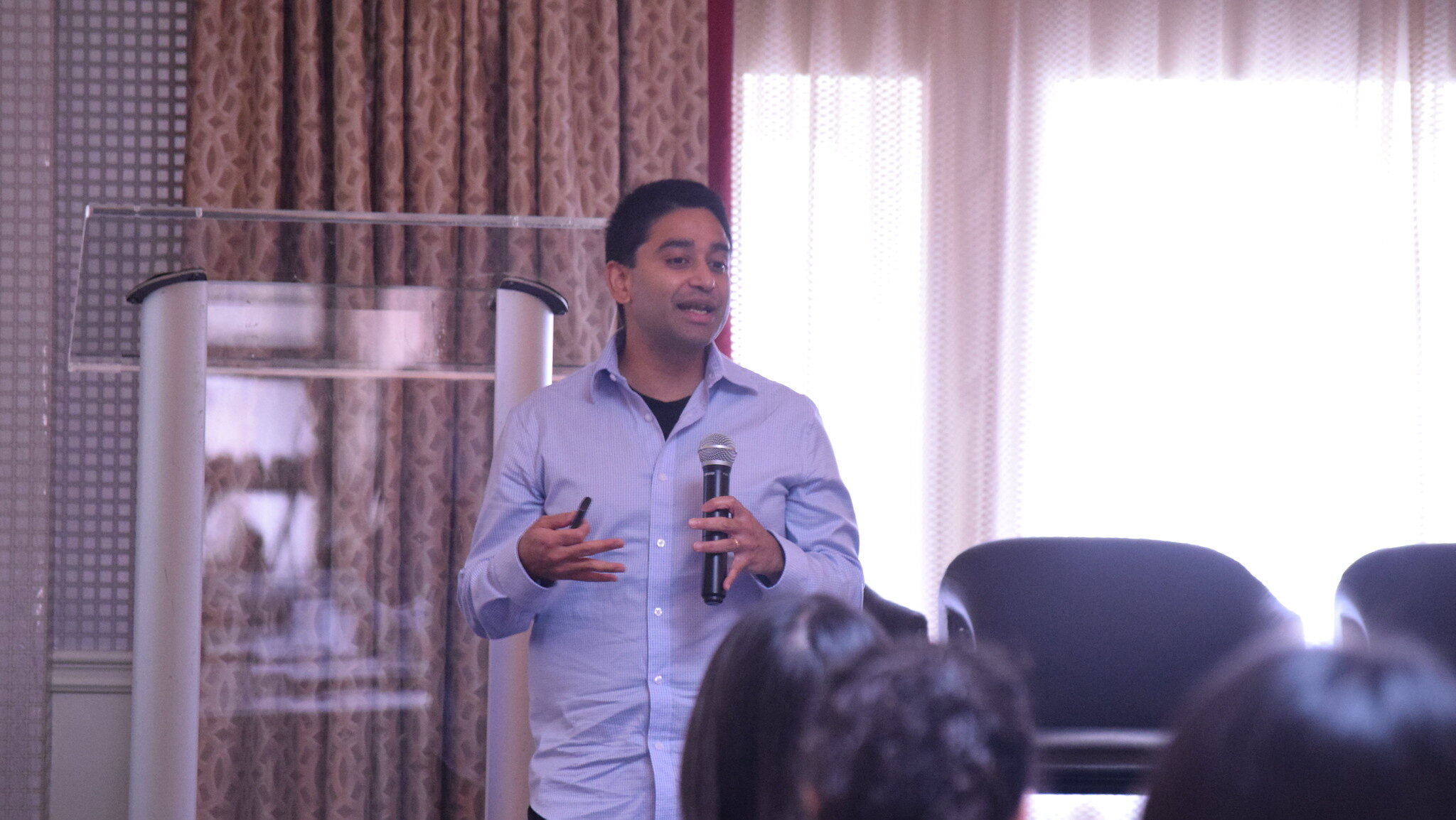
Day Manoli, an associate professor in the McCourt School of Public Policy at Georgetown University, told the National Press Foundation’s Federal Action, Local Impact journalism fellows that evidence-based data is key to telling the story of any program’s success or failure.
Are Lawmakers Acting on Evidence?
“I think more often than not, legislators or policymakers might often be operating under a preconceived notion that might be informed by their own particular experiences,” Manoli said. “When I have had opportunities to speak to them and present studies – my own research, others – it has been somewhat eye-opening to see their reactions … It does seem to be that communicating the evidence from research or from evaluation studies to policymakers, there seems to be some barrier, some market failure there.”
“I think that when you get into the weeds of what is actually going on…, (testing) what strategies work, that has been somewhat untethered to ideology. And you can say, let’s test whether the EITC (Earned Income Tax Credit) works or providing employment incentives work. Let’s test whether, if we provide transportation subsidies, we get individuals to jobs.”
Evaluating the ‘Big Beautiful Bill’ and Some Historical Context
With any new policy, journalists should dig into the evidence provided for its need and expected outcome, and compare it to past efforts or current efforts in different regions. For instance, in looking at the One Big Beautiful Bill Act, the Trump administration’s signature tax and spending policy, Manoli said he would look to welfare reform in the 1990s for historical context.
“The Big Beautiful Bill really created transformative changes in our social safety net thinking about changes in Medicaid and SNAP (Supplemental Nutrition Assistance Program) that are coming up. These are very transformative reductions in funding for these programs.”
Manoli also highlighted an example from Tennessee when beginning in 2005, about 100,000 people were removed from the Medicaid rolls.
“This creates a pretty useful opportunity for research to think about what happens when individuals are taken off of Medicaid, what happens to their insurance coverage and what happens to their employment?”
What Happened – And What Didn’t Happen
A key question journalists should ask: “What would it be like without this policy change?”
“That’s a critical question to ask in order to evaluate the outcomes of any analysis, the outcomes of any story, to understand if these people were not taken off of Medicaid, what would’ve happened if these people were not taken off of SNAP? What would’ve happened?” Manoli asked. “When you have that counterfactual in mind, that comparison that allows you to clearly communicate the overall story of the evaluation, any statistical evaluation of policy analysis should clearly address all of these.”
Access the full transcript here.



 Reload document
 Open in new tab