Local journalism’s role in American democracy is “more vital than at any other time in memory,” as federal government operations have undergone a near-wholesale transformation during the first 10 months of the Trump administration, said Michael Waldman, president of the non-partisan law and policy institute Brennan Center for Justice.
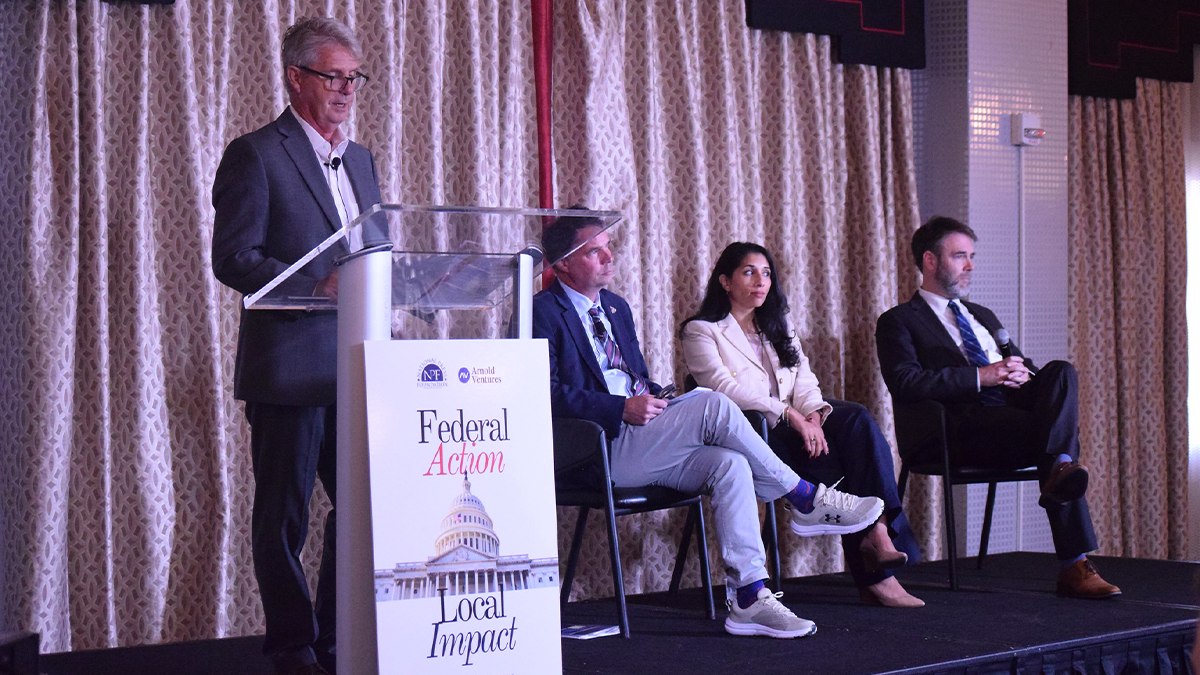
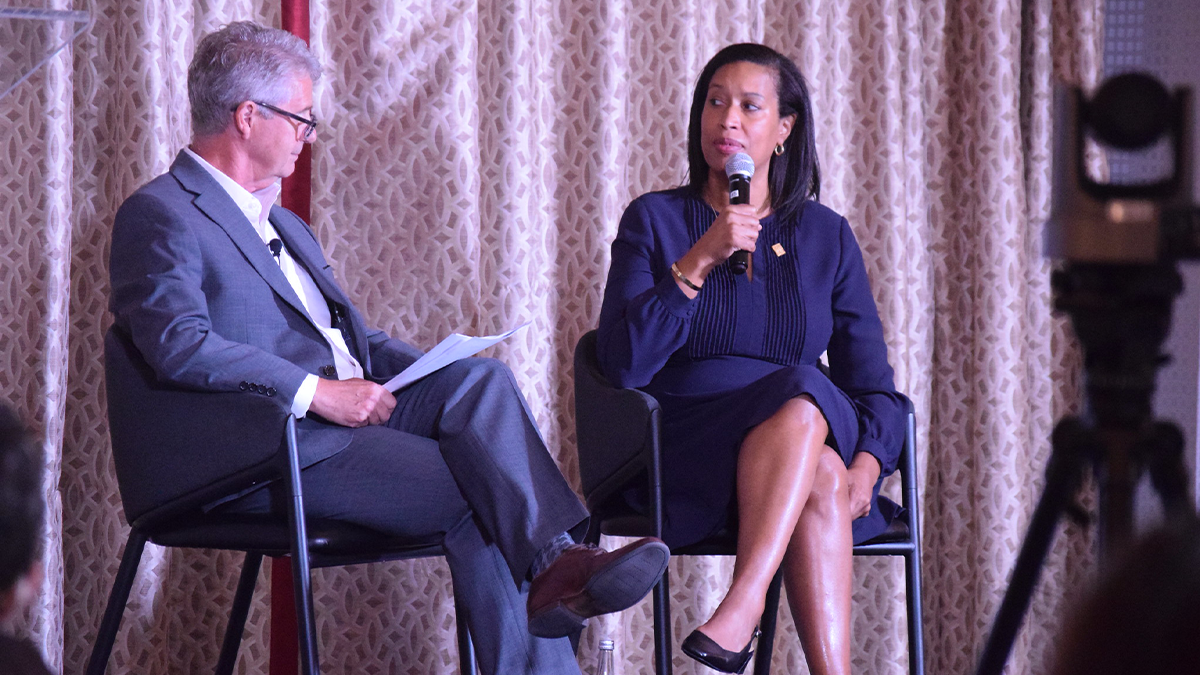
Waldman told the National Press Foundation’s “Federal Action, Local Impact” journalism fellows that local news organizations and non-profit outlets can make a difference.
Journalists Must ‘Separate the Noise from the Signal’
“I understand the challenges you all face at a time when access to information is being restricted, when propaganda is being asserted and when breaking through the din is really hard,” said Waldman, whose organization is one of the country’s leading sources of research on civil and voting rights.
Those basic rights, Waldman said, are at risk as the administration has moved to dramatically expand presidential power, invoking emergency authority to set punitive tariff rates on common goods and bypassing state officials to deploy National Guard troops to cities largely run by Democrats. States, meanwhile, also have become partisan battlegrounds in the perennial fight to redraw voting districts to favor political interests from City Hall to Congress.
“We do believe this is a moment where we are in a great fight for the future of American democracy, that the stakes really are that high, that the democratic rollback that we’ve seen in a lot of countries is certainly something we are all in the middle of, and it’s a challenge for you and for us to understand it, to narrate it, to separate the noise from the signal, to understand what’s really important and to make it real, tangible and understandable for people who are not following this professionally, not following it day by day.”
Understanding Where Checks and Balances are Faltering
The Supreme Court is set to play a major role as it begins its new term, with major challenges to presidential power already looming, including a case that could roll back the administration’s tariff strategy – the centerpiece of the White House’s economic policy.
“Finding a way to tell that story so that it isn’t just abstract, law professor stuff, but local businesses whose livelihoods are going to be very much affected by whatever the outcome is, I think is a real challenge, but I think people are very, very interested in that,” Waldman said.
“There are other cases that will be before the court also that deal with the question of who has control over the power of the purse. The Constitution gives Congress the power of the purse … but this administration has been unprecedentedly aggressive in arguing it can fire people, fire federal workers, stop spending money that was ordered by the law – by Congress – to be spent and even … shutting down agencies without Congress,” Waldman said, referencing the closure of USAID. “On these issues, the Supreme Court has often been very deferential.”
Journalists also have an obligation to hold the legislative branch accountable, Waldman said.
“Many of the things that are being done by the federal government – and especially by the executive – are illegal, violate the Constitution, violate people’s rights and would radically change the structure and the way our government works and its accountability. I don’t think that anything is resolved, and I think that the great challenge is to know how people can properly push back, how the Congress can, if it ever will reassert its role. So much of the reason we look to the courts is because of the vacuum created by Congress being so so weak, not just starting last year, but over many years.”
Is the U.S. Becoming Authoritarian?
Going from a democracy to an authoritarian government isn’t like switching a light switch, he said. The test will be whether people and institutions still feel they can speak out.
“When you look at other countries where there’s been democratic retrenchment or backsliding … momentum has a lot to do with it. And whether people think, ‘oh, you know what? The normal laws of gravity have not been entirely repealed, politics has not changed that much, and people can push back on things they don’t like and sometimes succeed.'”
Access the full transcript here.
This program is sponsored by Arnold Ventures. NPF is solely responsible for the content.