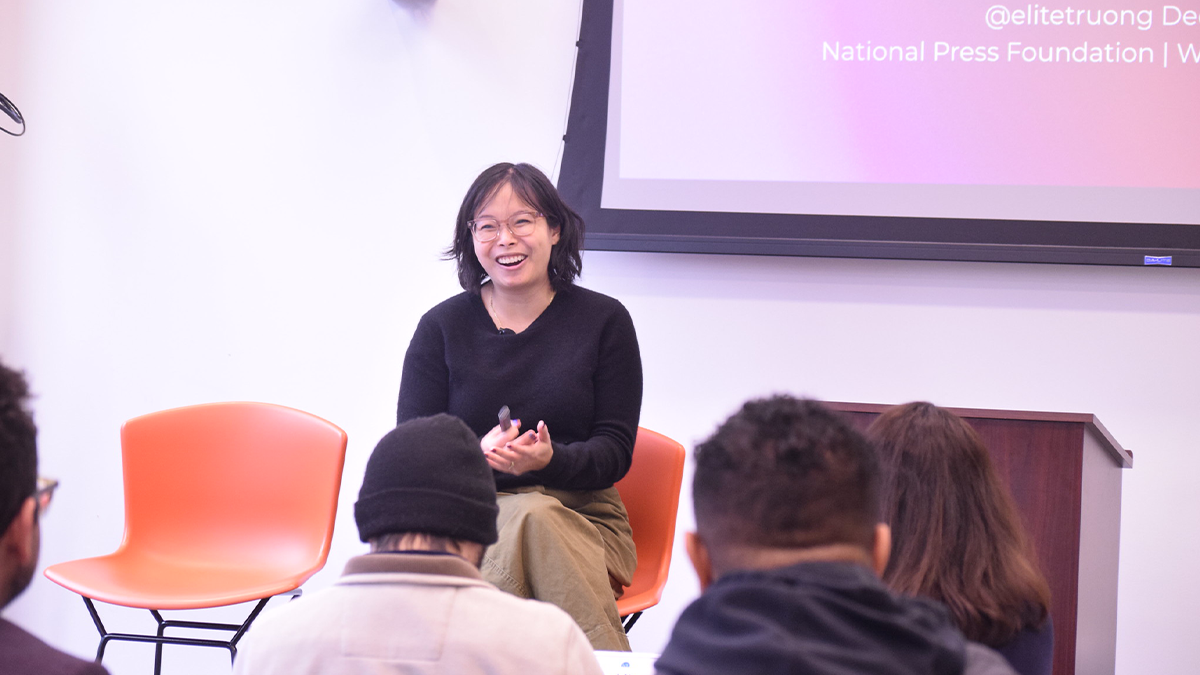
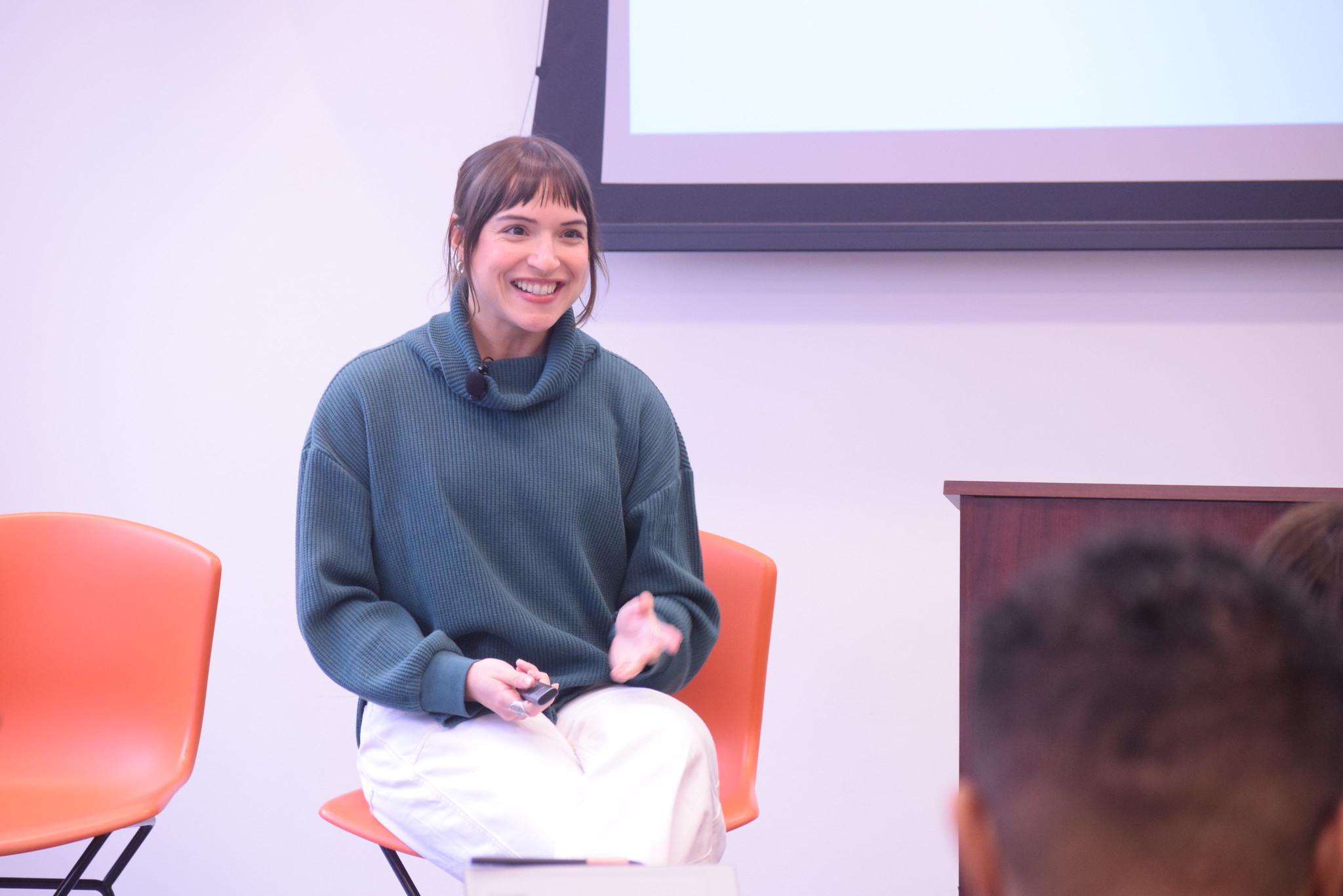
 To Isabella Gomez Sarmiento, music isn’t background noise. Music is evidence — of history, of power, of migration, of survival. As a reporter for NPR Music, Gomez Sarmiento has built a body of work that listens closely to how songs carry identity, politics and lived experience, especially for communities long pushed to the margins of mainstream cultural coverage.
Those instincts trace back to her childhood. Her family immigrated from Venezuela to the suburbs of Atlanta when she was 7 years old. From a young age, she understood that politics shaped her family’s daily life — why they lived far from grandparents, why they were starting over in Georgia, and why the idea of a free press mattered.
One formative memory still stands out. In 2007, the Venezuelan government declined to renew the broadcast license of RCTV, one of the country’s largest public television stations — a move widely viewed as a major blow to press freedom. Gomez Sarmiento was just 10 years old, but her parents explained why it mattered, not only for journalists, but for the people whose stories might never be told. That lesson stayed with her.
“I think that’s a big part of the reason I decided to study journalism,” she told National Press Foundation Widening the Pipeline fellows.
Here are highlights from her session:
Stay flexible and open to different types of beats
Straight out of Georgia State University in 2019, Gomez Sarmiento joined NPR as a Kroc Fellow, a highly competitive rotational program designed to train early-career journalists in public media (the program was suspended in 2023 due to budget cuts). Over the course of a year, she cycled through desks that might seem far removed from music: science and global health for Goats and Soda, field reporting for the National Desk, and producing for Weekend Edition.
The rotations taught her something essential: not knowing everything can be a strength. Writing about science without a technical background forced her to ask clearer questions and explain complex ideas in human terms. Producing a two-hour weekend news magazine showed her how many invisible decisions go into what listeners hear while making breakfast or driving home.
But even then, she was already gravitating toward culture.
“There’s this idea that music and culture reporting is fluff,” she said. “But it’s actually a huge entryway into the biggest questions we have about race, class, politics, identity and labor.”
Leaning Into Lived Experience
While still a fellow, Gomez Sarmiento began seeking out mentors across NPR, asking for coffee and pitching ideas that blended personal history with cultural analysis. One early breakthrough was a deeply personal essay about Shakira’s MTV Unplugged album — a story about growing up as a Latina immigrant, finding language for displacement, and using music to build shared understanding with friends who had similar experiences but no words for them yet.
After her fellowship, she stayed on at Weekend Edition as a producer, where she made it a priority to broaden who — and what — audiences heard. She pushed to book Latin artists and global voices that had often been sidelined in public radio music coverage, treating even a seven-minute interview as an opportunity to transport listeners somewhere new.
That meant conversations like Ayesha Rascoe speaking with Pusha T about shared roots in North Carolina, or spotlighting Afro-Peruvian cultural icon Susana Baca and her decades-long effort to preserve Black Peruvian musical traditions. For Gomez Sarmiento, these weren’t niche stories — they were essential ones.
Her reporting deepened when she moved to NPR’s Culture Desk, where she profiled figures like Venezuelan American comedian Angelo Colina, who helped build a Spanish-language standup circuit in Washington, D.C., and documented the fight to preserve Puerto Rican social clubs in gentrifying Brooklyn. Whether covering a block party in Williamsburg or Mexican Restaurant Week in New York City, she focused on how culture creates belonging — and how easily that belonging can be erased.
When the story hits close to home
Now at NPR Music, Gomez Sarmiento has taken on some of her most challenging work yet.
One standout project was an episode of Alt.Latino chronicling 30 years of Venezuelan protest music. The idea emerged when Venezuelan pop star Danny Ocean visited NPR for a Tiny Desk concert in 2024 — just as Venezuela was plunged into political chaos following a disputed presidential election. Ocean had released music responding directly to the crisis, and Gomez Sarmiento saw an opportunity to use music as a historical map.
The reporting was deeply personal — and intimidating. Covering a country she left as a child but remains connected to forced her to navigate the line between lived experience and journalistic rigor.
“I was really scared,” she admitted. “I worried about letting my personal experience dictate the story.”
Instead, with the encouragement of colleagues and editors, Gomez Sarmiento learned that proximity can be a form of expertise — if handled with transparency and care. The project required collaboration across NPR’s International Desk, Standards team and editors, but it also affirmed something she had struggled to believe through bouts of imposter syndrome: her voice belonged in the conversation.
“I think sometimes your personal investment in a story is a strength,” she told the fellows. “It’s not something you should shy away from.”
Access the full transcript here.
This fellowship is funded by the Evelyn Y. Davis Foundation and the John C. and Ethel C. Eklund Scholarship Fund. NPF is solely responsible for the content.


 Reload document
 Open in new tab