5 takeaways:
➀ Data on high-profile PPP loans is easily searchable. After being sued by media organizations for withholding information on loan recipients, the U.S. Small Business Administration has now released its data, although its site is somewhat cumbersome. Good Jobs First, a nonprofit that promotes corporate and government accountability, runs a journalist-friendly searchable database of some 950,000 loans worth more than $500 billion. That includes loans valued at more than $150,000. The database also links loan recipients with their parent companies, so journalists can identify firms that took multiple loans through different subsidiaries.
➁ Journalists need to look beyond PPP to track stimulus spending. The PPP program has commanded most of the public’s attention, amid reports that well-connected corporations received huge loans while small and minority-owned businesses went belly up. But several other loan and grant programs divvied up hundreds of billions in dollars for airports, airlines, health care facilities, colleges and schools. The project on Government Oversight has one of the most robust sites, allowing users to drill down to county and ZIP code level and to examine minority population and unemployment numbers while examining how much money flowed into a specific area.
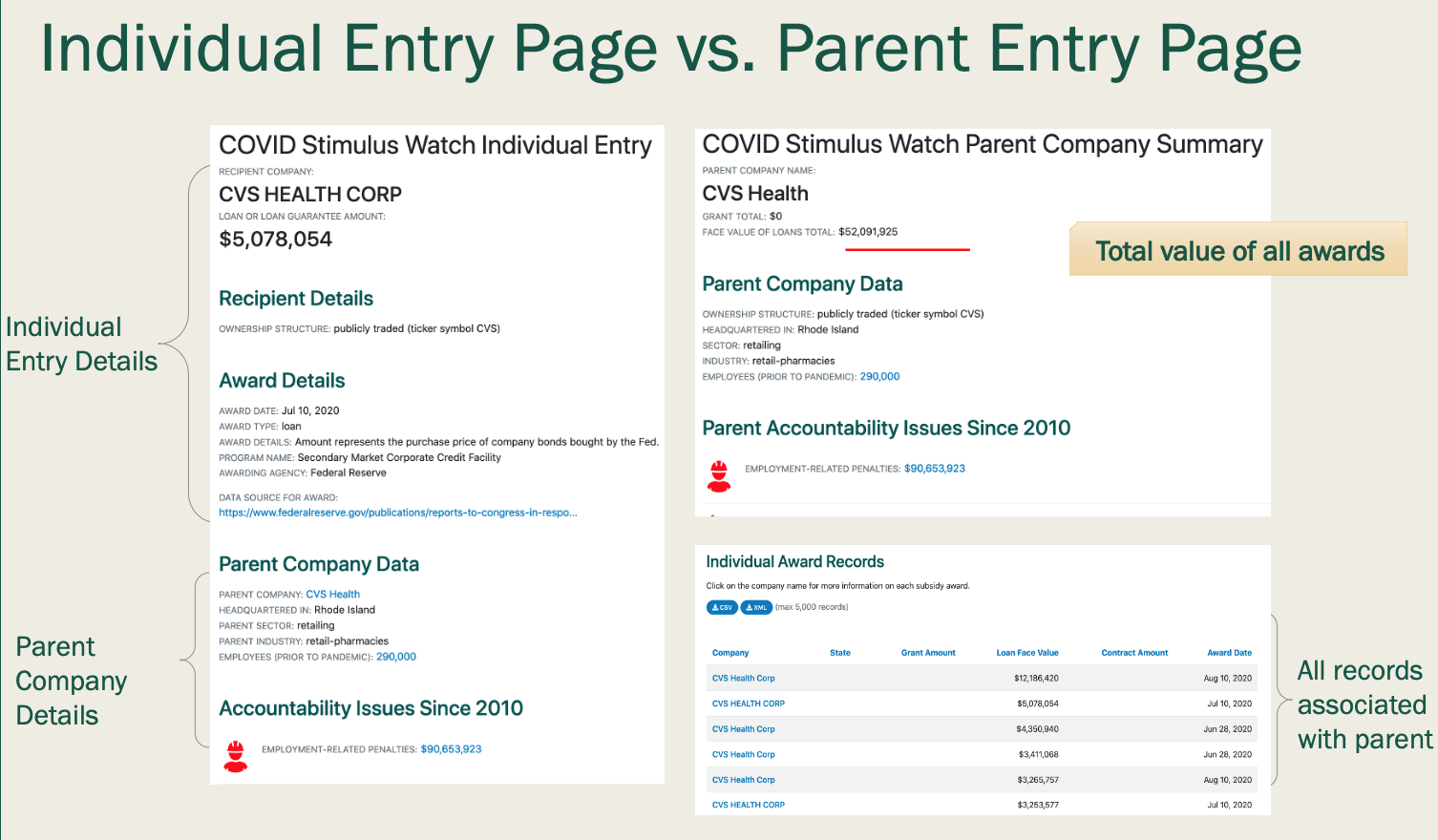
➂ Journalists can cross-check companies that received loans with those cited for violations. Good Jobs First maintains a “Violations Tracker” that compiles information on corporate crime and misconduct going back to 2000. It includes 480,000 violations logged by 300 federal and state regulatory agencies and these data are updated quarterly. Companies that were either found guilty of labor, environmental or other offenses or that were fined $5,000 or more are listed, and the database links 3,300 of these with their parent companies. An example: Sky Chefs, an airline catering company that shows up in the Good Jobs First data as part of parent company Lufthansa, has been cited for 31 infractions related to safety, consumer protection, environmental or competition-related offenses. “What we do is go through these entries and make all of those relationships, make all of those connections so you get a broader picture, a fuller accounting of each company’s track record,” Good Jobs First research analyst Mellissa Chang said. Data are displayed by individual company and by parent company, as this example of CVS Health Corp. shows.
➃ Other data sources can shed light on whether stimulus spending stemmed job losses. Journalists tracking COVID relief money have sought to report on whether it mitigated job losses as Congress intended. Good Jobs First matched companies that have filed layoff warning notices with those who took PPP loans, which were supposed to preserve employment. To monitor health care companies and their parent organizations, Chang used a database called the National Provider Identifier Registry. It often includes “doing-business-as” names that make it easier to link to PPP data. A warning, however: The database is massive – 10 gigabytes, millions of records and 400 fields of information.
➄ Check inspector general reports for story tips. The Pandemic Response Accountability Committee is an oversight body that includes 22 inspectors general. It is examining federal and state pandemic relief spending, and its website serves as a hub for IG and Government Accountability Office reports. The committee’s own reports document structural problems in the various COVID relief programs, as well as the cases of outright fraud. One example: A Dallas-area man was indicted and later pled guilty to filing 15 fraudulent applications for PPP loans, using different names and submitting to eight different SBA-approved lenders. He received $17.3 million in loans although his businesses didn’t have the payroll to justify them. Prosecutors said he used the money to buy multiple homes and a 2020 Bentley convertible. Brandon Brockmyer, director of research at the Project On Government Oversight, detailed the oversight bodies that are tasked with tracking the trillions that have flowed out the door to help prop up the economy during the pandemic. Brockmyer said those investigative bodies are good at ferreting out misspending but not well-suited for bigger questions such as: Did the COVID stimulus money worsen income and racial inequality? “I think it’s because it’s so much outside their standard set of skills,” he said. “They know how to investigate waste and fraud. I think they’re finding it to be more difficult to get at the equity question and they need to be pushed.”
This program was funded by the Evelyn Y. Davis Foundation. NPF is solely responsible for the content.