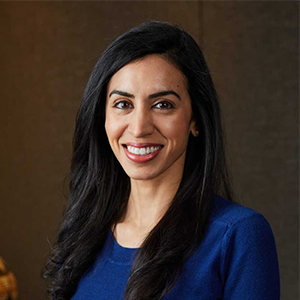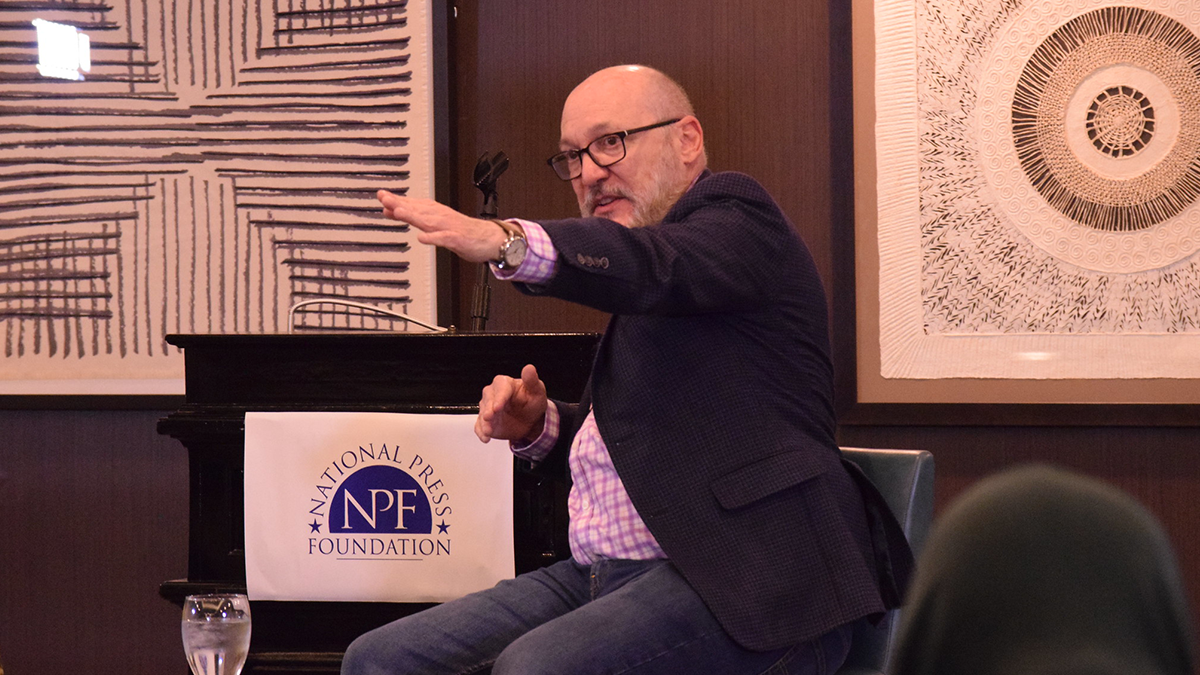
Firearms are the leading cause of death among youth in the U.S., and the implications of that statistical reality are far-reaching. By 2021, seven American children were killed by firearms every day. Nirmita Panchal, a senior policy analyst for the Kaiser Family Foundation’s Program on the Affordable Care Act and the Program on Medicaid and the Uninsured, shared some of the impacts of gun violence on American children and youth with NPF Fellows in McAllen. [Transcript | Video]
4 takeaways:
➀ Children of color are disproportionately harmed by gun violence. “Prior to the pandemic, Black youth were already significantly more likely to die by firearms compared to their white peers,” Panchal said. “But these differences have been exacerbated during the pandemic.” She said the rate of child death by firearm among Black youth is six times higher than the rate for white youth. Hispanic, Native American and Alaskan Native youth also experienced higher rates of gun violence than their white peers. Poverty also disproportionately impacts children of color, with some research connecting poverty to higher rates of gun violence.
➁ The mental health impacts on children can’t be overstated. “Childhood trauma can have lasting impacts,” Panchal said. Gun violence can take many forms in children’s lives, including domestic violence, neighborhood violence and school shootings. She said gun violence can cause post-traumatic stress disorder, anxiety and other mental health concerns in children. Research has shown children affected by gun violence have increased rates of school absenteeism, and they may struggle to concentrate in class. Moreover, access to a firearm can contribute to suicide risk.
Though mass shootings account for a comparatively small amount of deaths by firearm, even knowledge of mass shootings can harm a community’s mental health and increase anxiety, Panchal said. Some studies indicate that communities exposed to school shootings have a higher risk of suicide. Active shooter drills can also harm children if they are too intense. “They may be so real that they involve real weapons, they involve theatrical makeup and ask for sometimes even students and staff to be volunteers,” Panchal said. “And sometimes staff and students have been deceived into thinking that this is an actual school shooting event.”
➂ Increased access to firearms is directly related to higher suicide rates. “Other types of suicides are not more likely in states where access to firearms is harder,” Panchal said. The rate of suicide by firearm varies between states, but the rate of suicide by other means is relatively constant. Rates of suicide by firearm are related to the abundance of gun provisions in a given state. For instance, Idaho has only one gun law provision, but California has around 111 gun law provisions. California’s rate of suicide by firearms is significantly lower than Idaho’s. “What the research tells us is that roughly half of suicide attempts occur within 10 minutes of the current suicide thought, which again underscores the role of access to firearms.”
➃ Analyze which policies to address the problem are working…and which aren’t. Panchal noted several recent federal laws enacted to address student mental health needs, such as the American Rescue Plan and the gun reform provisions in the Bipartisan Safer Communities Act. Journalists should scrutinize how those funds are being used at the local level. “We know that there is a lot of emphasis on prevention efforts, providing crisis support and building out the workforce of mental health providers,” Panchal said. “Are schools and school districts able to use these funds towards actually recruiting more mental health providers? Are there any other challenges associated with that?” And even if schools have the funds, are oft-cited mental health workforce shortages preventing them from hiring staff? Finally, are they exploring other ways to support students, such as telehealth counseling?
This program was sponsored by the David and Lucile Packard Foundation, the W.K. Kellogg Foundation and the Heising-Simons Foundation. NPF is solely responsible for the content.