For some journalists, the intersection of their own lived experience and the issues they cover can yield complex challenges. But does personal knowledge cloud objectivity or increase empathy for audiences?
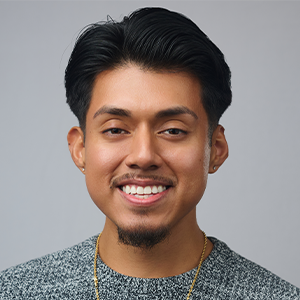
Two journalists with powerful examples of lived experience briefed NPF Widening the Pipeline fellows about that issue on May 11. First, 2025 Widening fellow Johnny Perez-Gonzales, who covers Hispanic communities for WHYY in Delaware, shared details of his own journey, which includes being raised by a single mother who helped put him through college, and his older brother being deported to Guatemala last year.
His experiences helped Perez-Gonzalez develop the Primer Estado WhatsApp group to bridge the information gap for Delaware’s Spanish-speaking community, providing accessible news and resources. He said the project is more than just a social media platform for him.
“It became a way to make sure people felt informed, included and seen because that’s what I went through and I want to make sure nobody else feels the way I was feeling when I was six, five, eight, trying to translate these news stories in Spanish to my mom,” he said.
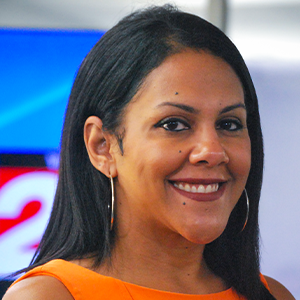
Next, Jen Solomon of 29News in Charlottesville, VA related her path from foster care, single motherhood, homelessness and other challenges while raising her five children, pursuing a communications degree and finally living her journalism dream. In June 2026, Solomon will mark one year as a professional journalist and said she leans into her life’s journey when communicating news events with her audience.
“I’m realizing that those parts of me, those painful parts, they’re my superpower,” Solomon said. “They’re how I meet people and I can talk to them and I can share things with them and they say, ‘Oh wow, she’s not just a news reporter.'”
Both Perez-Gonzalez and Solomon want other aspiring journalists to recognize the value of lived experience in journalistic storytelling.
“Identity can be a strength. So never look at who you are or what you are as something that’s a weakness because it is not,” Perez-Gonzalez said.
“I had nobody to come to tell me, ‘It’s okay. It’s okay. You can still work hard and make it here,’ ” Solomon said. “And I want to be that for the next young black girl or brown girl or person who immediately excludes themselves from something that they’re more than capable of doing because of the way their life went and the choices that they’ve made.”
Access the full transcript here.


 Reload document
 Open in new tab