Swati Sharma did not set out to lead a major media organization. But her lived experience, commitment to honing her craft and her authentic identity steered her along that path.
Now, as editor in chief and publisher of the general news interest site Vox, Sharma told 2025 National Press Foundation Widening the Pipeline fellows that leadership doesn’t need to be defined by a single-minded ambition to manage. It can also flow from a long apprenticeship to the craft and genuine respect for the people it serves.
“I really believe that what I’m best at is I know my personal mission, which is to get journalism to different communities who may not be getting information. And so that’s always been my passion.”
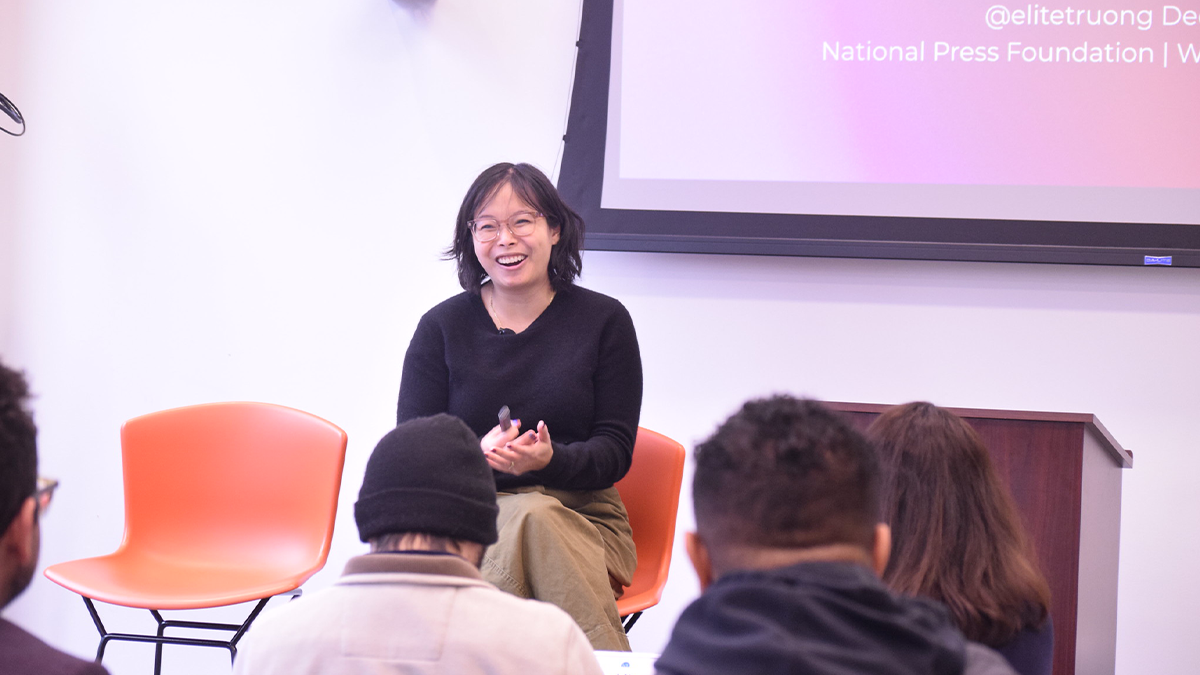
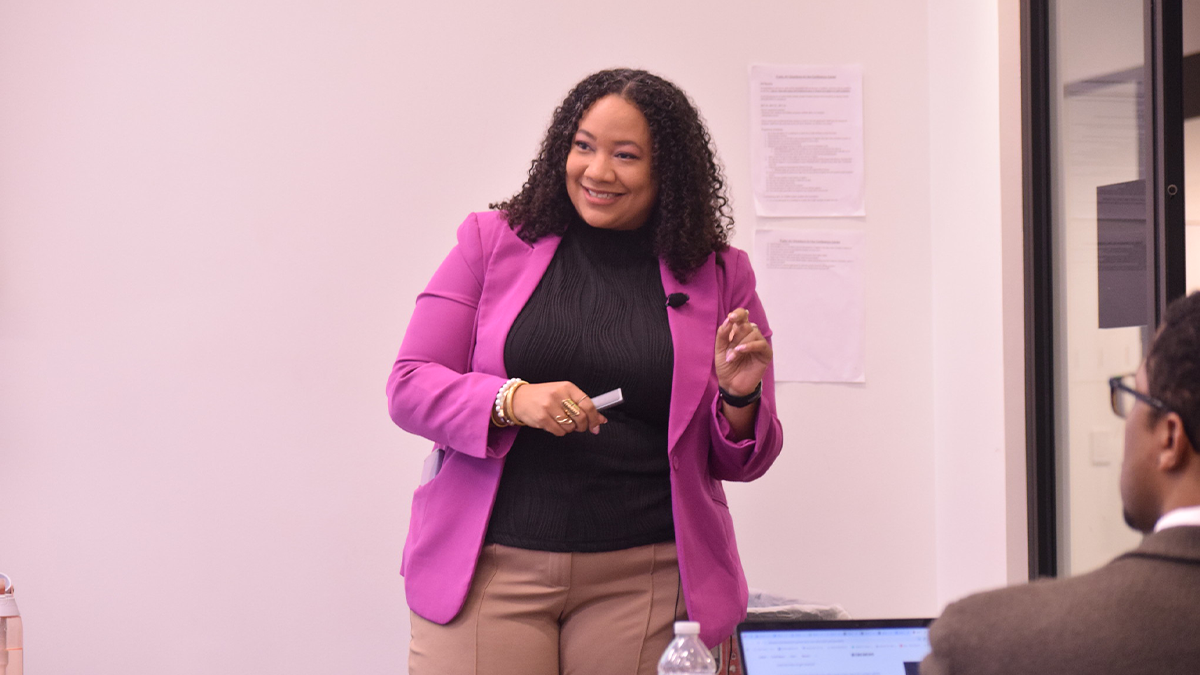
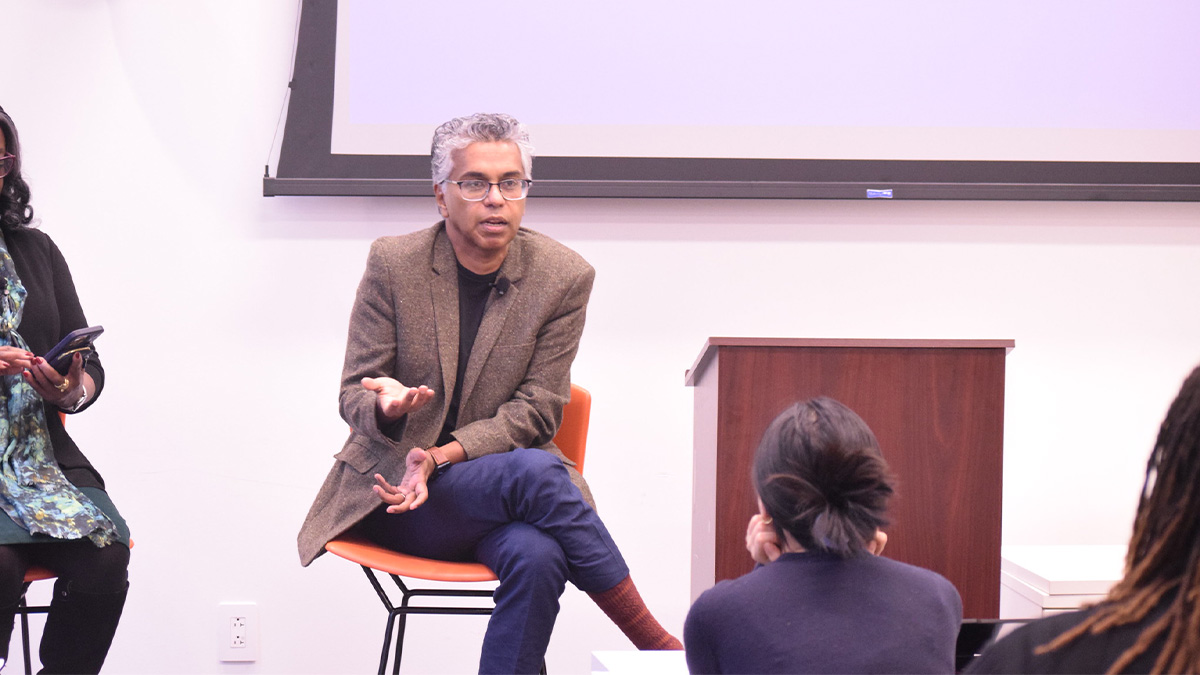
Sharma shared both her journey and her leadership philosophy with Widening fellows, and here are some highlights from that conversation:
From politics to journalism
Sharma grew up in Fremont, California, and like many in her generation, her political awakening came early. The attacks of September 11, 2001—she was in ninth grade—sparked her interest in politics, alongside cultural touchstones like The Daily Show and the Iraq War era. She thought she wanted to be a politician. What she soon realized was that she wanted something adjacent but different.
“I felt that around me, especially around 9/11, there was so much ignorance about what had happened, the history there, how Muslim Americans were treated.” Though Sharma’s family was Hindu, she was deeply affected. “I felt, I heard the hate around me. I realized, ‘oh, people just don’t understand.’”
After moving to Massachusetts with her family, Sharma attended community college before transferring to UMass Amherst and later Northeastern University. That community college stop, she said, proved pivotal. It gave her access to opportunities she might not otherwise have had, including an internship at the Massachusetts State House.
“That’s when I realized maybe this is not what I want,” Sharma recalled. She wasn’t drawn to the inner workings of power so much as to explaining it. Journalism, she realized, was the way to bridge that gap.
Learning the craft, job by job
Sharma cited the tremendous career support from Walter Robinson, the legendary Boston Globe editor who led the paper’s investigation into the Catholic Church abuse scandal as pivotal during her college years. When she later interviewed for a job at the Globe, then-editor Marty Baron cited her Bollywood blog as evidence of her curiosity and voice. She took the Globe job over graduate school and threw herself into the work—hyperlocal reporting, weekend shifts, political coverage.
By April 2013, when bombs exploded near the finish line of the Boston Marathon, Sharma was in the newsroom writing a blog post about Gisele Bündchen joining Instagram. Suddenly, everything changed. Because she had real news experience, she was put on the homepage team, helping run live alerts and coordinate coverage throughout the week. The Globe’s reporting would go on to win a Pulitzer Prize.
Not long after, the Washington Post called with an opening in its op-ed section. She worked across desks, learning the institution from multiple angles. When faced with a career decision—between a higher-paying digital management role and a grueling 6 a.m. weekend breaking news job—she chose the latter.
It was the first year of the Trump administration. The work was brutal and relentless. It was also, a boot camp of sorts.
“I really wanted that breaking news experience,” Sharma told fellows. “I felt like that would make me a really well-rounded journalist.”
Finding a leadership philosophy
After the Post, Sharma was recruited to The Atlantic, where she helped steer digital coverage through the Trump years and the COVID-19 pandemic. There, she refined a leadership insight that would shape her management style: every newsroom has its own strengths, and leadership means amplifying those—not imposing a template from somewhere else.
Her “superpower,” Sharma believes, came from focusing on solving problems rather than chasing titles.
“I think because I was from a very non-journalism, non-East Coast background, I brought reporting to all my jobs and I basically learned who actually makes decisions, what are the actual problems, how can I be helpful? And I didn’t keep looking up, I kept really focused on my job.”
When Vox approached her about becoming editor in chief, she hesitated. The role felt daunting—and she acknowledged, opportunities like that have not always been accessible to women of color. Still, she went for it.
Four and a half years later, she added publisher to her title, deepening her belief in the necessity of strong collaboration between editorial and business teams.
‘Clarity is kindness’
Management, Sharma told fellows, is not accidental. It is a skill—and one journalism has historically undervalued. She credits mentors like Marty Baron and Kevin Merida for steering her toward big-picture thinking and investing in her growth. She also names early women leaders and mentors, including Katie McLeod and ethicist Margaret Sullivan, whose guidance sustained her.
In leading Vox, one of Sharma’s core management principles is simple: “Clarity is kindness.”
“I think at some point during COVID that got messed up to niceness and it’s like, ‘just be nice.’ But then people don’t get real feedback, and they can’t grow. So I really cared about management as well. And I would only be here because of all those managers who did help me over time.”
Access the full transcript here.
This fellowship is funded by the Evelyn Y. Davis Foundation and the John C. and Ethel C. Eklund Scholarship Fund. NPF is solely responsible for the content.