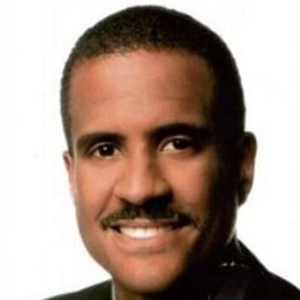
“Adapt or die” is the motto sports journalist David Aldridge lives by after nearly four decades in the news industry.
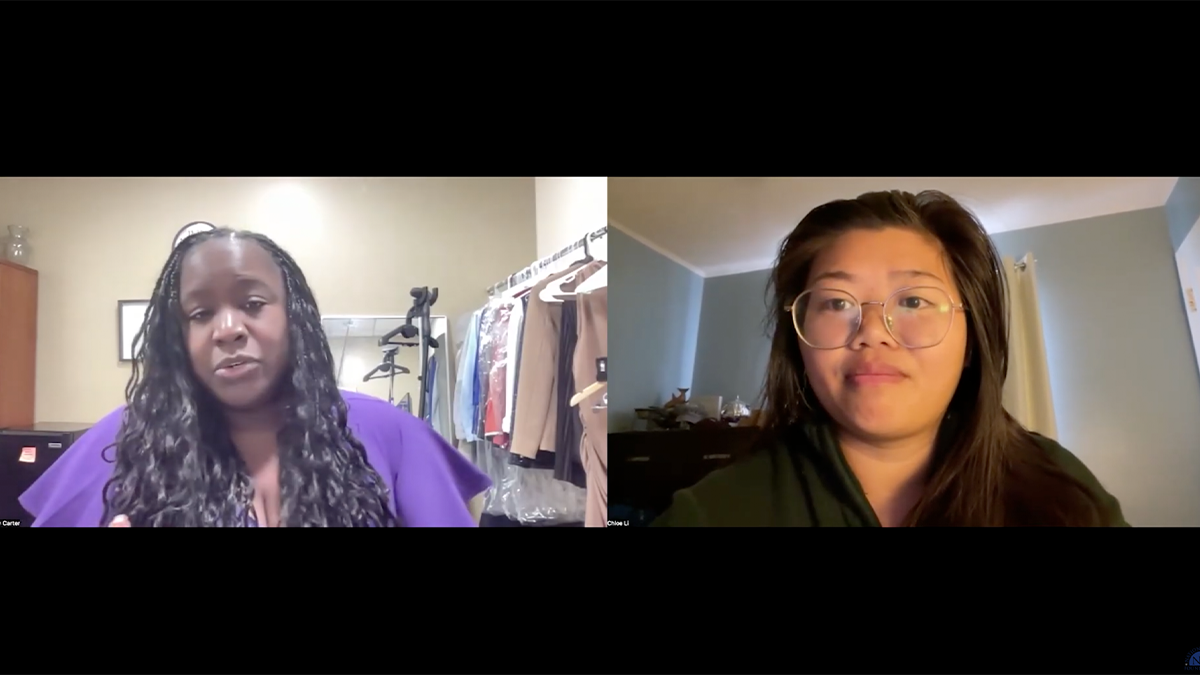
“Clearly, I can’t keep a job,” Aldridge joked, reflecting on his time going from The Washington Post to broadcast reporting for ESPN to column writing for The Athletic in briefing with the National Press Foundation Widening the Pipeline fellows.
His career demonstrates the key to longevity as a journalist: the ability to take a leap and stay relevant.
Aldridge gained a wide range of skills by working in different mediums. He learned to be fast and efficient at the Post, writing 25 inches of copy in just seven minutes. He then transitioned to television, learning to work with cameramen and catering to live audiences by condensing stories into punchy segments. Now, in the digital era, he has pivoted again to long-form reporting and column writing where readers crave depth and historical analysis over the Reader’s Digest version of a game.
‘Diversity Matters’
After graduating from American University, Aldridge began working for The Washington Post at only 22 years old.
“It was just an incredibly fortunate, lucky circumstance … 74 things had to happen right in order for me to get hired by The Washington Post,” he said.
While he was thankful for the opportunity, the newsroom in 1987 lacked diversity. As one of the few reporters of color, he felt pressure to prove himself.
“I was prideful to the point of being obnoxious about my deadline writing,” he said.
Aldridge recalled filing from events at 1:30 a.m., ensuring he was always someone his editors could rely on.
His boss, George Solomon, built a team including diversity in terms of both race and gender.
“He really walked the walk when it came to true diversity. And so you want to run through a wall for that guy because that’s not easy to do in the mid-1980s. And you know this guy’s sticking his neck out for us. We got to pay it back,” Aldridge said.
Diversity in sports journalism has made some inroads since then, benefiting newsrooms and audiences alike.
Aldridge noted that his friend Steve Wyche was the first person to realize Colin Kaepernick didn’t stand during the national anthem and know to ask whether that action might be a bigger political statement.
“That’s why diversity matters, because he noticed something and a million clicks moved from that,” Aldridge said.
Aldridge feels a connection to Black journalists present and past.
“I have a responsibility forever to people that I don’t even know that made it easier for me to do this job,” Aldridge said, citing Wendell Smith of the Pittsburgh Courier and Sam Lacy of the AFRO American. “I bring that to my writing and to my thinking all the time that I have to be good. I don’t have the excuse of not being good because people died for me to be good … and that’s why I think I still do this, because I still think I owe after 40 years.”
Advice for Young Journalists
The next generation of journalists should lean into their authentic selves and take advantage of their knowledge of technology while AI continues to grow, according to Aldridge.
“That’s a real advantage for you going forward,” Aldridge said. “The ability to utilize digital media in a way that impacts people your age and people who consume news the way you do … adapt or die, you have to.”
– By Keirah Chen, NPF Intern
Access the full transcript.
This fellowship is funded by the Evelyn Y. Davis Foundation and the John C. and Ethel C. Eklund Scholarship Fund. NPF is solely responsible for the content.