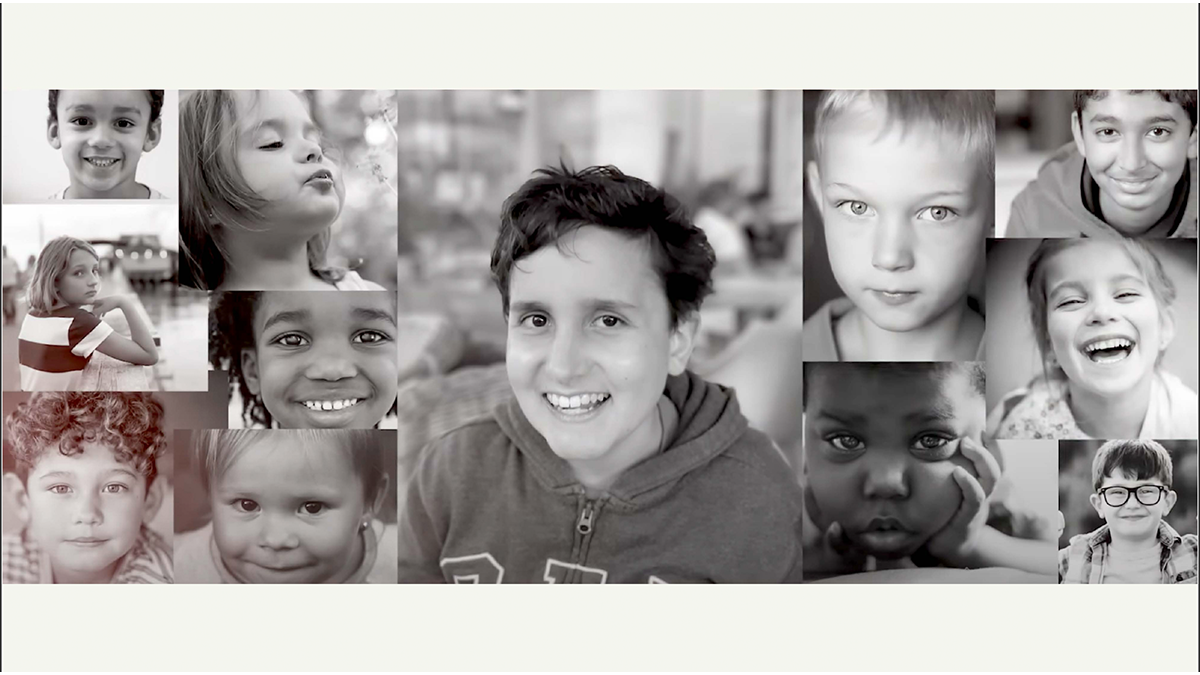
For parents, the day their child is diagnosed with a rare disease becomes a landmark – the moment life changes irrevocably. But the ability to understand what’s happening at a genetic level can help them brace for the future and provide the best possible care.
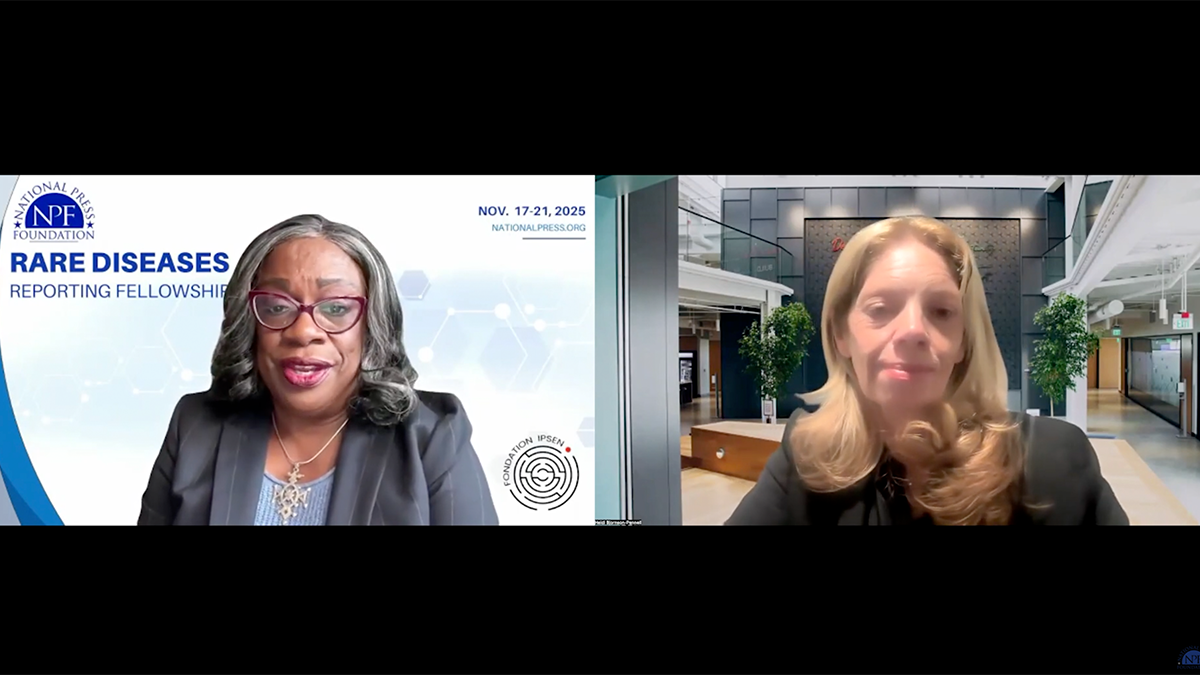
That’s why many consider access to genetic screening and counseling before and after birth to be important for people living with rare disease and their families. On Nov. 20, NPF Rare Disease Reporting fellows heard from Jana Monaco, a newborn screening advocate with a profoundly relevant story: Two of her four children were born with a rare metabolic disorder called isovaleric acidemia (IVA).
Monaco was joined by Nakita Laing, a registered genetic counsellor and a lecturer with the University of Cape Town. Here are highlights from their session:
When the vision for your child’s future changes irrevocably
Monaco described her son Stephen as a happy kid living a normal life up until about age 3.
“Suddenly one day I found him unresponsive in his bed. He was taken to the hospital, transported to another hospital that had the pediatric intensive care unit, and we thought he was dealing with just a little stomach virus that would go away. And unfortunately, 24 hours later he was in a coma on life support, and they started talking about these genetic conditions that they were looking at.”
Soon afterward, Monaco and her husband received confirmation that he had IVA.
“We were quickly taught about these genetic conditions and explained that it is an autosomal recessive gene that both of my husband and I carry, and you have to have both genes in order to have the condition. We, at the time, had no family history.”
Laing described genetic counseling as the process of helping people understand and adapt to the medical, psychological and familial implications of the genetic contributions to disease.
“It really is about interpreting individuals, families and medical histories. It’s about educating, it’s about possible facilitation of testing. There is obviously a psychological component to all of this because you can imagine getting this kind of diagnosis can rock people’s worlds,” she said.
From shock to acceptance – and a better start
Following Stephen’s diagnosis, the Monacos spent four weeks in the hospital and six weeks in a pediatric rehab.
“We were trying to figure out how to find our own normalcy again, how to deal with the loss because it was a profound loss and adjusting. So as we were trying to move along and adapt to our new way of life, our first night home from rehab, I sat and cried as I looked around at his room and all the medical equipment that was there. I realized, gosh, ‘this is our life now and it is very different.’ And then six months later we found out we were expecting Caroline.”
The Monacos opted for amniocentesis, and learned that their daughter also had IVA.
“We got the diagnosis and she was induced a week early so that everybody was on the same sheet of music. And she was taken to Children’s National Hospital in Washington, D.C., where Steven was managed with their geneticists. She was there within two hours of delivery. She had her little IV placed right there in the delivery room. She started receiving her special formula, her IV fluids. She did wonderfully and she was the biggest baby in the NICU and spent three days in the NICU and we brought her home.”
Though they already knew how to care for a child with IVA, it was still a scary time.
“We had the concern of what happened to Stephen and we wanted to do everything to avoid that happening to Caroline.”
Genetic counseling can help ease concerns and fuel better communication between families and health care professionals.
“We act as that bridge between the science and the families helping to help individuals understand the science of genetics, genomics, and help to interpret the medical implications of conditions that are very personal,” Laing said.
Access to genetic screening and counseling on the African continent is extremely limited
For the Monaco family, specialized immediate care in Washington, D.C., was life-changing. But for many families in the world, such care is unheard of.
About 30 million babies are born on the African continent each year, Laing said, and yet the lack of stable health care infrastructure in many countries puts newborn screening and genetic counseling out of reach for most.
In South Africa, the state healthcare system takes care of 84% of the population, but facilities are extremely understaffed. Still, the country has had numerous pilot screening projects since the 1950s, and until recently, there was a very successful program for congenital hypothyroidism in the Western Cape province.
“But the funding was withdrawn and it’s no longer available. The only thing that is available is testing in the private sector and it’s at an individual’s own expense. … it’s probably at the value of around $350 equivalent in America, so it’s quite expensive. And so we are only testing around 0.5 percent of all births in the country. So the challenges that we’ve identified in our country is about trying to move forward, what kinds of conditions should we include?”
Access the full transcript here.
This fellowship is funded by Fondation Ipsen. NPF is solely responsible for the content.



 Reload document
 Open in new tab