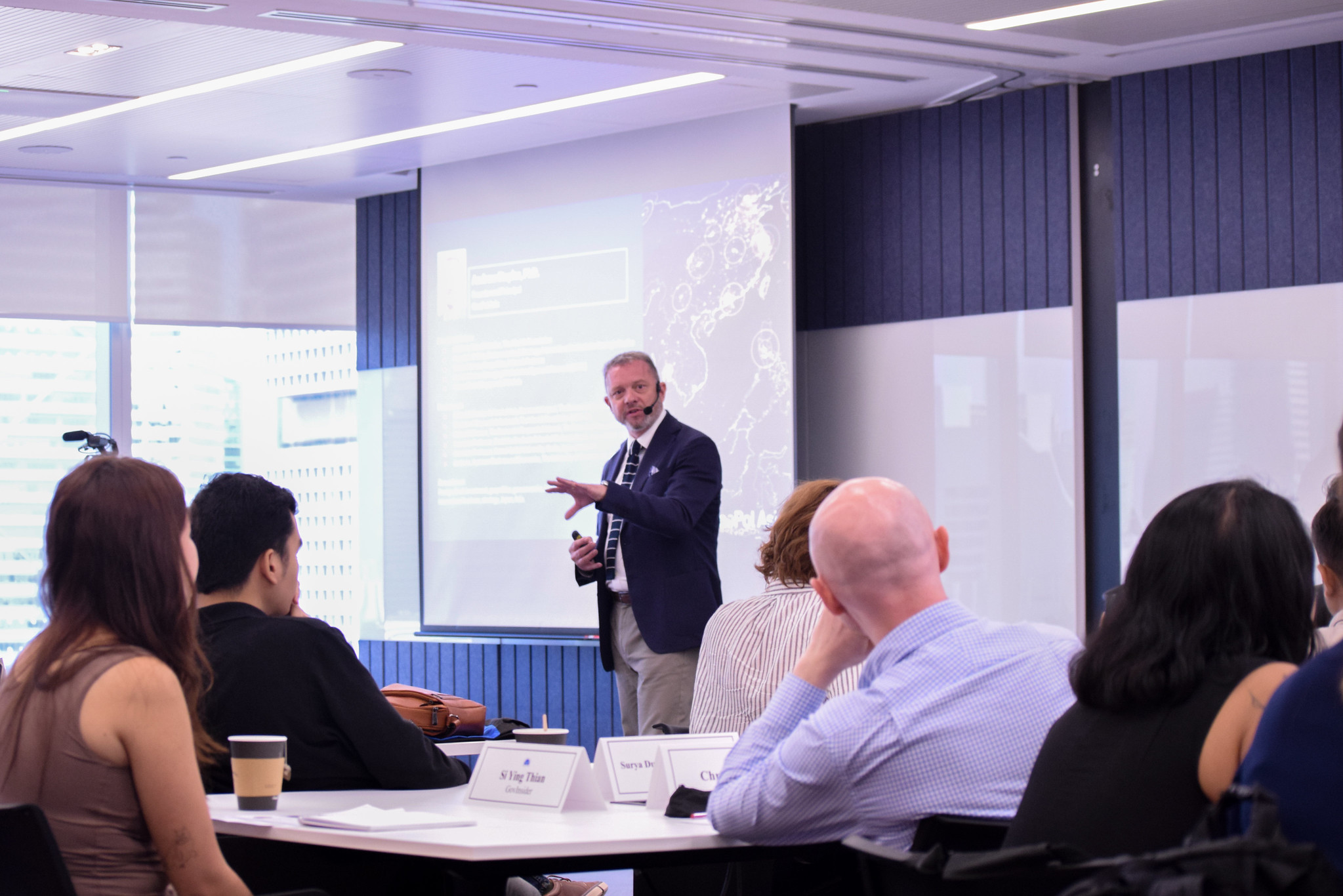
Prolonged periods of extreme heat resulting from global climate change are rapidly transforming the way people live and work, requiring an “urgent call” for action by world leaders who have not yet fully embraced the growing crisis.
“We have entered into the brand new phase,” Jason Lee, director of the Heat Resilience and Performance Center at the National University of Singapore, told the National Press Foundation’s International Trade Fellowship program. “You think global warming; that’s not true. It’s global boiling now and we are right in the midst of the crisis.”
Lee, who has long focused on human adaptation to heat stress, said no sector of society is immune to rising temperatures and the risks to workers, school environments, the elderly and even pets.
Even in tropical Southeast Asia, Lee said the notion that populations naturally acclimate to temperature change is “totally wrong.”
In warm, humid climates, people spend 95% of their time indoors to escape the uncomfortable heat, Lee said.
“We are behaviorally … very sensitive to thermal discomfort and try all ways to avoid the heat at all costs and therefore inducing lack of incidental physical activity.”
The heat avoidance reflex can creep into our most personal functions, including judgment. For those working in environments exposed to the elements, Lee said poor decision-making can sometimes be traced to heat-related considerations.
“If I get a hundred workers to build a skyscraper in Singapore and then do a counterbalance design and build that same project in London, you’ll see how much quicker, safer that project will be completed in a cool environment,” Lee said.
The urgency for public action, Lee said, has led to the creation of the Global Heat Health Information Network’s Southeast Asia hub, an arm of the World Health Organization and anchored at the National University of Singapore.
But Lee said there is a need for more comprehensive action to address the far-reaching impacts.
“We have always lived with the heat and humidity so it’s easy to think we are used to it, but as the heat intensifies we must ask are we truly prepared for what lies ahead?” Lee said.
“Our country’s provinces and homes are feeling the strain of increasing oppressive heat with schools closing, work disrupted and heat related illnesses on the rise. The toll of chronic heat stress is also partly impacting our health, productivity and mental wellbeing. The region’s rapid urbanization and aging populations plus socioeconomic disparities further amplify the impacts making this issue impossible to ignore. The time to act is now.”
This fellowship is part of an ongoing program of journalism training and awards for trade coverage sponsored by the Hinrich Foundation. The National Press Foundation is solely responsible for the content. All programs are on the record. Resources and transcripts are available to journalists worldwide.



 Reload document
 Open in new tab