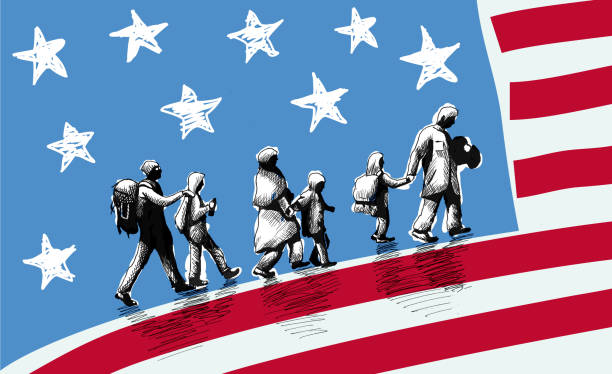
Historically, the mental health challenges for immigrant families have been framed through the lens of the separations that occur forcefully at the border, or voluntarily when a family member leaves loved ones behind to find work in another country. In recent months, the Trump administration’s immigration policies have amplified this focus as arrests and deportations are regularly reported in media.
These events are especially traumatic for children.
“[Parents] cannot resist the arrest. They cannot do anything. They’re willingly going to go with the authorities. They have no option. And even worse, they’re leaving you [the child] behind,” said Ernesto Castañeda, the director of the Center for Latin American and Latino Studies and the Immigration Lab at American University. “When your parent’s taken away and literally leave you in the street, that is triply traumatic. And we see that happening right now in Massachusetts, in many places that ICE comes, they remove the mother and a … child is literally left orphaned in the streets, so that’s very heavy for any person. That’s going to have mental health consequences for a long time.”
Another undercovered issue is that many immigrants are dealing with post-traumatic stress before they enter the U.S., Castañeda said.
“Some of the reasons for migration are gang violence, extortion … because of this context of where a lot of immigrants come from, civil war, violence, genocide, people already probably had mental health issues before coming to the U.S. Then the trip migration itself also can be very traumatic,” he said. “You can have PTSD from that.”
In addition to understanding trauma, journalists who cover immigration issues need to understand the nuance and plurality of the immigrant experience, Castañeda said.
“(There are) the distinctions that for the community members are very important between people that just arrived from Afghanistan, Ukraine, Venezuela, Ecuador, or people that have been here for a while who see themselves differently. People that have been living in Chicago for 20 years, even if they don’t have documents, they have a sense of belonging and pride and community.”
Access the full transcript here.
The Covering Workplace Mental Health journalism fellowship was sponsored by the Luv U Project, with associate sponsor the American Psychological Association. NPF is solely responsible for its content.