For journalist Emma Cordover, a dinner conversation with a stressed friend opened an intriguing new portal into immigration coverage.
“She works at a hospital here in New York at their clinic for undocumented migrants as a project manager, specifically for the postpartum depression clinic,” said Cordover, who is a digital producer for Politico. Her friend described her hospital job as “crazy” ever since President Trump began signing immigration executive orders immediately after his inauguration in January. Cordover’s friend said pregnant women and new mothers were entering the facility extremely scared and anxious. “She was explaining that as a result, the clinic had shifted its priorities completely and was holding legal info sessions and what to do if ICE shows up.”
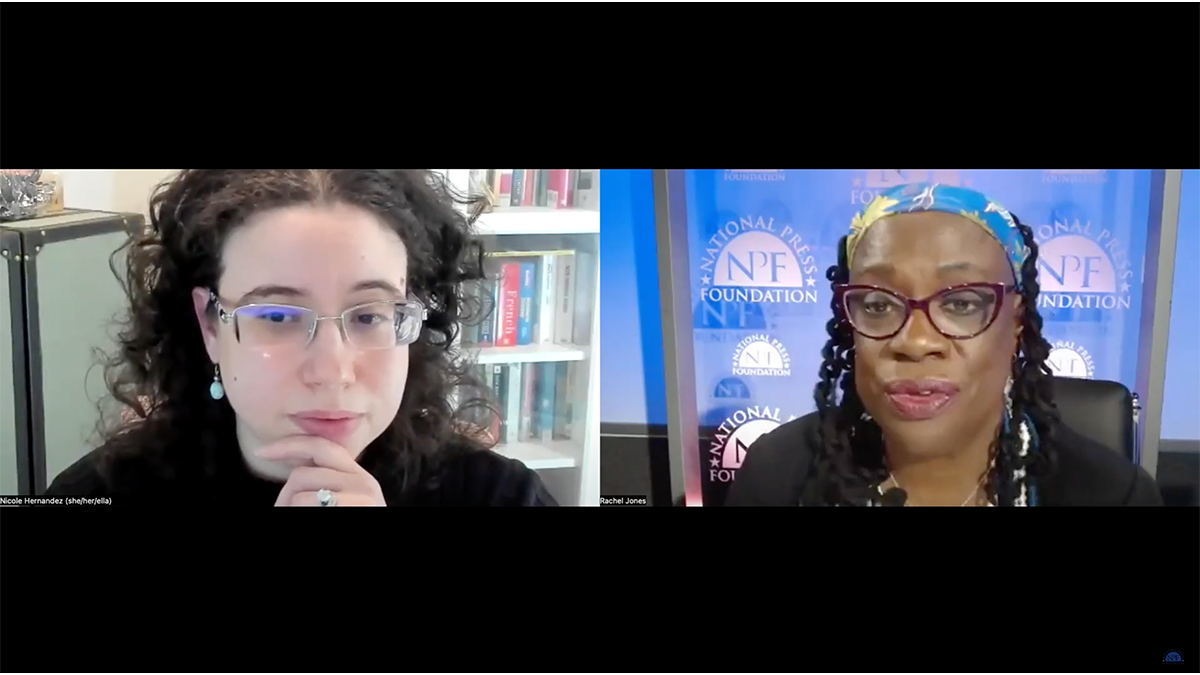
Cordover’s journalistic instincts yielded an opportunity to explore the topic of maternal health for immigrant women for Politico’s Women Rule newsletter. During a virtual session with Widening the Pipeline fellows on March 3, Cordover said the dinner convo was incredibly timely. “I hadn’t seen any reports yet on this particular kind of overlap. I think that these are the moments from which the best stories are born in my experience.”
Here are 4 takeaways from Cordover’s session:
1. Seize the moment.
Cordover didn’t waste a minute second-guessing herself. She knew she’d be producing the Women Rule newsletter the following week, so it was time to start researching a solid pitch for editors.
“Trump’s immigration policy executive orders dominated the news cycle for the first weeks in office, for almost all of January. I think he obviously made a slew of policy changes related to immigration coverage in his first moments in office. And I think what this research made clear was that there was indeed a media blitz related to immigration that was intentional and concerted. It was important to me that I established that there was actually this kind of immigration blitz happening that could be spreading fear and spreading confusion within communities.”
2. Lean into that intriguing story idea.
Your energy about a topic can help seal the deal.
“I really wanted to make sure that I packaged this very complicated issue in a way that would land for my editor primarily, and of course for our audience,” Cordover said. “I told her that I wanted to figure out how to cover the mass deportations and their effect on women. I later wrote, ‘I wonder if we could look at how deportations affect mothers or something to that effect, and how medical and maternal care professionals/childcare professionals are responding, are adoption services seeing a boost? Are childbirth complications increasing as mothers choose not to seek care?’
“I wanted to focus on policy, action and reaction, specifically what do people need to know about how these policy changes are affecting people in daily life?”
3. Finding people to talk to doesn’t have to be hard.
Sourcing on a strict deadline like a newsletter that comes out weekly can be slightly challenging, Cordover said, because there’s a very limited window and you want your story to be relevant. “But I find that when you are writing about something timely, usually you get responses pretty readily, especially from groups like these who want to share information and spread knowledge.”
Cordover said she also wanted to make sure she had the most up-to-date data on things like the number of deportations, the demographics of those deported, how many are women, how many are children.
4. A good nut graf makes all the difference.
Providing the proper context near the top of the story builds reader buy-in, and Cordover focused on producing a solid nut graf.
“I wanted to underscore, like I mentioned in the beginning, the factual distinction between Trump’s media blitz and the actual number of deportations. I wanted to highlight the overwhelming nature of the news around the deportations and how that might mismatch with what’s actually happening and how this might be contributing to the fear and confusion among communities. And then after that, I wanted to bring in the whole point of the story, which is that there is a specific subset of those immigrants that could be uniquely impacted by these policies. It’s not just patients skipping healthcare appointments in general.”
Access the full transcript here.
This fellowship is funded by the Evelyn Y. Davis Foundation. NPF is solely responsible for the content.



 Reload document
 Open in new tab