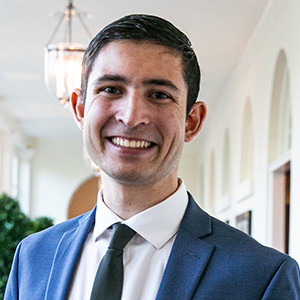
Over 5 million students are stepping up to be caregivers in their families — children that Richard Lui and his assistant producer Alex Lo call “Sky Blossoms.”
Sky Blossom is a term that comes from World War II, when front-line troops received much-needed aid and supplies from paratroopers who dropped in. Ground troops would look up and say, “Here comes the Sky Blossoms,” explained Lui, who is a news anchor for MSNBC and NBC as well as the director of the films “Sky Blossom” and “Unconditional.”
“Unconditional” (2023) chronicles three families over seven years – including Lui’s – in their journey as caregivers. “Sky Blossom: Diaries of the Next Greatest Generation,” which was released in 2020, follows five young American caretakers for their military parents.
“I think the common theme that we saw just as observers in each of those families was just the heroism that you saw in these kids,” Lo, a producer of both films, told his fellow NPF Long-Term Care Crisis Reporting fellows.
Key quotes from Lui, MBC/MSNBC News Anchor and Producer of “Unconditional” and “Sky Blossom”
“And my gut was that caregiving was that secret sauce and we were right, I believe. Not that it took a rocket scientist to figure that out. And so, I did go in wanting to represent every geography and I wanted to represent all major groups of ethnicity in the film because we had too much regional separation and too much racial division at the time.”
“We’re just showing you what is America in the context of caregiving.”
“It was one-to-one human to human. What I love about this story space is that regardless, and that’s why I said regeneration care is that in these spaces, all of that melts away. I was in the south, I was in the Midwest, I was in the east, the west, the Pacific Islands. I was with Latino, Black, API, indigenous and white families. And it all went away. So the great thing about this story space is that it melts it all away.”
Key quotes from Lo, NBC News Desk Editor and Producer of “Unconditional” and “Sky Blossom”
“We worked with different NGOs who are really on the ground to help identify those families. So, I think we had a spreadsheet where we maybe had about 50 or so that were under consideration. And we were looking for very specific things in terms of the stories that we wanted to tell.”
“We were trying to show the invisible wounds that not just the recipient of care had, but also the caregivers themselves, you talk about the regrets, all the difficulties that they were having. And certainly, having a caregiving experience of our own allowed us to, I think, see into that better and to be able to have a better sense of how we could show that, whether it was through the interviews or through animation, even through music.”
Access the full transcript here.
The America’s Long-Term Care Crisis Fellowship is sponsored by AARP, which also sponsors the AARP Award for Excellence in Journalism on Aging. NPF is solely responsible for the content.