It costs a family about $80,000 a year to take care of a family member with dementia, says Sandeep Jauhar, a cardiologist and author of “My Father’s Brain” about his family’s experience with Alzheimer’s.
“There’s a huge resource gap” when it comes to caregiving for people with dementia, he told journalists selected for NPF’s America’s Long-Term Care Crisis Fellowship.
Jauhar, whose family is from India, noted that “there is no Social Security in India … Social Security is having a son.”
“In India, there’s a culture of families taking care of the elderly. In America there’s a nuclear family and then the government doesn’t help,” Jauhar said. “Families break up because of this. People die, caregivers die because of lack of resources, lack of help from the government.”
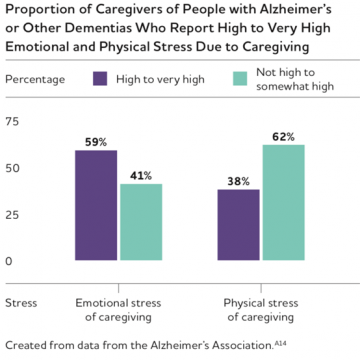
Jauhar, a cardiologist from Long Island Jewish Hospital, said that caregiving takes a huge toll on family members, with primary caretakers suffering stress, depression, and other mental health issues as well as loss of productivity or advancement at work.
There are an estimated 48 million family caregivers in the U.S., most of whom are women who get little or no pay and who have very little training. And Jauhar said access information is a big problem. “There’s a huge knowledge gap. If, as a doctor, I knew next to nothing of something practical and useful about dementia, I can only imagine … that there’s just a huge deficit of understanding about what dementia is and how to cope with it, and I think that’s why almost every caregiver I’ve ever spoken with has huge regret – I have huge regret about the job I did as a caregiver.”
One of Jauhar’s biggest challenges was accepting the loss of brilliant man who had inspired and guided his own life through the years. “I refused to treat him like a child…to me it seemed unethical.” But he eventually faced the truth: “Some people would call it ‘reality orientation.’ “Do you pay more attention to the person with the rational foresight who was a scientist, or do you pay attention to the person in front of you?” Jauhar said support groups helped him end his denial. And, ultimately, he wrote the book he wished he had when he was watching his father’s cognitive decline.
Access the full transcript here.
The America’s Long-Term Care Crisis Fellowship is sponsored by AARP, which also sponsors the AARP Award for Excellence in Journalism on Aging. NPF is solely responsible for the content.