4 TAKEAWAYS:
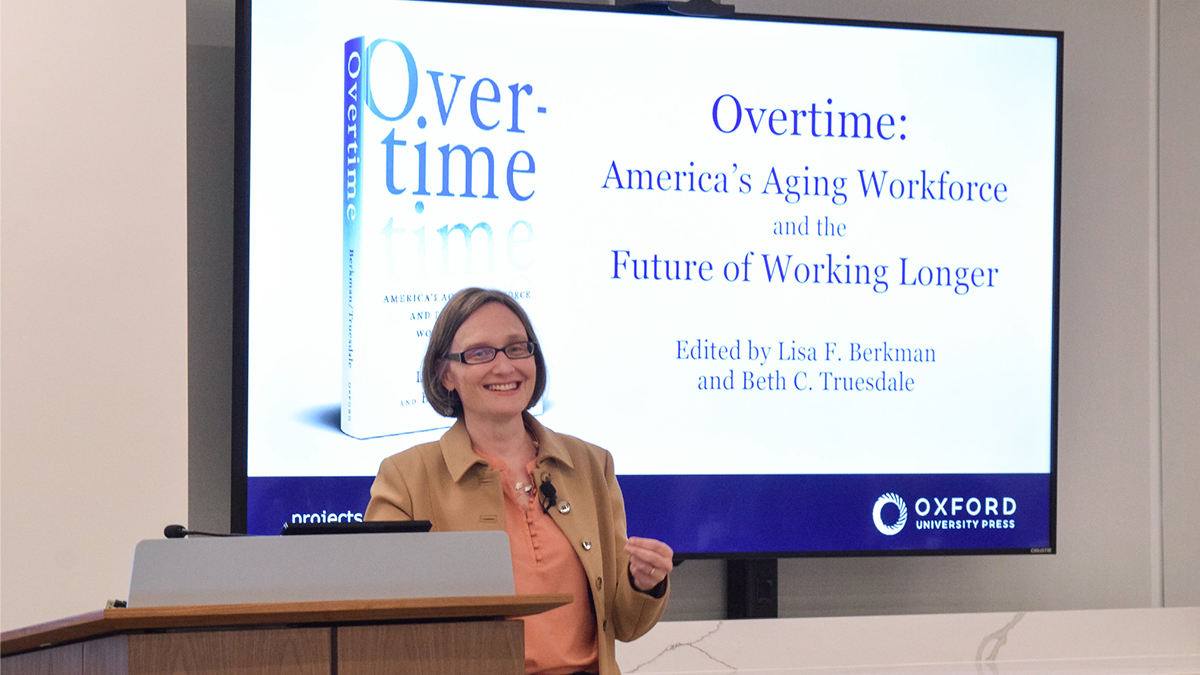
➀ Has the U.S. workforce returned to the way it was before the pandemic? That requires looking at the numbers, Jennifer Schramm, AARP’s Senior Policy Advisor told NPF Living Longer fellows. Use the Bureau of Labor Statistics’ data tools and series reports to compare different statistics during different time periods. There are 4.9% fewer men 55+ and older in the workforce as of August 2022 compared to February 2020, according to Schramm. But to make it easier for others, every month, the AARP Public Policy Institute publishes an Employment Data Digest. “We run data on the employment to population ratio. We look at different age groups’ labor force participation rate.” [Transcript | Video]
➁ Ask the right questions of the right people. Reach out to experts at the Current Population Survey or an economist at the State Labor Market Information for your specific state, Schramm suggested. “They’re probably a great resource for interviews about local employment trends.” Look at what the BLS publications are putting out and what the BLS economists are thinking about. “They know this data better than anybody else. And when they write an article about something, it’s because they saw something in the data they thought was interesting and unique.”
➂ Create a data visualization to accompany your story. Use the Federal Reserve Economic Data (FRED) website, Schramm suggests. FRED – an initiative from the Federal Reserve Bank of St. Louis – helps users tell their data stories, according to its website. You can browse the data by the category, release, the source, the tag and the release category. FRED will make a graph for you to edit and either download or embed it to your story. Tutorials can be found on its website. NPF fellows have also learned how to create visuals with Datawrapper and Tableau.
➃ Compare the United States to other countries. “Another angle for stories can often be just looking at where we in the U.S. are compared with other countries,” Schramm said. Use the Organization for Economic Cooperation and Development (OECD) to compare different measures of the economy of different countries. Another idea is to potentially schedule your stories around an agency’s release calendar. For example, when the veterans’ data comes out, write about veterans that week, Schramm said. She also mentioned that older workers who have the highest levels of education are the most likely to work at older ages. “But during some months … their decline was sharply down. Whereas those with lower levels of education were either holding steady or their decline wasn’t as noticeable.”
Other organizations that can generate ideas about emerging trends include:
- National Bureau of Economic Research
- Pew Research Center
- The Brookings Institute
- Schwartz Center for Economic Policy Analysis (SCEPA)
- Urban Institute
This program is sponsored by AARP. NPF is solely responsible for the content.