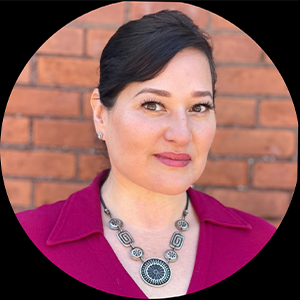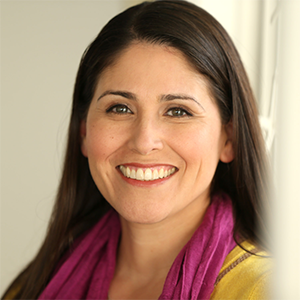
As the impacts of the Trump administration’s immigration orders continue to mount, so too do concerns about strategic disinformation in and about Latino communities. Journalist Martina Guzmán, the daughter of immigrants working in the Detroit auto industry, encountered numerous examples of how false narratives had influenced communities in her years as a reporter. And as an avid NPR listener, she knew firsthand the power of radio to shape perceptions. Guzmán’s lived experience influenced the creation of the free app Verdad, which is designed to monitor radio stations for disinformation.
“[It’s] a tool to help what was an extreme blind spot for journalists to be able to monitor what was happening on radio,” Guzmán said. That’s especially important for Hispanic audiences, where an estimated 97% consider radio as a primary source of news and information.
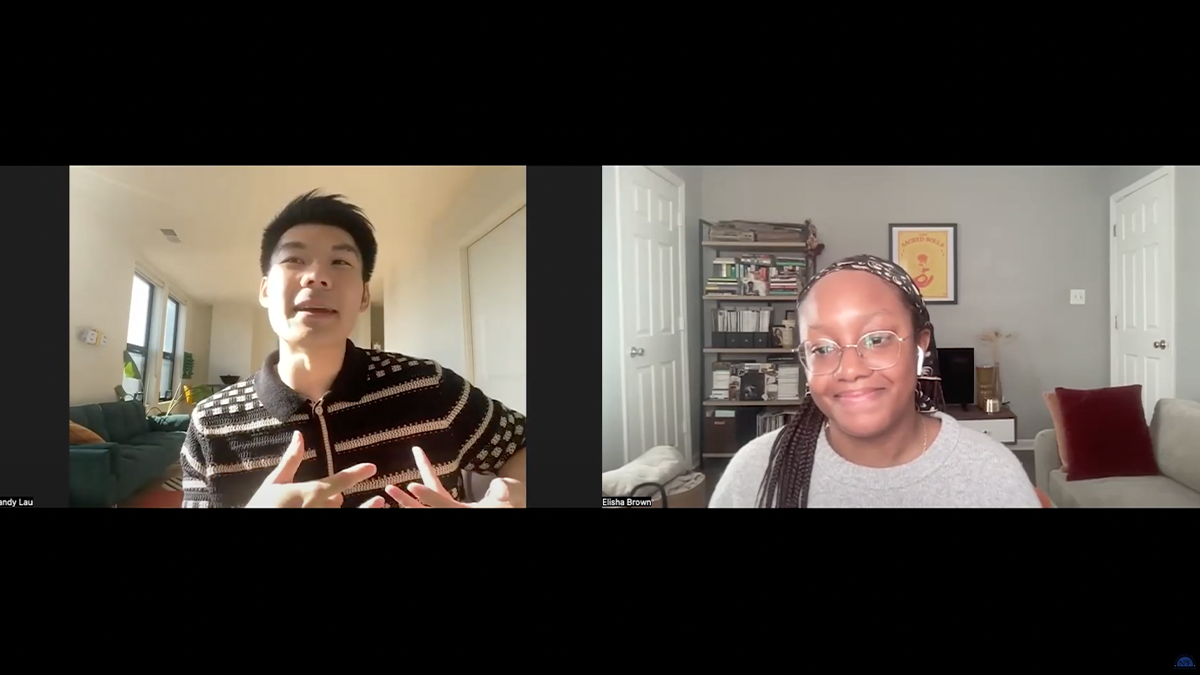
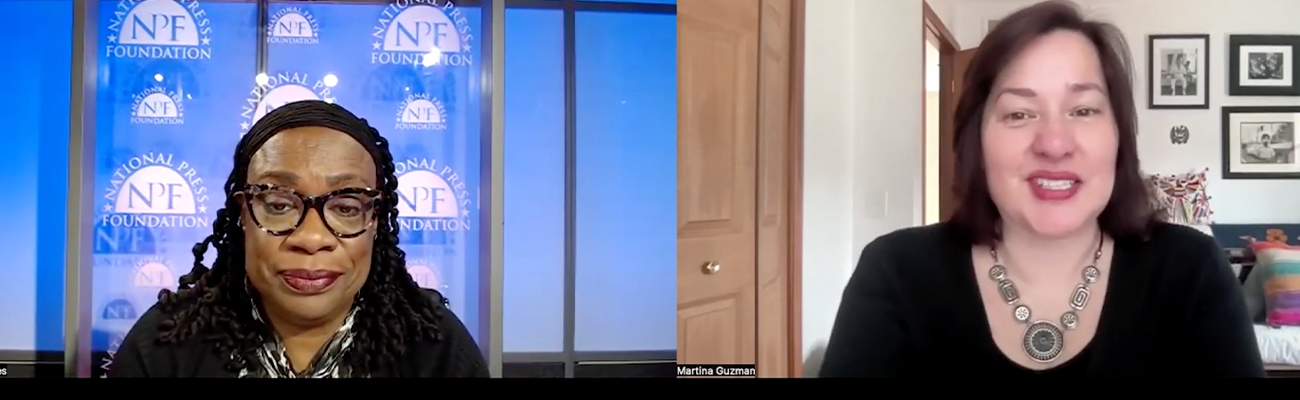
On March 3, the director or the Race & Justice Reporting Initiative at the Damon J. Keith Center for Civil Rights explained the process of creating the app to NPF’s Widening the Pipeline fellows and offered advice for how it could benefit their reporting.
Guzmán said the key markets for Verdad are radio stations in states considered political battlegrounds, and well as stations in states with high Latino populations. The app scans the content of those stations, using AI to detect information that is likely incorrect. Users can thumbs up or down the posts, and information can then be flagged and either removed or reevaluated to prevent bad actors from flooding news websites, Guzmán said.
“We keep adding things so that the AI tool can refine itself and be able to more and more distinguish what disinformation is, what a conspiracy theory is, what misinformation is.”
Although mis/disinformation has long been used to influence political outcomes, it began to flourish during the 2016 election, Guzmán said.
“I don’t know if I would say it’s more because of one president or another, but it’s definitely been around since then,” she said. However, “what we found was that before the election, a lot of the disinformation was to the right. It was right-wing conspiracies, it was far right ideology. And after this election, what we found was that there was left-leaning disinformation, and that really surprised us.”
Guzmán urged journalists to use Verdad to help counteract false narratives in Hispanic communities.
“Latinos are invisible. Unless it’s immigration, it feels like our community is just invisible to comprehensive news coverage,” she said. “Economic development and business stories really make me feel like this is what this community that you ignore is contributing economically to the city and to the state.”
Access the full transcript here.
This fellowship is funded by the Evelyn Y. Davis Foundation. NPF is solely responsible for the content.