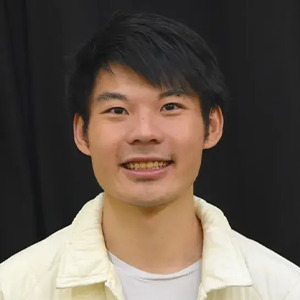
As one of the first Asian American reporters for the New York Amsterdam News, Tandy Lau has some solid insights into how diverse communities interact with media.
Covering public safety for one of America’s oldest Black newspapers requires Lau to draw from his own experience as the son of Chinese immigrants, reporting in one of the most ethnically diverse cities in the world.
“I think it’s very important to be able to dip into who you are to think of stories,” said Lau, whose work builds bridges within and between different communities. “It’s a little bit easier of a time to reach out to these populations to really get them to trust you and for them to know that you’re not going to do any harm with your reporting.”
Amsterdam News reporters are journalists of color producing content for communities of color, and Lau says the formula is unapologetic.
“At the end of the day, we see race as something that you can’t really avoid. We don’t think that there are two sides to racism,” Lau told Widening the Pipeline fellows March 3. “As a public safety reporter, I see my colleagues that work outside of advocacy news, when they write about murders, they don’t write about both sides of the murders. They don’t write about how a murder could be murderer and anti-murderer, people just write about how murder is bad. There is that difficult conversation of whether or not you could say the same about racism because it’s a much less tangible thing.”
But when the objective is serving the needs of a particular community, Lau says exploring topics like the reasons people seek refuge in the U.S. is a vital public service.
“Obviously we have an influx of migrants, but even on the granular level, there are people in the community that have a general misunderstanding of what an asylum seeker is, and they need to have that understanding. And I think that has been really why we do these stories more so than anything else.”
Do no harm
As the Trump Administration’s immigration policies continue to unfold, many communities are confronting the impact of deportation orders and shifting processes that have caused many undocumented people to avoid leaving their homes for activities like church and school – or even medical emergencies.
When Lau received a tip about a migrant soccer program in East New York, it seemed fairly straightforward.
“It was funded just by small donations and it really didn’t have any press. They were just taking migrant youth that were living in the shelters, giving them a soccer field to play on indoors. So the story I think was around this time last year, it was freezing cold outside, so you couldn’t play in a New York City park, but it was indoors, it was safe environment.”
But the more Lau talked with the program coordinator, he realized there was something deeper at play. As photographs were being arranged for the story, the coordinator told Lau about concerns that went far beyond things like fundraising or athletic competition.
“One of the big issues he had was just generally the uses of the kids’ faces,” Lau said. “He’s a little bit worried about some of these people, their parents are going through their cases, didn’t really feel super, super comfortable having this publicly available knowledge and we respect that. Obviously one of the big things that we always come back to at this paper is not to do harm. I think what really that opened the door to was other programs reaching out to us and really talking about what their plans were and what they wanted to do.”
Access the full transcript here.
This fellowship is funded by the Evelyn Y. Davis Foundation. NPF is solely responsible for the content.