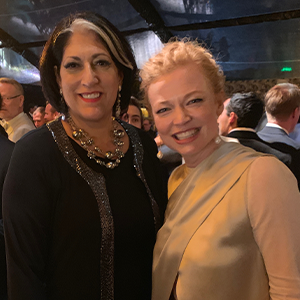
Tammy Haddad with Sarah Snook, who plays Shiv Roy on the HBO hit “Succession.”
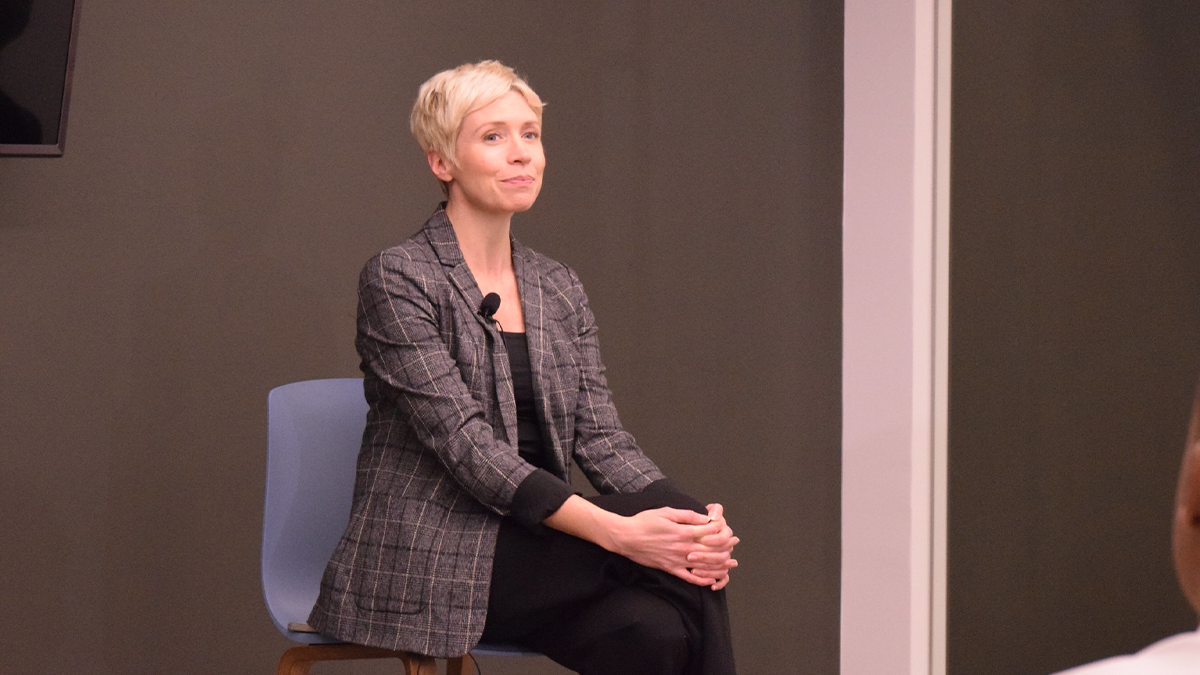
Tammy Haddad, founder of Haddad Media, has worked as an executive producer on CNN’s “Larry King Live” and MSNBC’s “Hardball with Chris Matthews” and has consulted on HBO shows like “Veep and Succession.” She shared tips on building a network in and outside of journalism and securing television appearances with NPF’s Paul Miller fellows. [Transcript | Video]
3 takeaways
➀ Ask the follow-up question. People are “programmed” to deliver answers that make them appear favorable, and sources often aren’t inclined to give thoughtful, detailed responses in their first answer. Haddad said while working as a producer on Larry King’s radio show, he would interview sources for three hours, which led to people letting their guard down.
“Trust me, by that third hour, these people told you everything they weren’t supposed to say,” she said. “It was so good.”
Let people give the talking points they want to get across. Later, they’ll give more genuine answers because they know they already gave quotes that make them look good. “Let people say what they want to say,” Haddad said.
➁ Remind people you’re available. “Always leave people knowing they should call you first,” Haddad said. “Because the other person’s saying that.”
The strategy works to develop relationships with sources, but it also applies to networking. Most news outlets have an employee dedicated to booking TV hits for journalists. Talk to them, too. “You’ve got to find advocates in your newsroom,” Haddad said. Talking with bookers for individual shows is another good strategy to score a TV hit.
When telling people you’re available, follow through. “You cannot imagine how many people have careers because they answer their phone,” Haddad said. “Answer your phone! Don’t let it go to voicemail.” Television bookers often need to find a reporter to do a TV hit on extremely short notice. Finding time to talk with them is the first step in getting a booking.
➂ Keep disagreements civil. “Don’t disagree with the anchor, or you won’t be back on,” Haddad said. While journalists should ensure information is accurate, television prioritizes flow. “You don’t want to stop them,” Haddad said. “You want them to keep going.” She said journalists should make their clarifications, not argue.
For TV hits, keep the content short, and show emotion when discussing it. “If you don’t show the passion you have for your job, why should anyone else?” Haddad asked.
NPF is solely responsible for the content.