5 takeaways:
➀ Show up. Nothing compares to bearing witness in person. “When you do things remotely, you can get the story that you thought you were going to get. But when you go out and show up, you get the story you didn’t know existed,” USA Today Washington bureau chief Susan Page told the 2022 class of Paul Miller fellows. As a young reporter, Page made a point of going to news conferences – even those she didn’t need to attend – and to ask a question from the front row. “You never know … who’s watching it, might be somebody who’d be a great source. So I wanted them to remember me,” she said.
➁ Develop trusting source relationships. “Your good journalism depends on building and sustaining sources who trust you and whom you trust,” Page said. As a beat reporter, Page said she would constantly set up meetings and “talk to anybody who was willing to talk to me,” then assess from there “who told it straight and who didn’t.” She encouraged young reporters to over-report. Interview three more people whose quotes you don’t need as a long-term investment, she advised. Built trust by treating everyone with respect and civility. She also said journalists must be careful to be accurate, fair and willing to listen. “I think we rebuild trust in the work that we do brick by brick, just like it was eroded brick by brick,” she said. “We have no bigger obligation than that.”
➂ Accept shades of gray. Make room for not just balance, but nuance. “If you write a story with a hero and a villain, you might want to take a second look at it. If you write a story where you’re conveying that you know exactly what happened and what’s going to happen next, that’s probably wrong,” Page said. “Reality is complicated and messy, and smart journalism has to reflect that.”
➃ Do not assume. Try to slow down, look at different perspectives and think of different angles. “This is a lesson I’ve had to learn myself over and over again,” Page said, noting how she and others assumed Donald Trump could not be elected in 2016. “In retrospect, I understand exactly what happened in 2016. So why didn’t I see it at the time? That is what I would like a do-over on,” she said.
➄ Combat misinformation with a truth sandwich. When politicians lie to the level that it must be covered, Page endeavors not to amplify the incorrect information. She advises a “truth sandwich,” starting with a factual statement, explaining the lie but clarifying that it is false, and ending with another factual statement. “You smash the untruth between two slices of true bread so that it doesn’t get any more currency,” she said. “So no one can read just the headline or the lead and be left with an untruth.” That method must be employed every single time the untruth comes up in coverage, Page said. “That leads to sometimes not very elegant writing, but it leads to more defensible writing.”
Speaker:
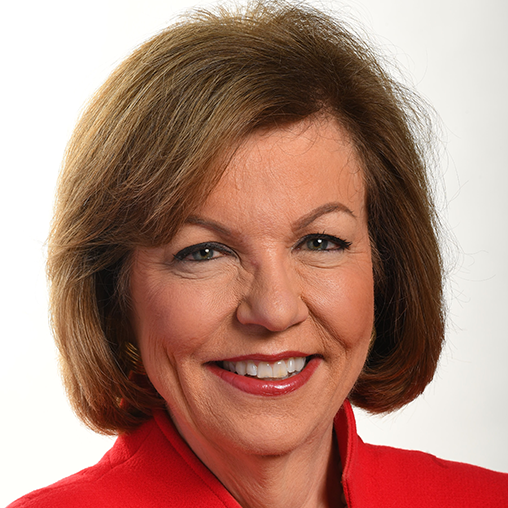
Susan Page, Washington Bureau Chief, USA Today
This program was funded by the Evelyn Y. Davis Foundation. NPF is solely responsible for the content.