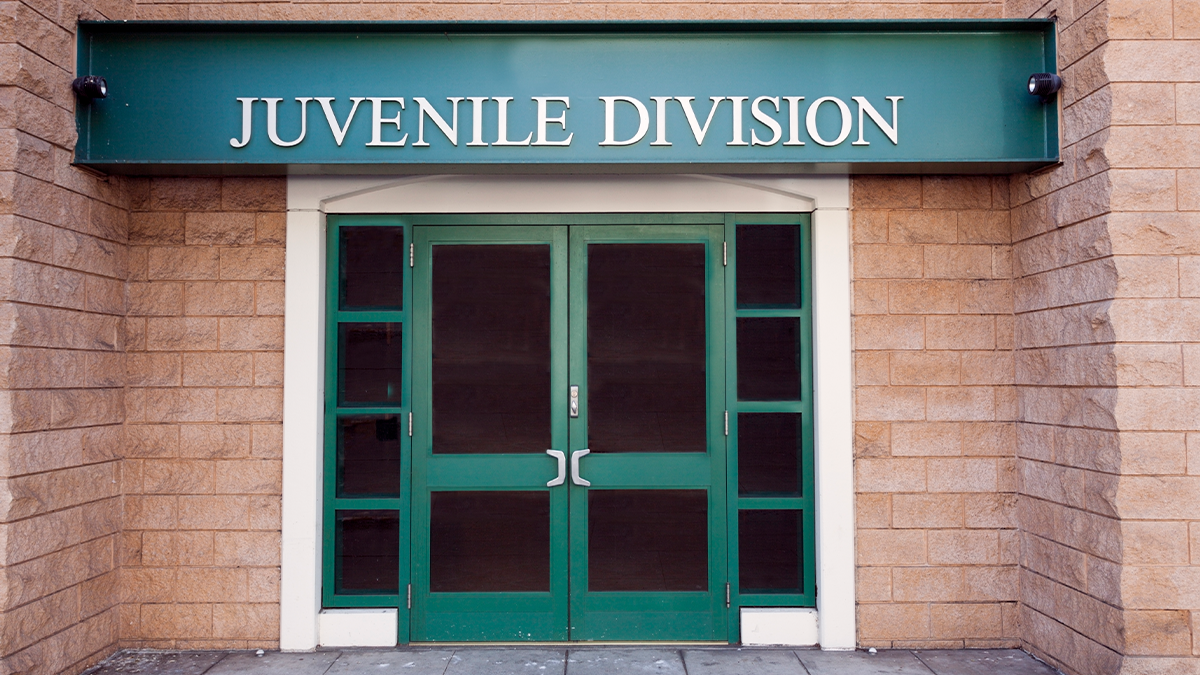
Shortly after radio journalist Meribah Knight moved to Nashville for a job with Nashville Public Radio, she came across a story about children who had been arrested for not stopping a fight.
“And I thought, ‘What the hell?’…. And so, I just really couldn’t understand what was happening. And it was the beginning of a six-year odyssey of trying to understand why,” Knight said. She spoke to NPF’s Future of the American Child Fellows about what it was like reporting and recording The Kids of Rutherford County.
Find your “North Star” question.
For Knight, identifying that foundational question was easy. “Why are children being arrested for such minor offenses in this county?”
Children were getting charged with crimes like kids running away, smoking, drinking underage and not going to school. But Knight described the procedures surrounding these arrests as a “black box that you can’t get into” – which is why the system is so broken, she said.
But Knight said she was able to make progress when the families of the children who were arrested started suing, Suddenly, information was more accessible in the court record.
“Because what it turned out is that they had messed up royally and that the crime that they had said these kids committed was a ‘criminal responsibility for the conduct of another.’ Which essentially what they were saying was, you didn’t step in to stop this fight, so you are guilty of this fight.”
In one of the first complaints, Knight saw a judge who allegedly told the police to arrest kids, and once arrested, they go to the jail and wait.
“And this is where the accountability reporting comes in,” she said. Rather than just finding the answer to the question, Knight said she wanted to hold the people at fault accountable.
‘A whole system run by a judge and the jailer she appointed.’
About 10 months after the arrest of those kids, the police department decided to investigate itself, Knight said. At the time, there was a new police chief, and he asked the national police to come in and do a parallel investigation. This turned into a 144-page investigative file, which included a Key officer’s audio recording. Knight filed a public records request asking for all of the audio – and she received 38 hours’ worth. This audio turned into the first episode of the podcast.
One section of audio Knight heard involved Officer Crystal Templeton saying that she thought arresting kids might somehow help them and their families. But that wasn’t happening.
“The system was arrest kids, take them to the judge and let the judge do with them what they will, don’t ask questions. And here you had a system that was built on an illegal policy of officers arresting kids that would go before a judge who initiated that illegal policy.”
Publics records, people and podcasting
Knight began filing public record requests – especially requests for personnel files – and then had to figure out who would be the main characters in the story.
She learned of two lawyers who are former juvenile delinquents themselves, she said. “They ended up taking cases in juvenile court because they couldn’t get a job anywhere else because they had DUIs on their records, they had drug possession on their records.”
One of the lawyers was Wes, whose first case was a 12-year-old girl arrested for accidentally starting a fire in a neighbor’s yard and was arrested.
Knight shared a snippet from Wes’ audio clip: “I remember feeling like I am in a penal facility. I visited prisons before, I’d been in jails before myself, and it was very much identical to an adult prison. And I’m sitting across from this little scared 12-year-old girl who had accidentally started a fire and had now spent the night in jail. It just felt wrong, it did not feel like this is how kids should be treated. It didn’t feel like this was the right place for this 12-year-old to be.”
Knight shared some valuable insights about podcasting as a medium: “It has been an incredibly difficult year for podcasts. It’s very scary to see amazing work like “Stolen,” which won the Pulitzer and a Peabody, everybody get laid off by Spotify…. I feel like we’re going to have another year of hard times, but I think essentially the ad model is broken because what you’re doing is you’re selling impressions. Even with Serial, you get a huge listenership, but these things take time and money to make.
And so, I think what’s interesting and I’m really interested to see what happens with this… I think more and more that foundations will become part of the economic engine that drives these in the funding model for them. But we just can’t expect the downloads that Joe Rogan gets, this is absurd. He sits with a mic and says crazy stuff for four hours. I made less than four hours, and it took me three years.”
Access the full transcript here.
This fellowship is funded by the David and Lucile Packard Foundation, the W.K. Kellogg Foundation and the Heising-Simons Foundation. NPF is solely responsible for programming and content.