5 takeaways:
➀ COVID is now one of the top 10 causes of death among children. The Food and Drug Administration approved emergency use of the COVID vaccine for children ages 5-11 for a reason: youngsters are increasingly hospitalized with the virus. More than 8,000 young children have been hospitalized with severe cases of COVID-19. Children of color are especially vulnerable. “When you look at the list of the top 10 causes of pediatric death, it’s things like drowning, suffocation. If we had a simple, safe, effective intervention to prevent any one of those things, we would jump at the chance, right?” said Dr. Sean O’Leary, pediatrics professor at the University of Colorado School of Medicine and Children’s Hospital. He said the American Academy of Pediatrics offers state-level data on children’s COVID infections for journalists to parse.
➁ Barriers to vaccine access may explain “wait-and-see” parents. This is especially important for low-income parents, who might not be vaccine-hesitant at all but may face other barriers to getting their children vaccinated — parents might not be able to get time off from their jobs or the vaccine might not be easily available or the family doesn’t speak English. Kaiser Health News reported that 41 million Americans live in “drugstore deserts,” without easy access to pharmacists who could give kids the shot. The two-dose vaccination regimen simply complicates the equation, times two. Dr. Leana Wen, emergency physician and professor of health policy and management at the George Washington University Milken Institute of Public Health, said access could be increased through mobile vaccination, popup clinics and, of course, schools. In many cases, she said, “It’s not that they’re unwilling to get the vaccine, but that vaccination has to be made the easy and convenient choice for them.”
➂ Pediatricians and family doctors are trusted voices of authority. It may seem obvious, but reporters should seek out pediatricians and family doctors, who are likely to be trusted voices in any community and especially among parents. “Pediatricians in general are very empathetic individuals. We go into medicine to take care of children and really respect parents,” O’Leary said. “And we respect the fact that they may have questions about vaccines. So, I do think that that’s a voice that we’ve seen some coverage of it in the news, of course, but I think we could certainly see a lot more as we’re seeing these vaccines being rolled out into the younger kids.”
➃ Find “success stories” to emulate. The issues swirling around the COVID vaccine are tailor-made for solutions journalism. Wen suggested writing about the early adopters and what those kids are able to do now. “They’re now able to have sleepovers, they could go to indoor birthday parties, they could resume their extracurriculars, things that I think many parents really have been dying to do,” she said. O’Leary said AAP has data showing areas where child vaccines are higher and suggested reporters seek out the reason why. “It’ll be things like they’re doing more community outreach, they’re getting into the churches, they’re getting into the communities, they’re popping up pharmacies. So, there are a lot of stories that you can tell about what those states and even local communities are doing to get the vaccination uptake higher,” O’Leary said.
➄ Beware false equivalency in your reporting. The fairness rule is embedded in every journalist’s brain, but there is no requirement to report the “other side” if it would fuel misinformation or outright lies. Reporters can also use “fact-checking” to set the record straight about false information spreading on social media. Keep in mind: Americans who rely on social media for information about COVID-19 are far more likely to believe false and misleading statements about the virus, according to one study. Rachana Pradhan, national correspondent for Kaiser Health News, said, “Journalists are still to a certain extent gatekeepers of information — who you quote and what you cover matters. And so I think sometimes the fear I think sometimes that people have is in the pursuit of balance, you don’t want to give a platform necessarily to people who come off as being credible sources of information on this, but really are not.”
Speakers:
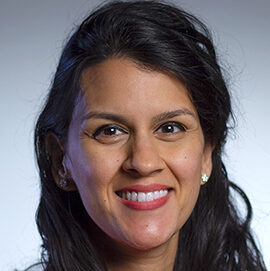
Dr. Leana Wen, emergency physician and professor of health policy and management at the George Washington University Milken Institute School of Public Health
Dr. Sean O’Leary, Vice Chair, American Academy of Pediatrics’ Committee on Infectious Diseases Director, Colorado Pediatric Practice-Based Research Network
Rachana Pradhan, National Correspondent, Kaiser Health News
This program was funded by the David and Lucile Packard Foundation, the W.K. Kellogg Foundation and the Heising-Simons Foundation. NPF is solely responsible for the content.