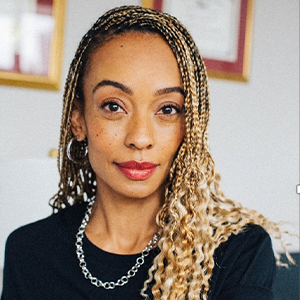
Penetrating biases in America’s criminal justice system requires reporters to view their work through a “racial lens,” a prominent civil rights advocate told journalists at the Crime Coverage Summit in New Orleans. The summit was co-sponsored by the National Press Foundation and RTDNA (Radio Television Digital News Association).
“So what I’m going to suggest to you today, which is something that I think you probably already know, but in order to be conscious about reporting about crime, you have to have a racial lens,” said Alanah Odoms, executive director of the ACLU of Louisiana. She also noted the state’s high incarceration rate should be viewed through its history of slavery.
Odoms said criminal justice reform advocates and analysts have long confronted “an ideology that is inherently one that presents itself in a way that is particularly harmful for marginalized” people, including people of color, women, the poor and the LGBTQ community.
She urged a more inclusive approach to crime reporting “where we not just acknowledge, but we also articulate the fact that the criminal legal system is inherently biased against people of color, the poor and these other identities…”
Highlighting the power of investigative reporting, Odoms said some of the most meaningful journalism involves “challenging the status quo.”

Alanah Odoms, Photo by: BP Miller/Chorus Photography
Odoms said a recent analysis of suspected offenders in Louisiana who are jailed prior to trial found that Black boys and men ages 15 to 24 are five times more likely to be jailed following arrests than their white counterparts of the same age.
“We found that Black Louisianians are more than twice as likely to be jailed following arrests than white Louisianians,” she said. “And this part was really interesting… excessive bail was at the root of the injustice in pretrial. So, it was not a question of guilt or innocence, it was a question of money, whether or not you had the wealth.”
Access the full transcript here.
Crime Coverage Summit 2024: Beyond ‘If It Bleeds, It Leads’ was sponsored by Arnold Ventures and hosted by NPF and RTDNA. NPF is solely responsible for this content.