5 takeaways:
➀ Many minority communities feel both over-policed and unsafe. Parents worry about their children getting safely to school and want police protection, even while harboring long memories of abusive policing, said Walter Katz, vice president for criminal justice at Arnold Ventures and a former public defender. Despite rising public concern about the uptick in homicides, police spend only 5% of their time investigating violent offenses, said Katz, who also served as a senior public safety official in Chicago. Meanwhile, 40% of those who have been victims of gun violence never report it to the police. “If you don’t trust, why would you cooperate?” Katz said.
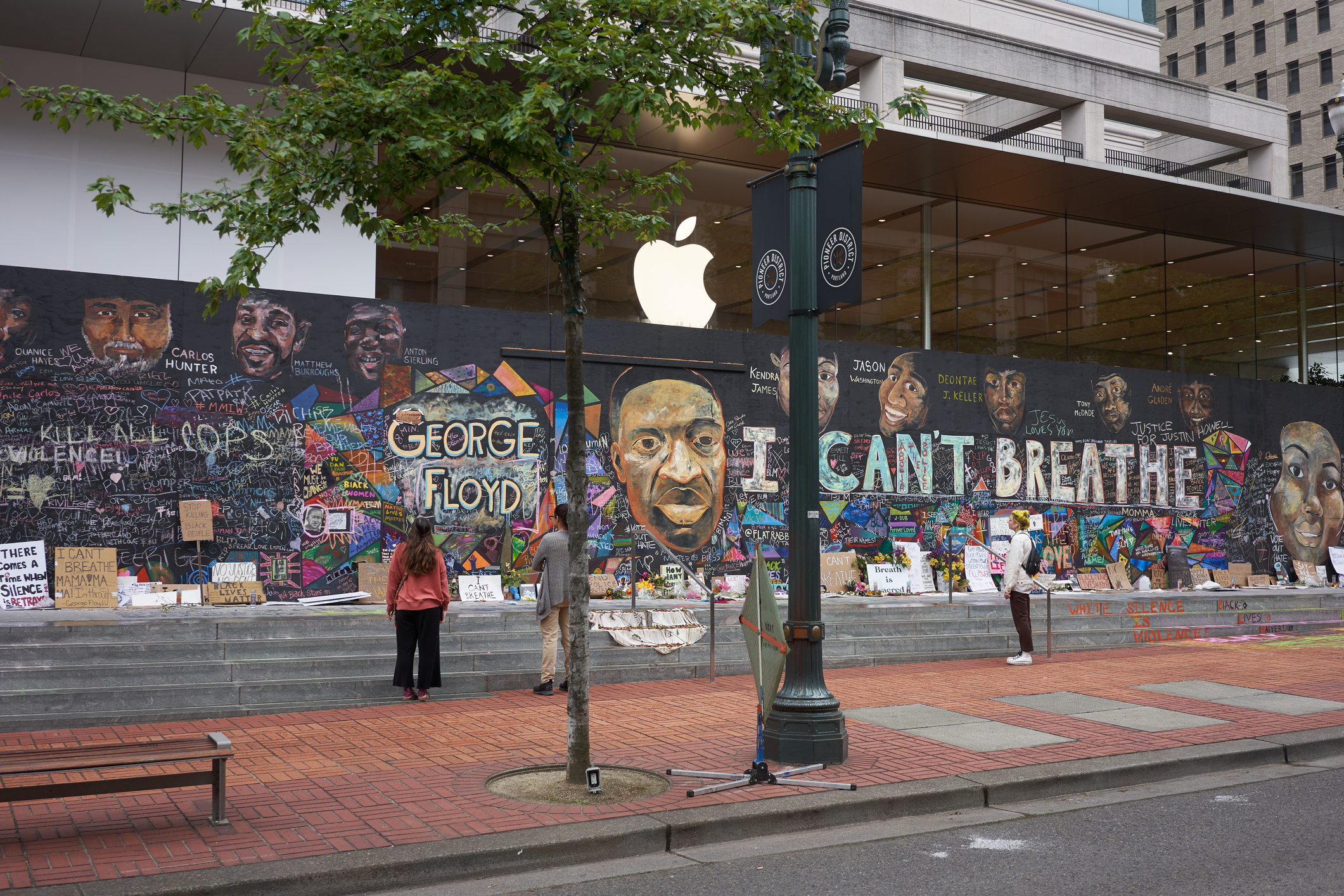
➁ Policing priorities – and results – are under new scrutiny since the murder of George Floyd. Violence is the leading cause of death among young Black men, yet more than half of the murders of Black Americans never lead to an arrest, Katz said. With a spike in homicides in 2020 and a continuing, albeit slower increase in 2021, “You’d expect the police to focus on solving homicides, but instead, they spend time on other things,” Katz said. Only five of every 100 arrests are for violent offenses, while 30 are for “other offenses” that might include public intoxication, disturbing the peace or other minor infractions, he said. Unarmed Black men are 3.5 times more likely to be shot by police than unarmed white men. Meanwhile, fewer than 30% of residents in low-income neighborhoods feel that police respect their civil rights.
➂ The biggest barrier to racial justice in policing is the all-too-common misconception that “all Black people are violent.” In fact, crime is concentrated among a tiny fraction of the population and is geographically concentrated as well, Katz said. “Here’s the truth: In Baltimore, and this isn’t very different from Chicago, 0.75% of the population is involved in gang activity” – but that 0.75% accounts for 58% of those involved in homicides, either as a perpetrator or as a victim, Katz said. Likewise, gun violence is concentrated in certain neighborhoods. A Boston study found that 70% of shootings clustered around 5% of street corners in that city. “We also know that while gun homicides in places like Chicago, get all the headlines, firearm death rates are higher in Southern and Western states. Of the 20 states with the highest homicides rate, 12 are in the South. Gun death rates are close to correlated with access to firearms.”
➃ The “wandering officer” story is a symptom of a systemic lack of accountability in policing. Police officer disciplinary records are only made public in just over a dozen states, and provisions in the Law Enforcement Officer Bill of Rights make it very hard for journalists to get them. “Police advocates use their bargaining and lobbying power to ensure officer privacy, and they control how their discipline information is disseminated,” Katz said. “Weak and inconsistent state decertification rules, including an absence of robust state boards like those that govern other professions, the medical profession, the legal profession, et cetera, means that officers with records of serious misconduct can get hired at other departments.”
➄ Journalists should read police collective bargaining agreements and report on indemnification. As a public defender, Katz said he spent years digging into why officers with a history of excessive use of force stay on the force. “The devil is in the details of collective bargaining agreements, department policies and state-level Law Enforcement Officer Bill of Rights,” Katz said. Together, they can make investigations less likely and sanctions less likely – and the public should know what is in police union agreements. When police are found guilty of civil rights violations, these agreements and policies mean that their employers – governments and taxpayers – pay the bills. A study found that 99.5% of officers are indemnified, a story that has been under-covered, Katz Said.
Speaker:
Walter Katz, Vice President of Criminal Justice, Arnold Ventures
This program was funded by Arnold Ventures. NPF is solely responsible for the content.