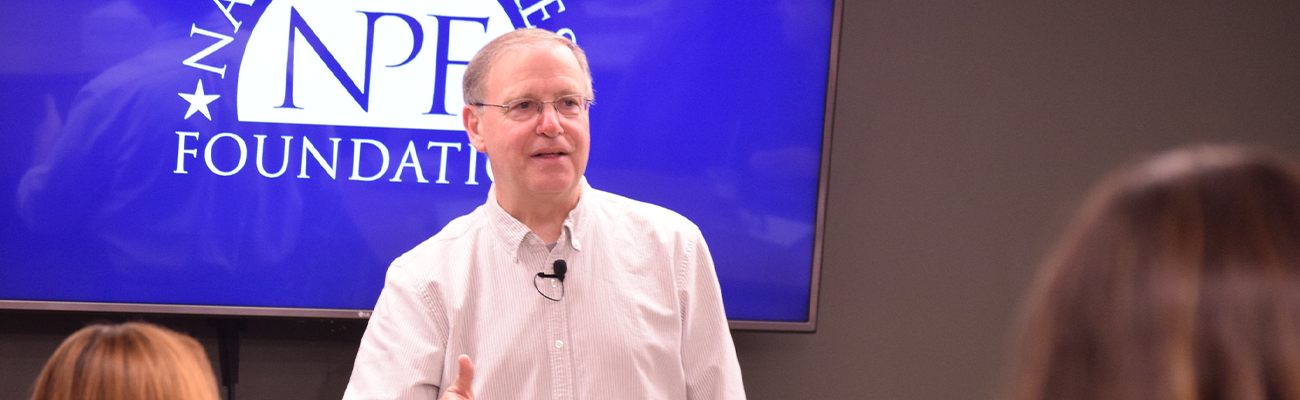
In more than two decades in federal law enforcement, Chuck Rosenberg has served at virtually every level, across both Republican and Democratic administrations.
From line prosecutor, FBI chief of staff, counselor to an attorney general, U.S. attorney and acting administrator of the Drug Enforcement Administration, Rosenberg said personal politics were always left outside the door.
With President Donald Trump’s loyalists at the FBI and across the Justice Department leading purges of career officials and redeploying agents to untraditional duties, including immigration enforcement, Rosenberg said the firewall that long separated politics from law enforcement operations has been breached like never before.
‘Deeply disturbed’ by politicization of institutions
“I am deeply disturbed by what I am seeing … I didn’t think I would ever see anything quite like this,” he said. “I literally did not know the politics of anyone in my office. It was forbidden to talk about it. It just didn’t happen. And I tell people that and they think that can’t be. How could you be in a place for so many years and not know how the man or woman in the office next to you voted or how she thought? And it just never came up.
“We sort of prided ourselves on being apolitical and nonpartisan and whatever views you had outside the office, you never, ever, ever brought in the office,” Rosenberg said, adding that “seems broken and perhaps irretrievably.”
Hope in career civil servants
Despite the uncertainty, Rosenberg remains confident in the experienced agents who continue to work in the trenches.
“I think at working levels it’s going to be OK. I think the men and women who’ve been doing this for a long time and have been doing it together are going to continue to do what they’ve been doing. But are we more vulnerable when there’s turmoil? Sure. Are we more vulnerable when there’s a lot of noise in the system? Sure. And are we more vulnerable when really good people are either walked out the door or begin to question whether or not they should stay? Sure. So never a non-zero risk, but I think it’s a riskier environment when there’s turmoil and there seems to be a good bit of that right now.”
Leadership is at its best, he said, when new management understands there is much to learn.
“You don’t learn by talking, you learn by listening,” he said. “Are there things that the FBI that need to be fixed? Absolutely. Did I know what they were at the DEA in the first year? Barely. It probably would’ve taken me five to really learn the organization and more than that to really learn it like someone who comes up through the ranks.”
‘There are two things left’: The courts and the journalists
At this uncertain time, Rosenberg said the press is more vital than ever.
“I am incredibly grateful that you all have chosen this path … to get paid less than you would anywhere else, to work harder than you would anywhere else, and to get yelled at more than you would anywhere else in a time when our institutions are faltering. Congress is completely feckless. And that’s not new. I don’t mean to suggest that if you’re covering it, they’re not a good story,” he said.
“But when the executive branch is changing in ways that are unfamiliar to most people … I actually believe there are two things left: The courts and you. So I am unbelievably grateful that you are doing what you’re doing because it’s really, really hard. And the environment in which you’re doing it is more difficult now than I think it ever has been.”
Access the full transcript here.