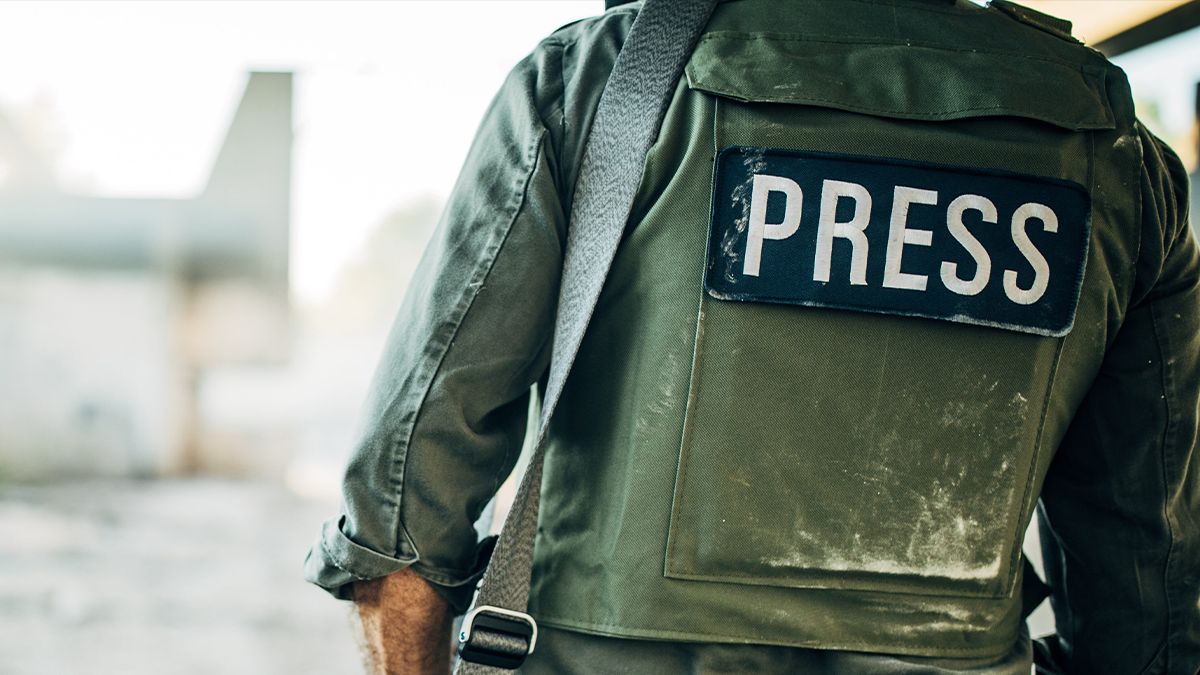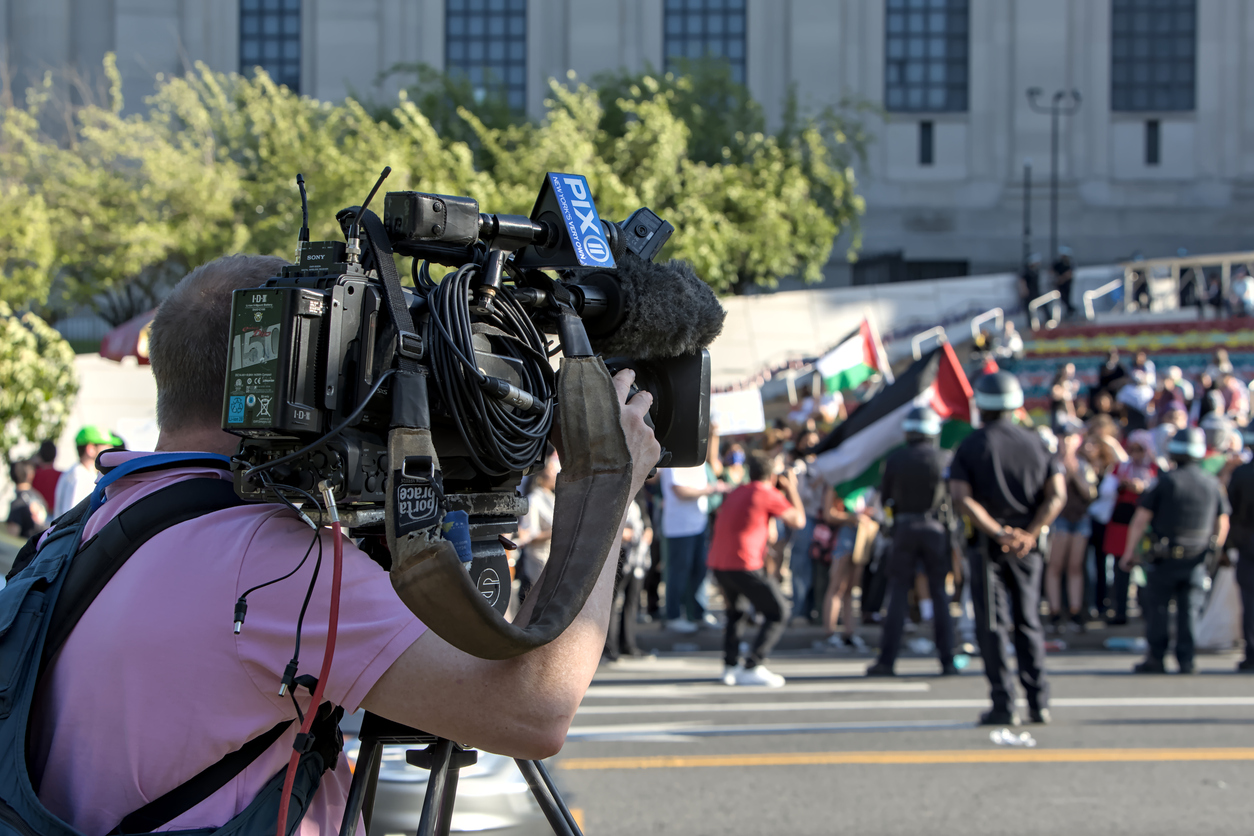
Before deploying to the streets to cover immigration raids, war protests or other law enforcement actions, reporters take note: A press badge is not a suit of armor.
Stephen Solomon, journalism professor at New York University, and Mickey Osterreicher, general counsel for the National Press Photographers Association, said that while the law may provide a framework for press freedom, it is vital for journalists to maintain situational awareness and prepare for potential confrontations or even arrest.
“The First Amendment gives extraordinary protection for the rights of protest, but there’s no special protection for members of the press,” said Solomon, who also serves as founding editor of NYU’s First Amendment Watch. “Members of the press have rights that are coextensive with those of the protesters themselves,” Solomon told the National Press Foundation’s Paul Miller Washington Reporting Fellowship.
The speakers highlighted the potentially risky tension between constitutional theory and street-level enforcement. While journalists may technically be considered observers rather than participants, police orders often apply to all. Attempts to litigate press access while officers are in the midst of an operation tend not to favor reporters, they said.
Osterreicher and Solomon asserted that the most effective street reporting occurs when rules are established and journalists are prepared long before the first protester arrives at the scene, urging newsrooms to treat police as a crucial voice in safety discussions while advocating for open and regular communication to establish rules of engagement.
Protecting Yourself and Your Data
In an era when journalists’ smartphones contain vital professional and personal data, Solomon and Osterreicher said digital security should be a key part of reporter preparations. Before assignments that could turn contentious, reporters should disable biometrics such as Face ID and Touch ID and set strong passwords. And never consent to searches short of a court-ordered search warrant.
For especially high-risk situations, Solomon advised obtaining disposable burner phones when covering protests and leaving smartphones at home.
The Newsroom’s Duty of Care
The advocates also issued a call for action by media organizations.
If a newsroom puts staffers in harm’s way, the organization is obliged to provide necessary resources, they said.
Journalists should demand specialized training, high-velocity protective gear, and a written guarantee of legal representation in case of arrest from the organizations they work for.
Access the full transcript here.